

When warehouse lighting is due for replacement, many people simply buy new fixtures and install them. A few checks beforehand can prevent buying the wrong products, ending up with a poor match, or leaving safety issues unresolved. Here are the most useful points to review, based on practical experience.
1. The real problems with the current lighting
Clarify why replacement is needed. Is it insufficient brightness, frequent failures, high energy costs, or uneven light? Listing the main pain points makes later product selection and layout far more targeted. Replacing just because "it feels time" often leaves the original issues in place.
2. Site environmental conditions
How much dust is present, how high is the humidity, is wash-down used, are temperature swings large, and how great is the risk of forklift impact? These factors determine the protection level and structural strength the new fixtures require. Many warehouses suit an LED tri proof light, yet the exact degree of protection still needs to match the environment.
3. Mounting height and installation method
Measure the actual mounting height and note whether the existing system is suspended, surface-mounted or bracket-mounted. Height influences lumen package and spacing choices; the mounting method affects accessories and installation difficulty. Linear fixtures such as a weatherproof LED batten light are common in long aisles, but confirm they fit the current mounting conditions.
4. Power supply and wiring condition
Check voltage stability, cable age, circuit loading and the reliability of grounding. LED fixtures usually draw less power, so existing circuits are often usable, but badly aged wiring or poor joints should be addressed first. Otherwise the new lights may flicker or fail early.
5. Illuminance and uniformity requirements
Different zones need different light levels. Main aisles, picking areas and loading zones generally require higher illuminance; racking also needs adequate vertical light. Setting clear targets before choosing power and optics is more effective than simply adding more fixtures.
6. Ease of maintenance
How easy will the new lights be to clean and replace? In warehouses that involve frequent work at height, prioritise designs that simplify servicing. A well-protected IP65 LED tri proof light reduces dust and moisture ingress while also lowering maintenance frequency.
7. Emergency lighting needs
If the existing emergency lights are ageing at the same rate, include them in the replacement plan. The emergency units need matching protection and reliable change-over performance.
Clearing these points before selection and purchasing greatly improves the chance of a successful upgrade. Replacing lighting is not just a like-for-like swap-it is an opportunity to optimise.
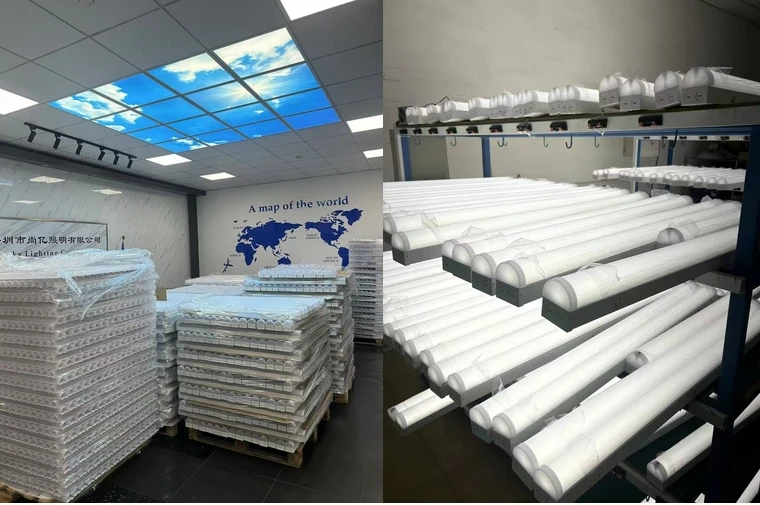
If your warehouse is preparing for a lighting replacement or is already in the selection stage, share the main pain points, mounting height and environmental characteristics. I can help prioritise the checks and outline suitable directions based on similar projects. Thorough preparation at the start makes the rest of the process much smoother.





