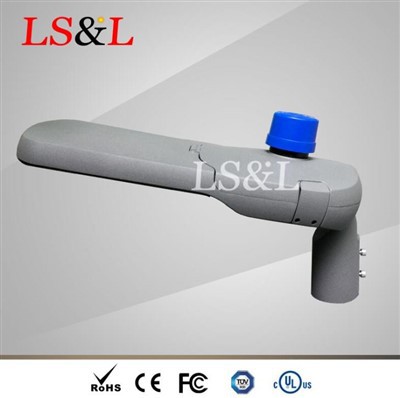
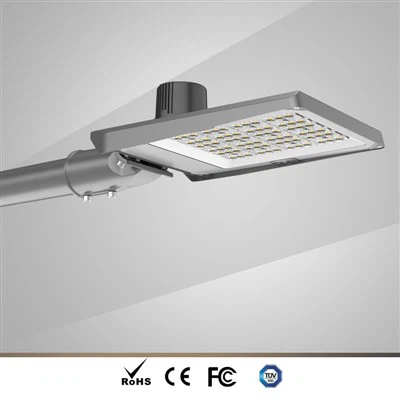
In the LED street light export business, one of the most common questions we get from buyers is: "What wattage LED chips does this street light use?" Whenever I reply to an inquiry like this, I usually take a moment to clarify a point that trips up a lot of clients - the wattage of a single LED chip and the total wattage of the fixture are not the same thing. Drawing on our factory's real production experience, let's go through this topic properly.
Clearing Up the Terminology: Chip Wattage ≠ Fixture Wattage
Strictly speaking, an "LED chip" (or "LED bead") refers to a single LED unit within the light source module. Most mainstream high-power LED chips on the market today range from 1W to 10W each, with common specs including 1W, 3W, 5W, and 10W chips. What we usually mean when we say "this street light is 30W, 100W, or 200W" actually refers to the total fixture wattage - the combined output of dozens or even hundreds of individual chips wired in series/parallel and arranged on an aluminum PCB module. So the "30W to 200W" range mentioned in the original question really refers to the total fixture wattage range, not the wattage of a single chip. This distinction is important to clarify when confirming technical specs with a client, to avoid selection errors caused by a mismatch in terminology.
Current Mainstream Fixture Wattage Range: 30W-200W
With that clarified, let's look at the mainstream wattage range. Most LED street lights on the market today fall somewhere between 30W and 200W in total fixture wattage, and the right wattage depends on the road type, road width, and applicable lighting standards. For residential side streets or pedestrian walkways, a 30W to 60W street light is typically sufficient. For urban arterial roads or multi-lane, two-way streets, 100W to 150W fixtures are usually needed to achieve adequate illuminance and uniformity. And for high-demand lighting scenarios - highways, large ports, or logistics parks - clients frequently opt for 150W or even 200W+ high-power LED street lights.
Road Type and Lighting Requirements Drive the Wattage Choice
Choosing chip wattage (i.e., total fixture wattage) isn't something to guess at - it comes down to the actual lighting requirement. Wider roads with heavier traffic need higher illuminance and better uniformity, which calls for higher-wattage fixtures or adjustments like increasing pole height or shortening the spacing between poles. On the flip side, if the road is narrow and the surrounding area doesn't need much brightness, choosing an overly powerful fixture just wastes electricity and can cause light pollution. This is exactly why a professional street light supplier will always ask about the road's specifications and applicable lighting standards before quoting - recommending the right wattage solution rather than simply fulfilling whatever number a client mentions.
Energy Efficiency and Running Costs: Higher Wattage Isn't Always Better
A common misconception among buyers is that a higher-wattage street light automatically means better lighting performance. That's not quite right. The actual lighting performance of an LED street light also depends heavily on luminous efficacy (lumens per watt), the light distribution curve, and mounting angle. Two 100W street lights from different manufacturers can perform very differently, depending on chip quality, driver design, and thermal management. So, as long as the applicable lighting standard is met, choosing a fixture with higher efficacy and lower energy consumption is the real way to cut energy use and reduce long-term operating and maintenance costs - which is exactly why street light procurement today is increasingly focused on value for money, rather than simply "stacking wattage."
Environmental Factors Also Affect Wattage Selection
Beyond road type and lighting needs, environmental factors matter too. In cold climates where lumen depreciation tends to happen faster, clients often build in some extra wattage margin, opting for a slightly higher-wattage fixture to ensure lighting performance still meets standards years down the road. In residential areas more sensitive to light pollution, a moderate wattage with more precise light distribution tends to be the better fit. That's why when designing a street light solution for a client, we typically factor in road specs, local climate conditions, and project budget together, rather than applying a one-size-fits-all standard.
Conclusion
Years of experience in the LED street light export business have taught us that getting the wattage selection right directly affects both lighting performance and long-term operating costs. That's why Luxsky Lighting always provides fully customized solutions across the entire wattage range - from 30W to 200W and beyond - based on each client's road type, lighting requirements, and budget, using carefully selected high-efficacy chips and quality drivers to ensure every fixture delivers both energy efficiency and stable lighting performance. If you're weighing wattage options for a street light project, feel free to reach out to Luxsky Lighting - our technical team will recommend the right LED street light solution based on your actual project needs.