Of all the projects I've worked on over the years, branch road lighting is probably the most underestimated category. A lot of buyers assume that because traffic volume is low and standards are lower, any wattage will do - then after installation, either the illumination is too low and residents start complaining, or they overspecified and end up wasting energy and budget. So today I want to dig into how to actually choose the right wattage for LED Street Lights on urban branch roads, based on what we've learned across years of roadway LED lighting projects.
Why Branch Road Lighting Gets Taken for Granted
Branch roads generally refer to lower-traffic, residential-purpose roads in the urban road hierarchy - think streets around residential communities or minor connectors leading into main roads. Compared to arterial roads, branch roads do carry lower illuminance requirements, but that doesn't mean fixtures can be chosen carelessly. Branch roads often see a higher proportion of pedestrians and cyclists at night, so insufficient lighting can actually create more safety risk, not less. This is why, before making a wattage recommendation, we always confirm the road classification standard and traffic composition with the client first - rather than applying the blanket logic of "branch road equals low wattage."
Common Wattage Ranges for Branch Roads
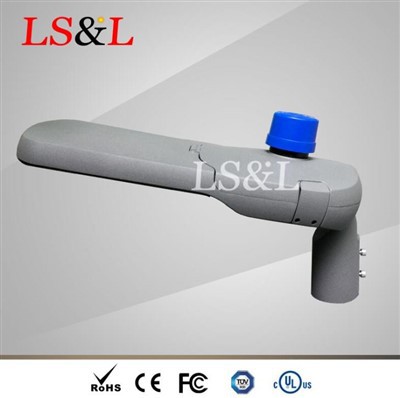
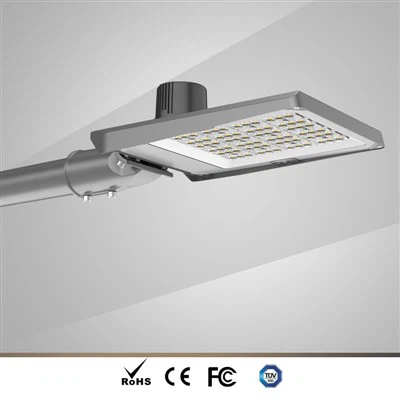
Branch road pole heights are typically 4–6 meters, and common wattage selections fall in the 30W–70W range. The exact number depends on a few variables:
Pole spacing: For branch roads with pole spacing around 20–25 meters, 30W–50W is usually sufficient. Once spacing increases beyond 30 meters, you generally need to move up to 60W–70W; otherwise, you risk under-illumination or alternating bright-dark patches.
Road width: Single-lane and two-lane branch roads have different luminous flux requirements, so it's worth confirming the road cross-section data before selecting a wattage.
Surrounding environment: Branch roads near schools, hospitals, or older, densely populated residential areas should generally have higher illuminance and uniformity standards. These scenarios also tend to require a higher color rendering index to make it easier to spot pedestrians and road conditions at night.
One important point: wattage is only a reference figure. What actually determines lighting performance is luminous efficacy (lm/W) and beam distribution design. Two fixtures both labeled "50W" from different manufacturers - with different chips, optical lenses, and driver designs - can produce noticeably different real-world illuminance. This is exactly why we always encourage clients, during the selection stage, to verify whether a supplier has a genuine, strict quality-control LED engineering lighting system in place - from LED binning and aging tests to batch sampling, every step needs data behind it, not just a single factory test report.
Smart Solutions Work for Branch Roads Too
A lot of clients ask whether a small branch road project really needs a Smart outdoor light control system. The answer is: absolutely. For example, brightness can automatically dim during low-traffic overnight hours and brighten when pedestrians or vehicles are detected - meeting safety lighting requirements while significantly cutting energy costs. For municipal projects with tight budgets that still want long-term savings on electricity and maintenance, this kind of solution offers strong value for money.
Beyond Wattage Selection, Product Quality Matters Most
Getting the wattage right is only half the equation - the fixture's own stability matters just as much. Branch road lighting projects tend to involve large quantities spread across wide areas, so if there's a batch-wide light decay issue or failure, repair and labor costs add up fast. We always advise clients to check a supplier's QC process and after-sales response speed alongside pricing - that's really what determines whether a long-term partnership will run smoothly.
Conclusion
Branch road lighting may look simple, but choosing the right wattage actually requires weighing pole spacing, road width, and surrounding environment together - and delivering on that ultimately comes down to reliable product quality. Luxsky Lighting has spent years focused on roadway LED lighting, with a full product range covering the common 30W–70W wattages for branch roads, plus Smart outdoor light control solutions, all built on strict quality control throughout the process.
If you're selecting fixtures for a branch road lighting project, reach out to the Luxsky Lighting team - we're happy to provide free wattage recommendations based on your road specifications.