After more than a decade in lighting exports, factory clients often trace bulkhead failures back to the driver: the power supply fails first. Datasheets list many driver lines-which ones really matter on an industrial site? Here is what to prioritise, based on field experience.
Input Voltage and Protection Range
Confirm the input range covers the site, for example 220–240V or a wide-range design. Industrial supplies often swing; drivers with over-voltage, under-voltage and surge protection last longer.
When an LED bulkhead light sits at the end of a long run or near equipment that starts and stops often, extra margin on the input side matters even more.
Output, Efficiency and Power Factor
Output current and voltage must match the LED board. Efficiency affects temperature rise and energy use; power factor (PF) affects grid loading. Batch industrial projects commonly require PF ≥0.9 and may also limit harmonics (THD).
A high-efficiency, correctly matched driver helps keep the housing cooler and supports longer LED life.
Operating Temperature and Lifetime Data
The driver's ambient or Tc temperature range should cover hot workshops or cold stores. Lifetime hours should be read with the stated test conditions-not only the marketing figure.
In high-temperature positions, poor driver thermal design brings earlier lumen drop and early failures.
Protection, Isolation and Extra Functions
Drivers may be built-in or field-replaceable. In wet-dust or semi-outdoor areas, the complete luminaire still needs the right sealing; a replaceable driver simply makes later service easier.
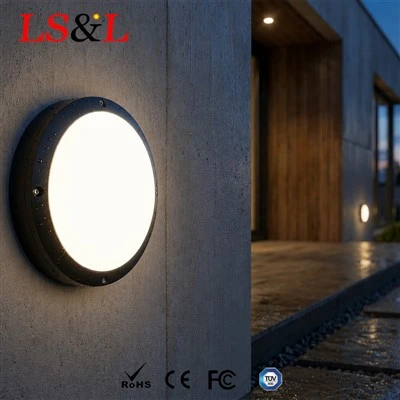
For exterior walls or rain-exposed points, treat sealing and breathing design as outdoor bulkhead light duty-do not assume an indoor-rated driver will cope.
Where dimming or central control is required, check support for DALI, 0–10V or the protocol used on site and keep it consistent with the control system.
What Industrial Buyers Should Check First
- Input voltage range and surge level
- Efficiency, PF and THD where required
- Operating temperature and lifetime conditions
- Whether the driver is replaceable and how it matches the board
- For bulk round bulkhead light projects, keeping one driver brand or series reduces spare variety
For industrial bulkheads, the driver specs that matter most are voltage tolerance, protection, efficiency, temperature capability and lifetime-not merely "has a driver." The right driver helps the luminaire run its full term in dust, humidity and supply variation.
From years of working with factory and export clients, I know the driver is the heart of the bulkhead. Reading these lines carefully on the datasheet saves far more effort than replacing complete fittings later.

If you are comparing driver data on bulkheads, share site voltage, temperature and whether dimming is needed. I can help identify which bulkhead light has a more suitable driver setup and mark the items that should go into the purchase requirements.
Contact now