As an LED street light manufacturer with more than twelve years of export experience, I have supplied lighting to logistics parks, ports and industrial zones in the Middle East, Southeast Asia, Africa and South America. Buyers often ask me: "Which wattage should I choose, and where?" My answer is always the same: do not pick by price or habit. Pick by pole height, area size and work type. Here is how I explain 200W, 300W and 400W to my customers.
200W: Trunk Roads, Gates and Dock Edges
A 200W fixture is the most common choice for main roads and busy working edges. Mounted at 9 to 12 meters, it gives strong, even light for trunk roads, gate approaches, intersections and linear dock rows. With a Type II or Type III beam and pole spacing of about 3.5 to 4 times the mounting height, LED street lights for logistics parks at 200W deliver good uniformity without too much glare. For heavy truck lanes, this is usually my first recommendation.
300W: Truck Parking Areas and Open Yards
When the area becomes wide and open, 300W gives you more coverage per pole. It suits container truck parking, transfer platforms and large apron areas, usually on 10 to 15 meter poles. A wider Type IV or Type V beam spreads the light across open space, so you can use fewer poles and save on cabling and installation. I often suggest 300W where the buyer wants a good balance between coverage and cost.
400W: Large Container Yards and High-Mast Layouts
A 400W fixture is for the biggest areas: container stacking yards, large handling zones and high-mast systems, where multiple heads are mounted on poles of 15 to 25 meters. It brings strong output and wide coverage, but it also needs careful design. Glare and shadows between container stacks can become a problem, so a DIALux simulation based on IES files is very important before you order. A driver in a high truck cab can be dazzled, even for two seconds, if the optics are poor.
Do Not Over-Specify: Higher Wattage Is Not Always Better
Using 400W everywhere wastes electricity and creates glare. Using 200W in a huge yard leaves dark gaps. Branch roads, walkways and perimeters usually need much less, around 60W to 100W. With smart dimming and motion sensors, you can lower the output late at night and raise it when vehicles approach. Quality LEDs already save 50% to 70% electricity compared with old metal halide lamps, and zoned wattage plus dimming saves even more.
Choose a Supplier Who Offers the Full Range and Stands Behind It
High-wattage fixtures work hard in heat, dust and lightning. Replacing one on a 12-meter pole means hiring a lift, closing a lane and losing working hours, so I suggest an LED lighting supplier with 5 year warranty and a real factory behind it. As an LED lighting OEM manufacturer, we also customize wattage, beam angle, color temperature and branding for project buyers and distributors. Our quality standard includes:
- Branded LED chips and drivers, 100% aging test before packing
- Die-cast aluminum housing, IP66 / IK08, 6kV to 10kV surge protection, CE and RoHS certified, with IES files and test reports for DIALux design
When a customer asks me for a 5-year warranty, I can say yes with confidence, because we test before shipment, not after complaints.
Conclusion
Use 200W for trunk roads, gates and docks, 300W for truck parking and open yards, and 400W for large container yards, all confirmed by simulation. Our LED street lights are built with strict quality control, so they stay bright, stable and reliable for years.
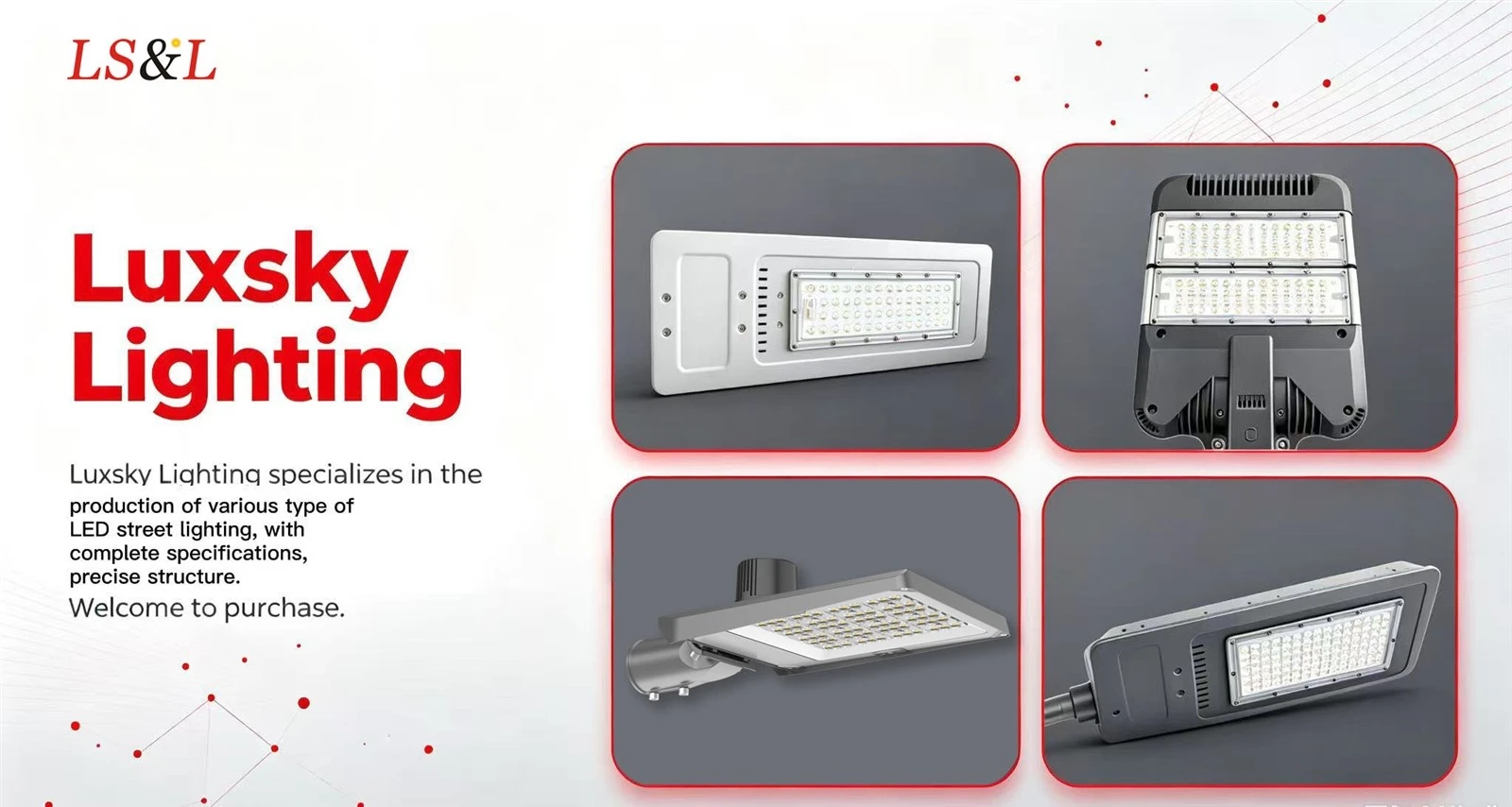
If you are planning a new logistics park or upgrading an old one, choose Luxsky Lighting. Contact us today for a free DIALux layout and a competitive quote.