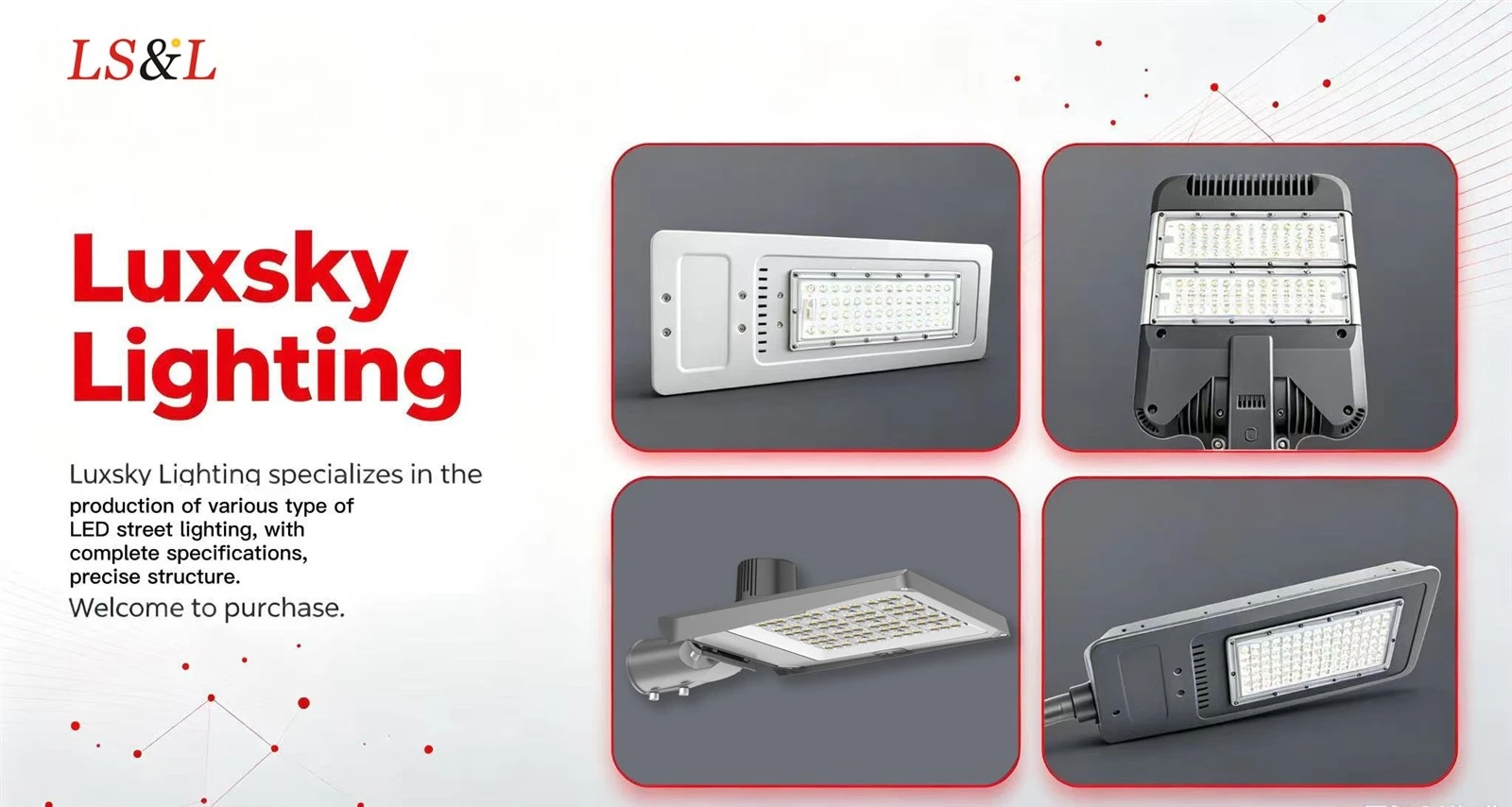
Over the past few years in lighting export, I've noticed a clear trend: more and more clients no longer just ask "how much per fixture" in their inquiries - they go straight to "do you have a smart control solution?" From municipal projects in the Middle East to industrial park roadways in Southeast Asia, smart outdoor lighting has almost become a standard requirement in tender documents. Today, let me share some hands-on experience on why urban roads are gradually shifting from ordinary LED street lights to smart LED street lights.
From "Passive Lighting" to "On-Demand Lighting"
Traditional street lights basically run on a timer switch at full power - regardless of whether there's traffic or pedestrians, the brightness at midnight is the same as at 3 a.m. This model seems simple, but it's actually a huge waste. Smart LED street lights use built-in sensors and remote control systems to dynamically adjust brightness based on traffic flow, pedestrian activity, and weather conditions, automatically lowering power output during low-traffic periods. This not only saves energy but also reduces the long-term wear from running fixtures at full load continuously. For municipal authorities, this directly affects the annual electricity budget and maintenance costs - and it's the core driver behind many projects upgrading from ordinary roadway LED lighting to smart outdoor lighting.
Remote Monitoring: Turning "Reactive Repair" into "Proactive Alerts"
With traditional street lights, faults are usually only discovered through routine patrols or resident complaints, resulting in slow response times and high maintenance costs. Once smart street lights are equipped with remote monitoring systems, issues such as driver malfunctions, excessive lumen depreciation, or offline communication modules can be flagged on the backend immediately, allowing maintenance teams to schedule repairs proactively instead of waiting until the light goes completely dark. I worked with a client in Southeast Asia whose project, after implementing a smart monitoring system, saw the workload of on-site inspection staff drop by nearly half - a saving municipal clients can clearly calculate.
Smart Features Still Depend on Hardware Quality
That said, I always emphasize one point to clients: no matter how good the smart system is, if the fixture's hardware quality doesn't hold up, even the smartest monitoring system can only "detect problems after the fact" rather than "reduce problems from happening in the first place." Driver stability, thermal design, protection rating, and hardware material - these fundamental engineering aspects are what truly determine whether a fixture can operate stably over the long term. This is why we consistently uphold strict quality control led engineering lighting production standards, from raw material inspection to final testing before shipment, without cutting corners at any step. The smart system is meant to build on this solid foundation - not to mask hardware shortcomings.
Data Accumulation Supports Better Urban Lighting Planning
The data accumulated from long-term operation of smart street lights - such as power consumption by road segment, failure rates, and traffic patterns - provides valuable reference for municipal authorities planning future lighting upgrades. This is also why more and more smart city projects around the world are prioritizing the intelligent upgrade of roadway LED lighting as key infrastructure.
Strict Quality Control Is the Foundation for Long-Term Stability
Years in this business have taught me that clients may be initially drawn in by smart features, but what truly drives repeat orders is whether the product itself can reliably operate for its full designed lifespan. When manufacturing every batch of smart LED street lights, we follow a strict quality control-led engineering lighting process - from incoming inspection of chips and drivers, to aging tests and communication module stability tests on the finished fixture - ensuring that both the smart system and hardware quality meet standards together, rather than one coming at the expense of the other.
Our Recommendation
If you're considering smart LED street lights for an urban roadway project, my advice is: don't just look at how impressive the smart features demo looks. Be sure to ask about the underlying quality control standards, driver brand, and protection rating - these are what truly determine whether a smart street light can run reliably over the long term.
Conclusion
Urban roads adopting smart LED street lights is, at its core, about using data and remote management to lower operating costs and improve response efficiency - but hardware quality always remains the foundation. At Luxsky Lighting, we consistently uphold strict quality control. Every roadway LED lighting fixture we produce, alongside our smart outdoor light solutions, goes through rigorous testing to verify quality, helping clients achieve both energy savings and stable, reliable operation.
If you're currently selecting fixtures for an urban roadway project, feel free to send us your requirements - our engineering team will provide free smart street light selection advice.