

In the past decade of supplying LED bulkhead lights to overseas contractors and distributors, we have watched the same pattern unfold many times. A project switches to a lower-priced supplier to control costs, and within a year reports of flickering, early light loss, or complete failure begin to arrive.
Prices for these fixtures differ widely across the market. Some units continue performing reliably for years in parking garages, stairwells, and outdoor corridors. Others start showing problems far sooner. The difference almost always traces back to the quality of the chips, the driver design, the housing materials, and the level of testing applied during production. Knowing the common failure points helps procurement teams avoid costly surprises later.
Why Are Some LED Bulkhead Lights Priced So Low?
Lower quotations typically come from lower-bin LED chips, simplified constant-current driver circuits, thinner aluminum or plastic housings, and reduced aging or waterproof testing. On a small residential job, these compromises can sometimes be tolerated. On commercial projects, the unit price forms only one part of the overall cost. Replacement labour, site disruption and repeated maintenance quickly outweigh the initial saving. The real question is how these cost-driven choices affect actual service life in daily use.
Common Reasons Low-Cost Units Fail Early
LED chip quality and lumen maintenance
Chip selection has a direct effect on how steadily the light output holds up over time. Lower-grade chips often experience faster lumen depreciation, noticeable colour shift, and gradual brightness loss. Industry reference methods such as LM-80 testing and TM-21 projections help estimate long-term lumen maintenance. Fixtures built for longer service life generally use chips that perform more consistently under these protocols, reducing the risk of early light loss in continuous commercial operation.

Driver design and electrical stability
The constant-current driver remains one of the most frequent points of failure. Budget drivers frequently lack tight current regulation, adequate surge protection, or proper thermal management. When supply voltage fluctuates or ambient temperatures rise, these drivers can produce flickering, intermittent restarting, or complete failure. A properly engineered constant-current driver keeps the LEDs within safe operating limits and supports longer overall reliability.
Heat management and housing design
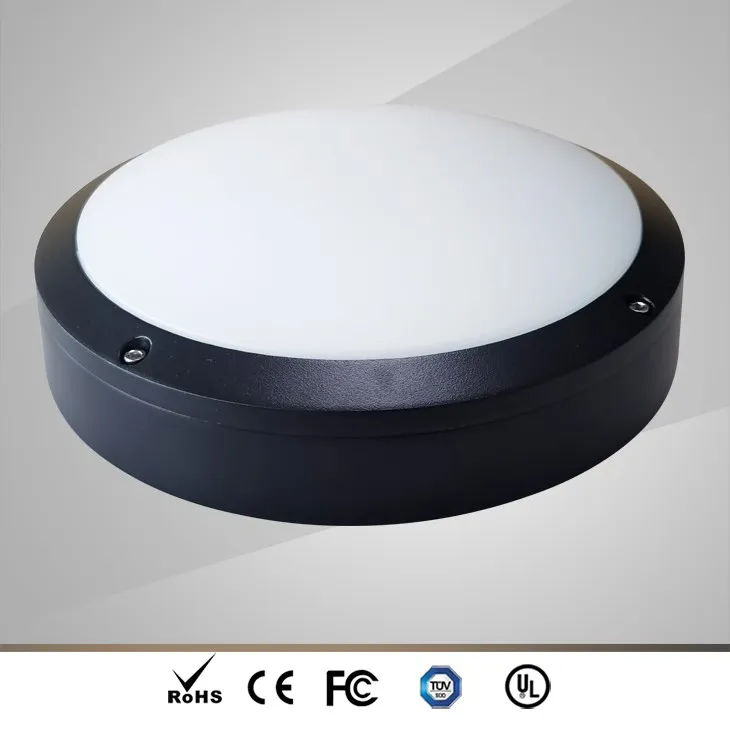
LEDs generate heat as a normal part of operation. The critical factor is whether that heat can leave the fixture efficiently. Inadequate heat-sink paths or thin aluminium housings trap heat around both the chips and the driver. Internal testing we have carried out on various designs shows that units with insufficient aluminium housing and heat-sink area run noticeably warmer under continuous load. Sustained higher temperatures accelerate both chip ageing and driver wear. For outdoor or semi-outdoor applications, solid aluminium housing and deliberate thermal design remain essential.

Protection level and environmental sealing
Parking structures, stairwells, coastal sites and other commercial locations expose fixtures to rain, humidity, temperature swings and sometimes salt air. When sealing is incomplete, or the stated waterproof rating is not consistently achieved, moisture can enter and create condensation inside the fixture. This leads to corrosion and premature component failure. IP65 provides protection against water jets from any direction and is commonly specified for many commercial outdoor and semi-outdoor locations. IP66 offers a higher degree of protection against more powerful jets and is preferred in harsher conditions. Matching the outdoor bulkhead light waterproof rating to the actual site conditions and verifying consistent sealing quality reduces the chance of environmental damage.

Why Lowest Price Alone Rarely Serves Commercial Projects
One failed fixture in a private home is mainly an inconvenience. The same failure repeated across hotels, schools, parking garages or office buildings multiplies labour costs, disrupts operations and increases maintenance pressure. Buyers responsible for larger installations therefore focus on consistent performance, predictable service life and dependable quality rather than the lowest unit quotation alone.
Practical Steps When Evaluating Suppliers
Look beyond the headline price. Review chip quality, driver design, aluminium housing and heat dissipation, verified protection rating, and the written warranty terms. Request supporting documentation such as LM-80 data, IP test certificates and clear warranty conditions. A well-specified IP65 LED bulkhead light should maintain reliable output under the temperature and moisture conditions of its intended location. The fixture that delivers the lowest total cost of ownership is rarely the one with the lowest purchase price; it is the one that minimises replacement and maintenance over its working life.

FAQ
Q: Why do cheaper LED bulkhead lights often fail within the first year or two?
A: Most early failures come from lower-grade chips, limited driver regulation, poor heat dissipation and imperfect sealing that allows moisture in.
Q: How long can a properly specified LED bulkhead light be expected to last?
A: Service life depends on component quality, thermal design and site conditions. Well-built units commonly deliver many years of continuous use in parking garages, stairwells and similar commercial settings.
Q: What is the practical difference between IP65 and IP66 ratings?
A: IP65 protects against water jets from any direction and suits most commercial outdoor and semi-outdoor sites. IP66 offers higher protection against stronger jets and is better for harsher wash-down or coastal exposure.
Q: Does choosing the lowest-priced bulkhead light reduce overall project cost?
A: Not usually. Replacement units, labour and site disruption often cancel out the initial saving on multi-unit commercial projects.
Q: What documents should I request before ordering?
A: Ask for LM-80 or equivalent lumen data, IP test certificates, driver details and clear written warranty terms.
Luxsky Lighting has supplied commercial-grade LED bulkhead lights to distributors and contractors across Europe, the Middle East, Southeast Asia and South Africa for more than ten years. Our range includes IP65-rated options with tested driver components and a five-year warranty. If you are comparing quotations for an upcoming project, send us the specification sheet. We will explain clearly where the cost differences lie and which configuration best matches the site conditions.





