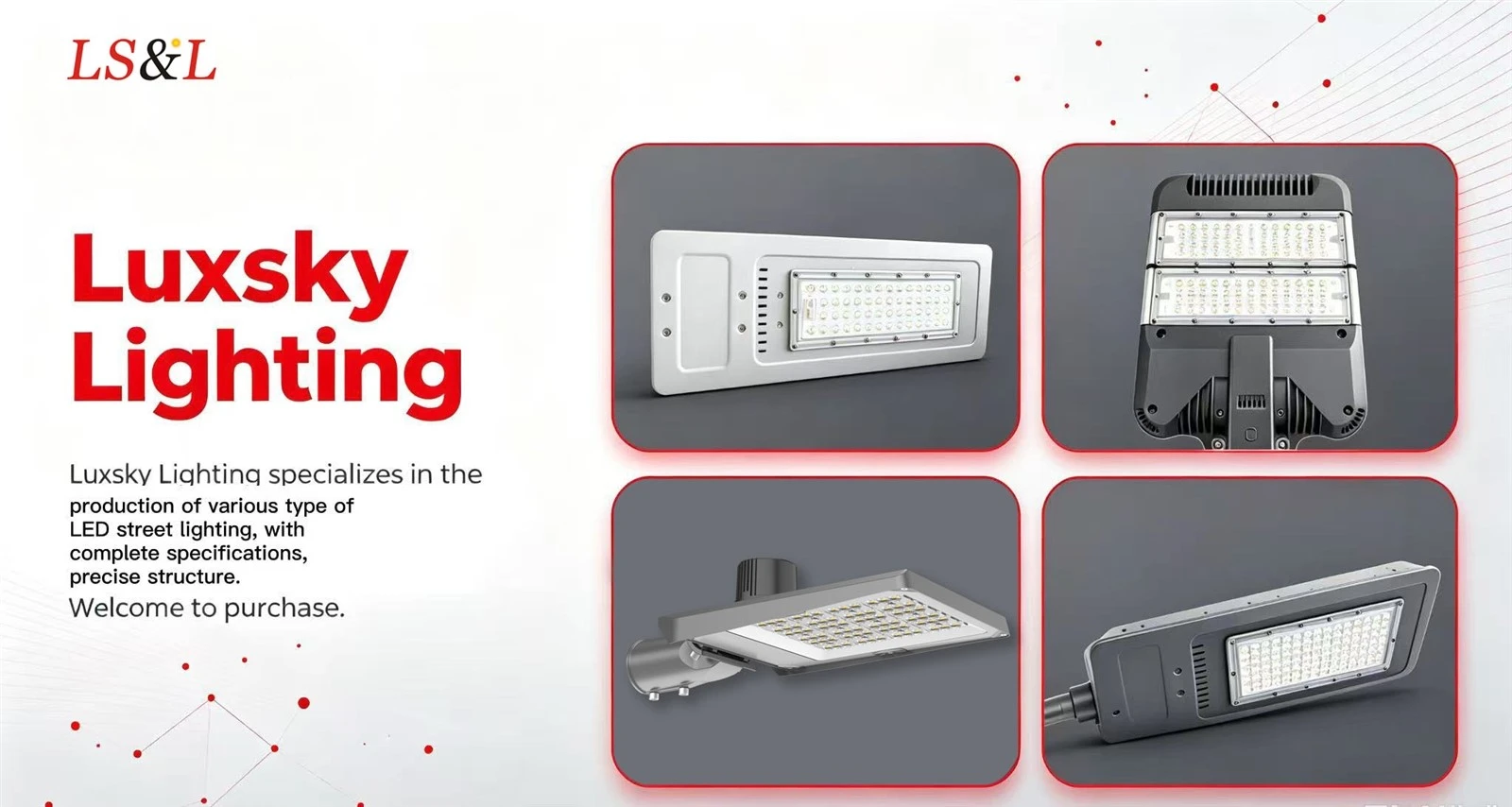
As an LED street light manufacturer with more than twelve years of export experience, I have supplied lighting to logistics parks, ports and industrial zones in the Middle East, Southeast Asia, Africa and South America. A customer once sent me a night photo and said, "The lights are very bright, but the road is still dark." I hear this often. A bright fixture and a well-lit ground are two different things. Here are the causes I find most often on site.
Glare Is Mistaken for Brightness
When you look at a fixture with poor optics, it seems very bright, because the light goes straight into your eyes. But that light does not reach the road. Strong glare also makes the surrounding area look darker, since the eyes cannot adjust. A driver in a high truck cab can be dazzled, even for two seconds, and lose sight of obstacles on the ground. Good optics send light down to the surface, not into the driver's eyes.
Wrong Beam Distribution
This is the most common mistake. A Type II beam on a wide road leaves the far lane dark, and a beam that is too narrow creates bright circles under each pole with dark gaps between them. Match the beam to the road: T2 for narrow lanes, T3 for trunk roads, T4 or T5 for open yards and intersections. Good LED street lights for logistics parks should come with real IES files, so you can check this before you buy.
Poor Pole Height and Spacing
Even a strong light fails if the poles are too far apart or the mounting height is wrong. Pole spacing should usually be about 3.5 to 4 times the mounting height, with closer spacing at curves, gates and intersections. Many parks also use fixtures tilted too high, which throws light outward instead of onto the road. Check the tilt angle on site, because a few degrees can change the result a lot.
Low Real Output and Light Decay
Some low-cost lights show high lumens on the label, but the real output is much lower. Poor chips and drivers also lose brightness quickly, so a light that looked good at installation becomes weak within one or two years. Dust on the lens and aging lamps make it worse. Always ask for a test report, and compare real lux readings on the ground, not the label. Quality LEDs already save 50% to 70% electricity compared with old metal halide lamps, and they keep their brightness longer.
Choose a Supplier Whose Data Matches the Real Result
The only way to avoid this problem is to simulate first and install real products that match the data. Replacing one fixture on a 10-meter pole means hiring a lift, closing a lane and losing working hours, so I suggest an LED lighting supplier with 5 year warranty and a real factory behind it. As an LED lighting OEM manufacturer, we also customize wattage, beam angle, color temperature and branding for project buyers and distributors. Our quality standard includes:
- Branded LED chips and drivers, 100% aging test before packing
- Die-cast aluminum housing, IP66 / IK08, 6kV to 10kV surge protection, CE and RoHS certified, with real IES files and test reports for DIALux design
When a customer asks me for a 5-year warranty, I can say yes with confidence, because we test before shipment, not after complaints.
Conclusion
A bright fixture does not guarantee a well-lit ground. Glare, wrong beam type, poor spacing and low real output are the usual causes, and a DIALux simulation helps you find them early. Our LED street lights are built with strict quality control, so the light reaches the road and stays bright, stable and reliable for years.
If you are planning a new logistics park or upgrading an old one, choose Luxsky Lighting. Contact us today for a free DIALux layout and a competitive quote.