

After visiting many warehouses, one thing becomes clear: dust affects lighting more than most people realise. High racks, constant movement and packaging materials keep fine particles in the air. When fixtures lack proper dust protection, the problems build slowly and show up in light output, lifespan and maintenance costs.
Dust first reduces the light that reaches the floor. Once it settles on the lens or housing, brightness drops and shadows deepen along aisles and under racks. Picking slows down and forklift drivers lose clear visibility, raising both error rates and safety risks.
Heat management is the next issue. LED fixtures need effective cooling to stay stable. A layer of dust acts like insulation, trapping heat. Higher temperatures speed up light decay and put extra stress on the driver. Many sites notice lamps becoming dim after only a year or two-often the real cause is accumulated dust rather than the LED itself.
Maintenance costs rise as a result. Fixtures without solid dust protection need more frequent cleaning, and high-level work is both time-consuming and risky. Once dust enters the housing, surface cleaning only helps temporarily and failures keep returning. Choosing better-protected products reduces these repeated interventions.
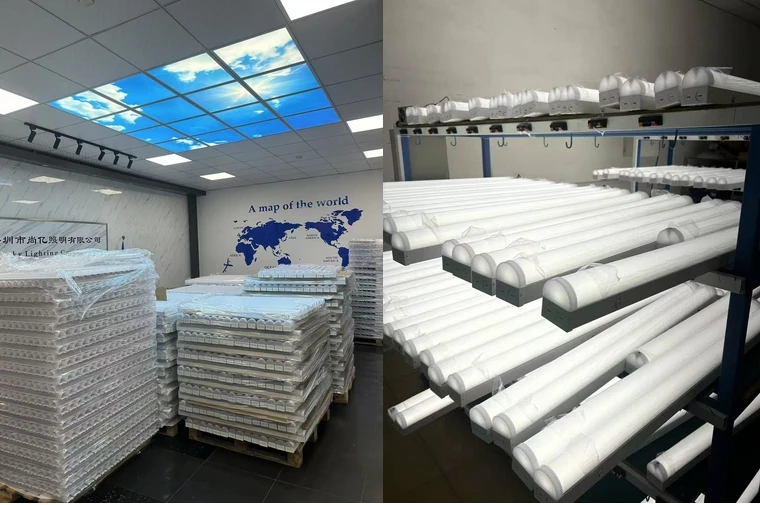
From a practical standpoint, tri proof lights treat dust resistance as a core feature. Their sealed design and surface treatment slow down both ingress and build-up. In dusty aisles and above-rack positions, an LED tri proof lamp helps maintain steadier output for longer and cuts how often lamps need changing.
Different zones have different dust loads. Main aisles and picking areas see more foot and vehicle traffic, while packing or loading zones often generate extra paper dust and debris. In these higher-risk spots, a weatherproof LED light can offer a useful combination of dust and moisture protection, keeping performance more consistent.
Dust protection works best when combined with simple habits. Even well-sealed fixtures benefit from periodic cleaning of the housing and heat sinks. When light levels drop, checking for dust is usually the quickest first step before deciding to replace anything.
Good dust protection keeps the lighting system quieter: slower lumen depreciation, fewer failures and longer intervals between maintenance. For warehouse operations these add up to real savings and smoother daily work.
If your site struggles with rapid brightness loss, frequent cleaning or high replacement rates, share a quick description of the warehouse type and main work areas. I can help assess whether dust protection needs strengthening and which zones deserve priority. Getting this detail right makes everyday operations noticeably easier.





