

With years of experience in overseas food factory lighting foreign trade and project execution, I've noticed most buyers only focus on water and oil resistance for workshop lighting while overlooking dust protection. Fine dust is widespread in food production facilities. It compromises hygiene standards and causes lighting failures, which may lead to failed inspections. Based on real project cases, I will break down the value of dust protection and key selection tips for lights used in food manufacturing sites.
1. Prevent dust buildup to maintain food hygiene standards
Fine particles from grinding, packaging and batching processes tend to gather on ordinary lights with loose gaps. Accumulated dust can fall onto raw materials and finished goods, violating food safety regulations and resulting in failed audits.
The integrated seamless housing of a weatherproof LED light leaves no corners for dust buildup. It requires less frequent disassembly for cleaning and sustains a hygienic production environment, helping you avoid contamination risks in food workshops.
2. Reduce lighting failures and cut maintenance costs
Micro dust can penetrate the internal circuits and LED chips of standard lights. It blocks heat dissipation, triggers short circuits and accelerates lumen depreciation. Frequent breakdowns push up replacement and service expenses for food plants.
The IP65 LED tri proof light delivers full dust protection, stopping fine particles from entering the fixture. Clean internal components ensure stable heat dissipation for non-stop 24-hour operation, extending service life and lowering daily maintenance workload.
3. Eliminate safety hazards and meet overseas project audit requirements
Dust generated in food production is flammable. Dust piled on hot light surfaces may ignite and cause fire risks, a key checkpoint for fire safety and lighting compliance during overseas factory inspections.
Industrial-grade LED tri proof lamp features dustproof and flame-retardant construction. Even heat distribution prevents high-temperature spots that could ignite dust, complying with fire codes for food manufacturing and removing risks during project acceptance.
4. Keep consistent light output and secure production accuracy
Thick dust layers on lamp covers block light, reducing brightness and creating uneven lighting. Poor visibility impairs sorting and quality checks, raising defect rates and hurting production efficiency.
Dust-resistant tri-proof lights maintain steady transmittance without dimming over time. Uniform bright lighting supports precise sorting, color selection and inspection, stabilizing product quality throughout food processing.
Dust protection is essential for food manufacturing lighting, linked directly to food hygiene, operational stability and fire safety. Lights with poor dust resistance bring contamination, breakdowns and safety risks. Choosing hermetically sealed, industrial-grade lighting is critical for compliant and cost-effective food plant operations.
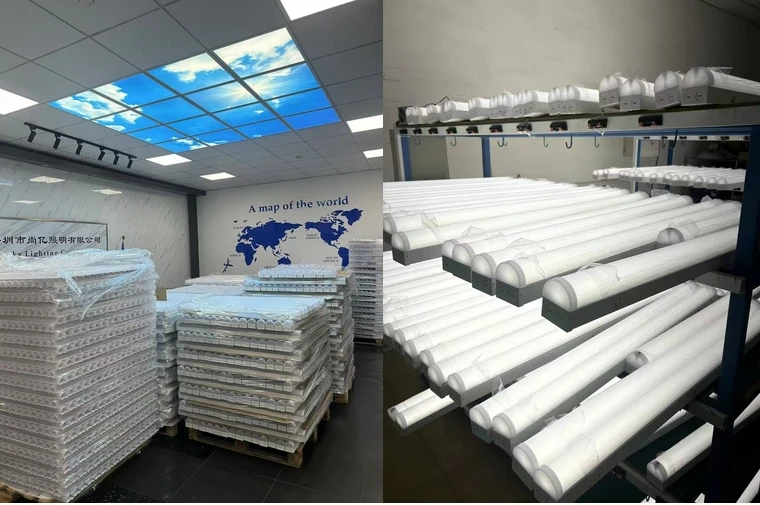
If you are building or renovating lighting systems for food factories and have concerns over dust-proof fixture selection or audit compliance, feel free to get in touch. With rich experience in overseas food lighting projects, I can help you find durable, dust-compliant lighting solutions tailored to your site.





