On August 15, 2026, China's Ecological Environment Code took effect - only the second law in the country to carry the formal title "code," after the Civil Code. Its most consequential provision for the lighting industry is a dedicated chapter on light pollution prevention, the first time artificial light has been regulated at the national statutory level. From this point, "light limit" joins safety, energy efficiency, and health as a fourth mandatory dimension that lighting products must satisfy.
For years, light pollution was governed by a patchwork of non-mandatory standards and scattered local rules that could not independently support enforcement. Complaints fell into a cycle of "rectify, relapse, rectify again," because there was no uniform rule connecting quantitative limits to legal procedures. The new code closes that gap with a complete system spanning definition, supervision, planning, standards, scenario control, and penalties.
Article 667 defines light pollution for the first time in law: excessive or improper use of artificial lighting, or improper alteration of daylight conditions, that disturbs people's vision in their living environment. The definition covers both artificial light and sunlight reflection, pulling nighttime advertising screens and daytime glass-curtain reflections into the same regulatory net.
The enforcement teeth come from Article 1210. Advertising screens, billboards, light boxes, media façades, roads, stadiums, and construction sites that fail to take effective measures to prevent light pollution - and disturb residents or traffic - face correction orders and fines from 5,000 to 50,000 yuan for refusal to comply. For the first time, "too bright and intrusive" is not just a nuisance; it is a violation with a price tag.
Article 670 makes light limits a legal requirement, directing standard-setting bodies to define reasonable limits in the technical specifications of lighting products, outdoor displays, traffic fill lights, and building materials. This transforms light control from an industry recommendation into a binding standard - a shift that will rewrite procurement logic, especially in road lighting, where the old bias toward maximum efficacy must now coexist with mandatory spill and glare control.
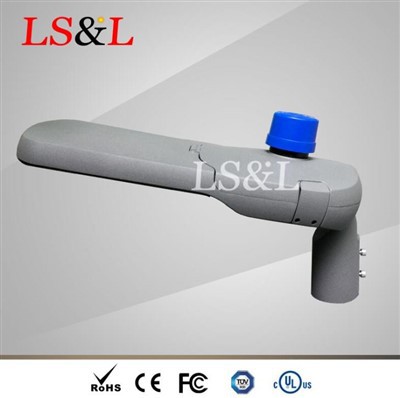
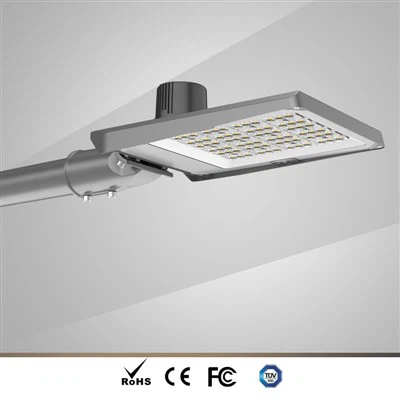
The industry's technical response is already clear: a move from passive shading to active light control. Instead of bolting on shields and louvres after the fact, manufacturers are designing asymmetric optics, free-form lenses, and precision light-control structures at the source, so light lands only where it is needed. Products that stack high-efficiency chips without real optical design will be progressively squeezed out.
The market consequence is equally significant. With China's LED street light market already past a hundred billion yuan, the code turns "optional upgrade" into "mandatory compliance," triggering a large retrofit cycle. The winners will be manufacturers who treat precise light control as a core competency, not an afterthought.
The code's reach extends well beyond street lights. Article 671 names advertising screens, billboards, light boxes, media façades, roads, stadiums, and construction sites as priority enforcement targets - the places where light-pollution complaints have always concentrated. Overnight advertising screens that never dim, traffic fill lights that strobe drivers, and construction floodlights aimed straight at residential windows are all now squarely within the law's crosshairs.
Even architectural glass is drawn in. Article 672 requires that buildings using glass-curtain materials be reasonably designed and selected to prevent light pollution, with light-environment assessment at the planning stage for new construction. That pulls glare from sunlight reflection - a problem long treated as an architectural afterthought - into the same compliance framework as artificial light.
Luxsky Product Perspective
Luxsky Lighting has built its product line around the same principle the code now enforces: light that goes where it should and stops where it should not. Our LED ceiling lights use controlled optics and glare-conscious design, so fixtures in corridors, lobbies, and building edges deliver useful light without spilling into places it is not wanted.

As light-limit compliance becomes a tender requirement, we can provide the photometric data and design guidance buyers need to verify it. See the range at luxsky-light.com/led-ceiling-lights and let us help you design for the new legal standard.