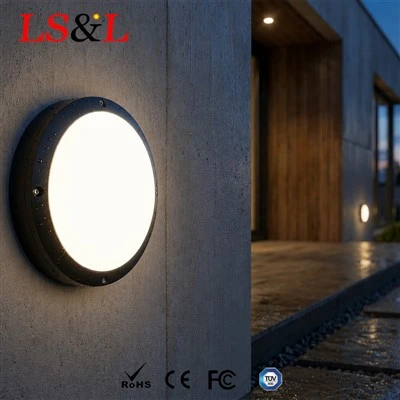
Many buyers wonder whether sensor lights make sense for low-traffic zones inside factories. Leaving lights on continuously in these quiet areas wastes electricity, yet clients also worry about failure rates and slow ROI after installation. From years of working on overseas industrial lighting projects, we have seen many buyers hesitate on this decision. Today we discuss whether sensor-equipped bulkhead light is worth installing in low-traffic factory areas.
Benefits of Sensor Lights for Low-Traffic Zones
Low-traffic areas usually include backup passageways, auxiliary storage rooms and remote inspection walkways, where staff may only pass by once every few hours or longer. Sensor lights turn on when motion is detected and switch off after a preset delay, cutting unnecessary lighting hours and reducing power consumption. The savings add up steadily over time, especially for markets with high electricity prices. Many projects choose oval bulkhead light for these spaces. Its simple profile fits neatly on side walls and simplifies maintenance. Beyond energy savings, shorter operating hours slow lumen depreciation and extend fixture service life.
Costs and Risks to Consider
Sensor lighting is not a free energy-saving fix, and savings alone cannot justify the upgrade. First, upfront costs are higher. Fixtures with sensor drivers cost more than standard non-sensor versions. Second, sensor reliability varies. Poor-quality sensors suffer from false triggers, failed detection or broken timers, which push up after-sales expenses. Dusty corners and locations with wide temperature swings also place extra stress on sensors, so functionality should not be your only selection criteria.
Suitable Installation Areas
They work well for backup inspection routes, small auxiliary storage rooms and equipment walkways with very occasional visits. These locations should have stable conditions without large metal structures that interfere with sensor signals. The payback period becomes much more reasonable for sites with minimal lighting demand.
Areas Not Recommended
Sensor lights are not ideal for zones that require regular inspections, where staff may arrive at irregular times and need reliable lighting on demand. Corners with heavy vibration and surrounding metal equipment also carry a high risk of sensor malfunction and are not recommended.
Selection and Commissioning Tips
- Prioritize models with switchable constant-on and sensor modes, so you can disable motion detection for maintenance work.
- Set the hold time appropriately based on visiting frequency. Too short a delay will cause lights to turn off before workers finish moving through the area.
- Pick fixtures with ingress protection matching site conditions. Some IP66 bulkhead light support optional sensor modules, offering dust and moisture resistance for damp, dusty factory corners.
Wrap-up
Whether sensor lights are worthwhile for low-traffic factory areas depends mainly on two factors: how often people pass through and the surrounding working environment. Sensors deliver good long-term value in stable, rarely visited zones. For frequently inspected or harsh locations, standard non-sensor lights are often more reliable. Avoid blind upgrades; calculate the return period before finalising your plan.

If you are reviewing lighting upgrades for remote factory zones and unsure if sensors are suitable, or want a cost comparison between sensor and standard fixtures, send us your site details. We can work out a suitable lighting plan for you.