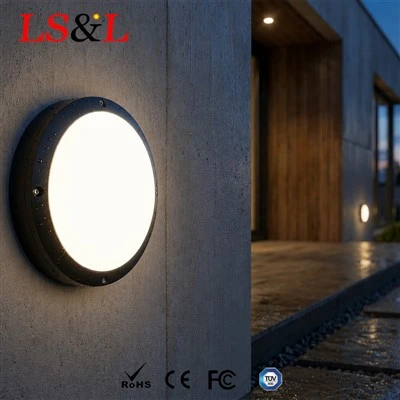
After more than a decade in lighting exports, factory and property clients often ask whether old wiring can stay when bulkheads are replaced. Keeping the runs saves time, but brittle insulation and corroded joints leave risk. Here is when existing wiring can be reused, based on field experience.
Many Projects Can Reuse It-If the Circuit Is Still Safe
If insulation is sound, conductor size is adequate, earthing is continuous, and the circuit function matches the new lamp, replacement on the existing path is often acceptable. That shortens the job and limits cutting and drilling.
After fitting an led bulkhead lamp, the load is often lower than the old fluorescent system, but safety and codes still govern-not only the fact that watts went down.
Check Insulation, Earthing, and Joints First
Look for brittle or cracked sheathing, water or oxidation in boxes, and whether the earth path is continuous. On industrial routes with humidity and dust, joints fail first.
Replace any sticky, discoloured, or clearly aged sections locally rather than keeping the whole run by default.
On Fluorescent-to-LED Jobs, Deal with the Ballast Section
Old fluorescent bulkheads often include a ballast. For LED, the ballast is usually removed or bypassed and the luminaire wired to the new diagram-do not assume the old terminal order can be reused as found.
If emergency, sensor, or control conductors exist, confirm the new lamp supports them so spare cores are not mis-terminated.
Restore Cable-Entry Sealing with the New Luminaire
Even when conductors are reused, the way the cable enters the housing must be resealed. An LED bulkhead that meets its IP rating on paper can still take dust and water if the entry is loose.
On semi-outdoor or exterior points, check whether conduits and joints are weather-capable and, where needed, follow outdoor bulkhead light installation practice-not only a head swap.
Practical Decision Checklist
- Insulation, earthing, and joints pass visual and any required tests
- Conductor size meets circuit and code needs
- Ballast removed or bypassed; LED wiring diagram followed
- Cable-entry sealing restored on the new lamp
- Suspect sections rewired locally; do not gamble on the full run
When replacing old bulkheads, existing wiring can often stay in service after a safety check and correct reconnection. Reuse is valid when condition and method are right-not when the only goal is to save labour.
From years of working with factory, property, and export clients, I know one saved rewire is fine; an unchecked wiring fault is not. Verify first, then reuse, and the lamp change stays clean.

If you are deciding whether replacement can use the existing runs, share the old lamp type and approximate age of the wiring. I can help identify which bulkhead light fits better and whether the old circuit is worth keeping.