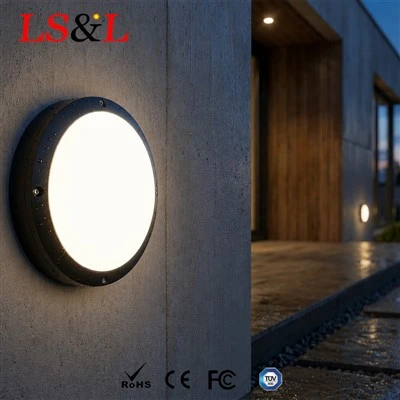
Many clients working on factory lighting projects ask whether light sensors can be fitted to fixtures to adjust brightness automatically based on natural daylight. This idea sounds great for energy saving, yet factory lighting conditions are complex, and it does not always work reliably. Over years of export work, I have seen many failed daylight sensor setups. Today we talk about whether bulkhead light can be used with daylight sensors in industrial applications.
How Daylight Sensors Work
Daylight sensors continuously measure ambient illuminance. When natural light is sufficient, they dim the fixture or turn it off; when light fades, the lights switch on or brighten again. Unlike microwave motion sensors, they detect light levels instead of movement. They perform best in areas with steady, gradual daylight changes to cut unnecessary power use. For factory aisles with good natural light, many projects install oval bulkhead light paired with daylight sensors to balance lighting performance and energy savings.
Benefits for Industrial Sites
The most obvious advantage is lower energy consumption. Fixtures do not need to run at full power during daytime near windows, which adds up to substantial electricity savings over time. Besides, they maintain consistent target illuminance. Brightness will not fluctuate wildly with passing clouds, offering stable visual conditions for workers. Used with dimmable drivers, they also reduce lumen depreciation from continuous full-power operation and extend fixture lifespan.
Drawbacks and Limitations to Note
Daylight sensors are highly sensitive to mounting placement, and this is where most industrial projects run into trouble. Readings become inaccurate if the sensor is blocked by racks or machinery, or if direct sunlight hits the probe. Moving forklifts and shifting stockpiles constantly change local lighting and cause false readings. Dust buildup in heavy industrial facilities also slowly reduces sensor accuracy. Daylight sensors bring almost no energy savings and only add extra costs for windowless zones with little natural daylight.
Suitable Installation Areas
They work well for assembly stations next to windows, long corridors with good daylight access, and warehouse spaces with large skylights. These areas have stable natural light and are not frequently blocked by moving materials, so daylight sensors can deliver value.
Areas Not Recommended
Enclosed, windowless workshops and internal aisles; zones with frequent material handling and shifting stock piles; heavy industrial areas with heavy dust and grease that quickly foul sensor probes.
Selection and Commissioning Tips
- Keep sensor probes out of direct sunlight and avoid facing them straight toward windows to prevent abnormal illuminance readings.
- Set target illuminance thresholds in advance according to factory lighting standards, and avoid overly high or low settings.
- Choose properly rated fixtures for damp and dusty workshops. Some IP65 bulkhead lights support external daylight sensors to withstand harsh plant conditions.
Wrap-up
Industrial bulkhead light can work with daylight sensors, yet this combination has clear application limits. It delivers excellent energy savings in well-lit, unobstructed spaces, but triggers unwanted operation and poor value in dim or dynamic workshops. Always assess site daylight conditions before adding sensors, and avoid unnecessary upgrades.

If you are designing energy-saving factory lighting and want to learn the difference between daylight sensors and motion sensors, or need reference tuning parameters, share your site drawings and conditions with us. We can recommend suitable lighting solutions.