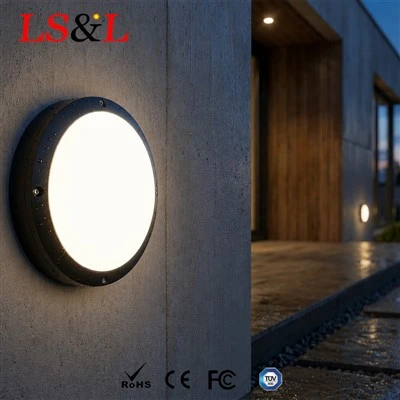
After more than a decade in lighting exports, project clients often ask whether bulkheads should use 0–10V or DALI dimming. Both can raise and lower light levels, but wiring, zoning, and later system changes differ a lot. Here is the practical difference and where each fits, based on field experience.
Control Method: Analogue Versus Digital and Addressable
0–10V adjusts brightness by voltage level on the control line, so lamps on the same circuit usually change together. DALI is a digital bus; each driver can have an address for individual or group control and status feedback.
When selecting an LED bulkhead lamp, decide first whether the project needs whole-group dimming or finer control by lamp or zone, then choose the interface.
Wiring and System Complexity
0–10V is simple in structure; control polarity must be correct, and distance and voltage drop stay within design limits. DALI follows bus wiring and addressing rules, with more commissioning steps, but groups can often change without major power rewiring.
On bulk corridor installs, if the only need is a common power reduction, 0–10V is often enough. If you need floor scenes and section monitoring, DALI fits better.
Features and Day-to-Day Operation
DALI supports scene recall, fault enquiry, and links to building systems. 0–10V costs less to implement but offers limited single-lamp feedback and flexible regrouping.
When an LED bulkhead is spread across many routes, DALI's addressability is clearer; with few points and simple logic, 0–10V is easier to maintain.
Match the Product and the Environment
Either dimming type requires a driver that supports the protocol-a standard switch-mode supply will not dim. Humid or outdoor points still need full environmental protection; adding dimming is not a reason to weaken sealing.
Where semi-outdoor or door zones need dimming, keep protection up to standard and, where exposure demands it, specify as an outdoor bulkhead light.
A Steady Way to Choose
- Simple zones, budget priority, common dimming: 0–10V
- Fine grouping, many scenes, feedback and growth: DALI
- State protocol version and dimming range in the specification
- Prove minimum level stability and flicker-free behaviour on a sample circuit
The core difference between 0–10V and DALI is analogue group dimming versus digital addressable control. Bulkheads can support either when the driver interface matches the system-and complexity of the project drives the choice.
From years of working with project and export clients, I know the dimming method should serve operations, not chase the most advanced label. Use 0–10V when logic is simple; move to DALI when fine management is required, and rework drops sharply.

If you are choosing a dimming method for a bulkhead project, share zoning needs and whether single-lamp control is required. I can help identify which bulkhead light fits better and clarify 0–10V versus DALI for your scheme.