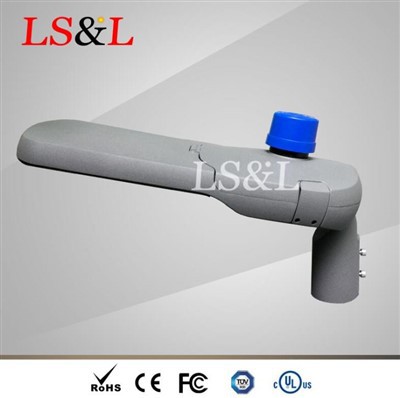
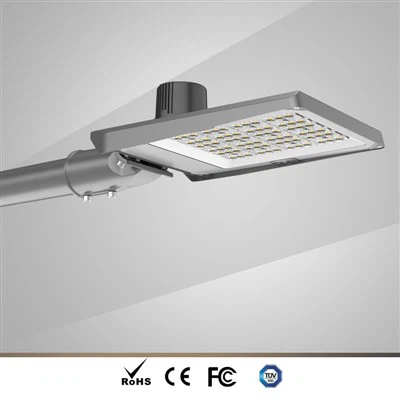
In discussions about upgrading urban road lighting, many clients ask directly: Can LED street lights truly replace high-pressure sodium lamps? As a veteran sales professional with over a decade of experience in the foreign trade lighting industry, I have worked with numerous municipal projects and contractors across Europe, the Middle East, and Southeast Asia. Based on actual deliveries and after-sales feedback, the answer is yes - provided the right products are selected and the details are handled properly. Below, I break this down from three core perspectives: energy efficiency, environmental protection, and lifespan, drawing on real project experience.
Energy Efficiency: The Efficacy Gap Directly Determines Operating Costs
High-pressure sodium lamps typically offer luminous efficacy around 100 lm/W, while mature LED street lights consistently achieve 150 lm/W or higher, with some quality products reaching 180 lm/W. This means that under the same illuminance requirements, the system power consumption of LED street lights can be reduced by 50% or more. In a coastal city project in the Middle East that we supplied, replacing the original 250W high-pressure sodium lamps with 150W LED street lights cut annual electricity consumption on the entire road by approximately 55%, delivering clear savings on electricity bills.
More importantly, LED street lights support intelligent dimming and time-segment control. During low-traffic nighttime hours, brightness can automatically drop to 70% or 50%, further reducing unnecessary energy use. High-pressure sodium lamps struggle with this - they start slowly and have limited dimming range, leading to unavoidable energy waste. For clients who prioritise long-term operating costs, the energy-saving performance is the most direct decision factor.
Environmental Protection and Safety: Completely Eliminating Mercury Pollution and Radiation Concerns
High-pressure sodium lamps contain sodium salts and mercury. If not disposed of properly at end-of-life, they can contaminate soil and water sources. Many countries and regions have already begun restricting mercury-containing light sources, driving up the subsequent disposal costs of high-pressure sodium lamps. LED street lights contain no mercury, lead, or other hazardous substances and produce no ultraviolet or infrared radiation, making them far friendlier to the environment and passers-by.
In addition, the colour rendering index (CRI) of LED street lights is generally above 70, with some products reaching 80+. This provides more accurate colour reproduction on the road surface, improving both driving safety and pedestrian comfort. The yellowish light of high-pressure sodium lamps offers noticeably poorer visibility in rain and fog. For several European municipal clients, we have accelerated their LED replacement programmes precisely because of environmental regulations and road safety requirements.
Lifespan and Maintenance: Fewer Replacements Mean Lower Total Cost
High-pressure sodium lamps have a rated lifespan of around 10,000 hours. In actual use, voltage fluctuations and frequent switching often reduce this to under 8,000 hours before replacement is needed. Quality LED street lights can reach 50,000 hours or more - roughly five times longer than high-pressure sodium lamps. This means that over a 10-year cycle, high-pressure sodium lamps may need replacing four or five times, while LED street lights typically require only driver maintenance or simple cleaning.
From a full life-cycle cost perspective, although the initial purchase price is higher, labour, vehicle, and traffic control costs for maintenance drop significantly. In a Southeast Asian highway project we calculated, the 10-year total cost of ownership for the LED solution was more than 35% lower than that of high-pressure sodium lamps. Of course, lifespan figures must be based on quality chips, reliable drivers, and effective thermal design - otherwise the advertised 50,000 hours remains only theoretical.
Practical Challenges and Implementation Advice
Full replacement is not without hurdles. Initial investment, lighting uniformity, glare control, and grid compatibility all require careful attention. Some early low-cost LED products did suffer from rapid lumen depreciation and poor light distribution, causing clients to question the technology as a whole. The solution is straightforward: choose manufacturers with real project references, who can provide IES files and complete test reports, and insist on at least a five-year warranty.
The technology is mature, and costs continue to fall. With correct product selection, LED street lights can fully surpass high-pressure sodium lamps in energy efficiency, environmental performance, and lifespan, becoming the mainstream choice for urban road lighting.
Conclusion
Luxsky Lighting's LED street lights use high-efficacy chips, professional optical design, and high-protection-rated structures. They have already completed batch replacement projects in multiple countries and regions, delivering stable and reliable quality. If you are planning a road lighting upgrade, please contact us directly for a tailored solution and quotation - making the replacement process more efficient and worry-free.