As society places increasing emphasis on sustainable development, street lighting, as a crucial component of urban infrastructure, is experiencing continuous innovation and development in its power supply methods. Mains-powered streetlights and solar-powered streetlights are the two most common lighting methods, each with its own unique operating principles and advantages and disadvantages. This article, Sanqian Wisdom, will provide a detailed analysis of the operating principles of these two types of streetlights and a brief comparison to provide a reference for selecting appropriate urban lighting options.
1. Mains-powered streetlight operating principle
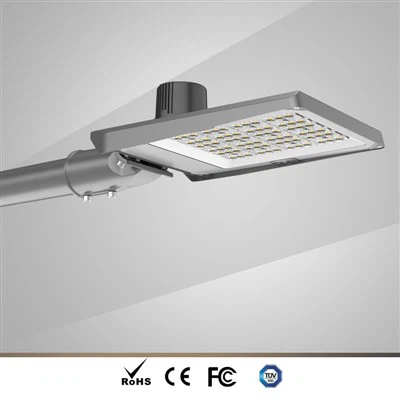
Mass-powered streetlights, or traditional streetlights that rely on the city's power grid, have a relatively simple and straightforward operating principle. The system primarily consists of streetlight fixtures, cables, a control cabinet, and the mains power grid. When night falls, a clock controller or photosensitive controller in the control cabinet detects that light intensity has dropped to a preset value. The controller then sends a signal to the power switch, turning on the power. Current is then transmitted through the cables to the ballast or LED driver in each streetlight, where it is converted to a voltage and current suitable for the lamp, illuminating the streetlight and providing nighttime illumination. II. How Solar Street Lights Work
Solar street lights are a green lighting method that converts sunlight into electricity. Their operating system primarily consists of solar panels, lithium batteries (or lead-acid batteries), LED lamps, intelligent controllers, and light poles.
1. Energy Collection Phase: During the day, the solar panel mounted on the top of the street light absorbs sunlight and converts it into DC electricity through the photovoltaic effect, which is then stored in the battery.
2. Energy Storage Phase: The battery, acting as an energy storage device, stores the energy collected during the day for use at night. To ensure battery life and efficiency, the intelligent controller manages charge and discharge to prevent overcharge and overdischarge.
3. Energy Release Phase: When night falls, the intelligent controller detects dimming and automatically activates the circuit, allowing the battery to release energy. The LED driver converts the battery's DC power to a voltage suitable for the LEDs, illuminating the street light and providing illumination.
III. Comparison of Mains Street Lights and Solar Street Lights
1. Energy Source
- Mains street lights rely on the traditional power grid, offering a stable energy supply but limited by grid coverage and stability.
- Solar street lights rely on natural solar energy, a clean, renewable energy source that is not restricted by geographic location, making them particularly suitable for remote areas or those with limited grid coverage.
2. Economic Benefits
- Mains street lights have a lower initial installation cost, but long-term operation requires electricity bills and is subject to price fluctuations.
- Although solar street lights require a higher initial investment, the lack of electricity bills offers significant long-term energy savings and lower maintenance costs.
3. Environmental Impact
- Mains street lights use fossil fuels for power generation, indirectly generating greenhouse gas emissions and significantly impacting the environment.
- Solar street lights have virtually zero emissions, are environmentally friendly, and align with the concept of green, low-carbon development.
4. Reliability and Maintenance
- Mains street lights are affected by grid conditions and will not function during power outages. Maintenance primarily involves cables and controllers.
- Solar street lights are independent of the grid and are unaffected by power outages, but the performance of batteries and solar panels degrades over time, requiring regular inspection and replacement.
Conclusion
Mains-powered streetlights and solar streetlights each have their own advantages. Choosing one type depends on a comprehensive consideration of the specific application scenario, geographic environment, budget, and environmental requirements. With the advancement of solar technology and the continued decline in costs, solar streetlights will play an increasingly important role in future urban lighting, particularly in promoting green urban transformation and achieving sustainable development goals. Furthermore, the integration of the two, such as the emergence of mains-powered complementary solar streetlight systems, is also a key future trend, aiming to combine the advantages of both to provide more efficient, reliable, and environmentally friendly lighting solutions.
Luxsky's new street light has low energy consumption and high light efficiency. Click the link to view