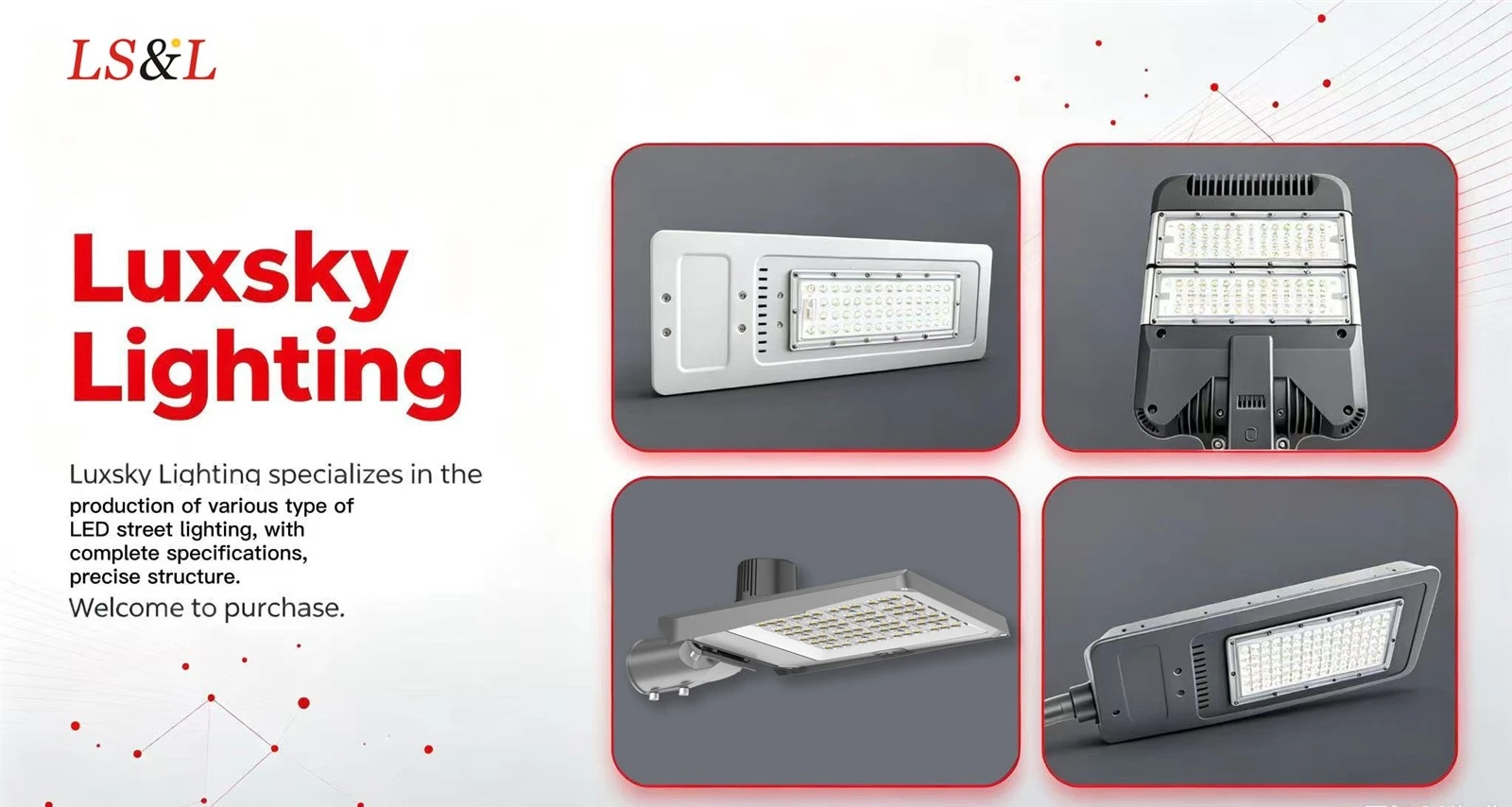
I've been in the LED lighting export business for many years, and I often get a very practical question from customers: "Our project uses motion-sensor street lights that turn on when people or vehicles pass by and turn off when the area is empty - will this frequent switching affect the lifespan of the fixtures?" It's a great question, especially now that more and more smart lighting projects rely on sensor-based control. Today I want to share what I've learned from years of working on roadway led lighting projects to address this topic.
Let's Start With the Conclusion: LEDs Are Different From Traditional Fixtures
If you're an engineer who's used to working with incandescent bulbs, fluorescent tubes, or high-pressure sodium lamps from years ago, your instinct might be that "more on/off cycles definitely shortens lifespan." That assumption is actually true for traditional light sources - incandescent filaments tend to break under repeated thermal cycling, and the high-voltage surge at fluorescent tube startup accelerates tube aging.
LED fixtures, however, work on a completely different principle. They emit light through a semiconductor PN junction, so there's no physical "filament fatigue" issue to begin with. In principle, frequent switching doesn't noticeably shorten the lifespan of LED fixtures the way it does with traditional light sources - and this is exactly the technical foundation that has allowed Smart outdoor light motion-sensor street lights to become so widely adopted today.
But That Doesn't Mean There's Zero Impact
While the LED chip itself isn't sensitive to switching frequency, there's another critical component in the overall fixture system - the LED driver - and if it's not well designed, frequent switching can indeed have some effect.
1. Inrush current at power-up: Every time the light turns on, there's a brief surge current through the driver. If the driver doesn't have sufficient surge resistance, long-term frequent on/off cycles can accelerate the aging of components like capacitors.
2. Thermal stress from temperature cycling: Each time a fixture goes from off to on, there's an internal temperature shift from low to high. In theory, frequent temperature cycling can put slight thermal stress on solder joints and structural components - though with proper design and materials, this effect is negligible.
3. Stability of the sensor control system: For sensor-based roadway LED lighting projects, the real point of failure is usually not the LED itself, but the stability and response accuracy of the sensor and control module - something buyers should pay close attention to during selection.
How We Address This Issue
Because we understand the details that can come into play in frequent-switching scenarios, we focus on optimizing the following areas during product design:
Using drivers with strong surge resistance: Every batch of drivers goes through multiple rounds of switching cycle tests before shipment, simulating tens of thousands of on/off cycles under real-world conditions to ensure long-term stable operation;
Optimized thermal design: Good heat dissipation effectively reduces the thermal stress caused by temperature cycling - this is also a key part of our commitment to Strict quality control in LED engineering lighting;
Rigorous sensor module screening: For smart street lighting projects, we perform separate aging tests and accuracy calibration on the sensor modules, preventing sensor misjudgment from causing unnecessary and frequent switching that could indirectly affect fixture lifespan.
Practical Advice for Customers
If you're working on a motion-sensor or smart street lighting project, here's my advice:
- Always ask whether the driver has been specifically tested for frequent switching scenarios before purchasing;
- Pay attention to the fixture's thermal design, especially for projects in hot outdoor climates, where poor heat dissipation can amplify the negative effects of frequent switching;
- Choose a supplier with real project references and authoritative test reports, not just impressive numbers on a spec sheet.
Conclusion
Overall, LED fixtures themselves aren't particularly sensitive to frequent switching - what really matters is whether the driver and overall system design can hold up under real-world use. When product quality is solid, frequent switching is simply not an issue. But if materials and workmanship are cut corners on, even the most stable use case can run into problems.
Luxsky Lighting remains committed to our principle of Strict quality control in LED lighting engineering at every stage of production. Whether it's our Smart outdoor light motion-sensor series or our standard roadway LED lighting products, every fixture undergoes rigorous switching cycle testing and long-term stability verification. If you're looking for a reliable LED street light supplier for your smart lighting project, feel free to reach out - we'd be glad to provide you with a professional technical solution and long-term quality assurance.