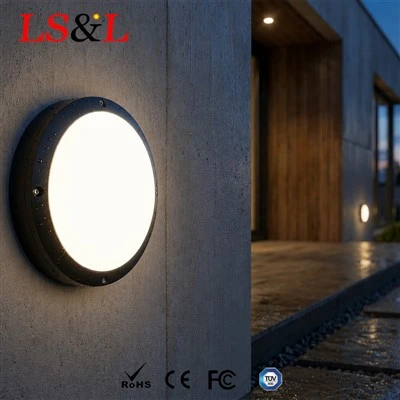
Many buyers overlook power factor when sourcing industrial lighting, focusing only on wattage, IP rating and price. A poor power factor causes extra energy loss, circuit overload and even failed grid inspection. With years of export experience, we have seen many projects delayed and reworked for this very reason. Today we discuss whether power factor matters when purchasing led bulkhead lamp.
What Is Power Factor
Simply put, power factor indicates how efficiently a fixture uses electricity. It ranges from 0 to 1; the closer it gets to 1, the less reactive power is wasted. Drivers with low power factor feed excessive reactive current back to the grid. One single fixture barely makes a difference, yet hundreds of units installed across a factory create a cumulative burden on transformers and cables. Tender documents for many European and Middle Eastern projects specify PF>0.9. For large-scale factory lighting layouts, include this requirement in your technical specs and confirm the driver design upfront when sourcing round bulkhead light.
Scenarios Where Power Factor Is Critical
Large lighting rollouts: Factories and warehouses with hundreds of fixtures may face utility penalties due to accumulated reactive power.
Markets with strict grid codes: Many countries enforce rules for commercial and industrial loads, and non-compliance prevents final power approval.
Sites running on backup generators: Generators have limited capacity. Low-PF fixtures waste power and reduce the total load the generator can support.
Requirements can be relaxed for small, scattered auxiliary lighting. Still, risks such as cable heating build up over time, even for IP66 bulkhead light fitted along access corridors in bulk installations.
Common Pitfalls to Avoid
Do not rely solely on sample test data. Some suppliers use premium drivers for samples but switch to cheaper components for mass production, dragging down power factor. Request test reports with shipments.
Separate power factor from luminous efficacy. A high PF does not guarantee high lumens per watt; check both metrics independently.
Watch out for unstable input voltage. Cheap drivers suffer sharp PF drops under voltage fluctuations, hurting reliability.
Wrap-up
In short: power factor can be flexible for small, sporadic installs, yet it is a non-negotiable parameter for industrial bulk orders. It does not change how bright the light appears, but it impacts grid safety, compliance and long-term energy costs. Many customers ignore it at the design stage and face costly delays during site acceptance.

If you are finalizing the specification list for an industrial lighting project and need guidance on power factor and driver standards for your target market, send over your project requirements. We will review the specs and suggest compliant lighting solutions.