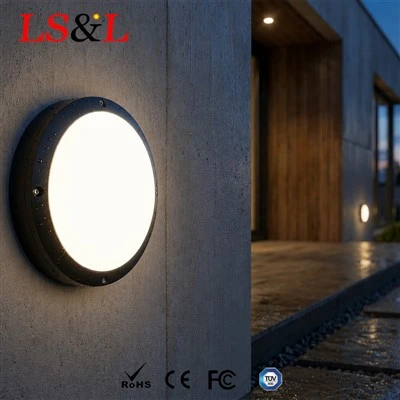
After more than a decade in lighting exports, property and factory clients often ask how lumens differ from watts on a bulkhead. Many still buy by wattage, then find an LED swap does not match the brightness they expected. Here is the difference, and which figure to use when you specify, based on field experience.
Watts Measure Power In; Lumens Measure Light Out
Watts (W) are input power-how much electricity the lamp uses. Lumens (lm) are luminous flux-how much visible light it emits.
At the same wattage, different efficacies can produce very different brightness, so "a 20W bulkhead" does not say how bright it is.
Efficacy Links the Two
Efficacy is often stated as lumens per watt (lm/W): how many lumens you get for each watt consumed. Higher values mean less energy for the same brightness, or more light for the same energy cost.
When a round bulkhead light is used as a replacement, compare the new lamp's lumen output with the old lighting result-not only the old wattage.
Why Wattage Alone Is a Poor Spec
Because LED efficacy is higher than older fluorescent systems, lower wattage can still look brighter. Buying "watt-for-watt" often makes corridors too bright, adds glare, and wastes energy.
Conversely, choosing very low watts without reading lumens can leave the space too dim. Set the target brightness and layout first, then choose enough lumens at a sensible power.
On Site, Distribution and Mounting Still Matter
Lumens are a total; how light reaches the floor depends on distribution, height, and spacing. Adequate total lumens with a very narrow distribution can still leave bright centres and dark edges.
An led bulkhead on a route should be checked against spacing, and where needed proven with a sample-not only by comparing datasheet numbers.
A Practical Comparison
- Watts: electricity use, linked to running cost
- Lumens: light output, linked to whether it is bright enough
- Efficacy: how efficiently one converts to the other
- Selection order: required illuminance → lumens and distribution → power and energy cost
In bulkhead lighting, lumens describe light and watts describe power. Once that is clear, choose LEDs by lumens and efficacy, and use watts to estimate operating cost-far more reliable than wattage alone.
From years of working with factory, property, and export clients, I know the shift from "how many watts" to "how many lumens" makes specification much clearer-and the energy numbers easier to trust.

If you are comparing bulkhead data, share the old lamp wattage and the target area. I can help identify which bulkhead light fits better and align lumens with watts for your layout.