After years in the lighting export trade, the moment a project comes in from the Gulf Coast, Southeast Asian islands, or an African port city, the first question from the client is almost always: "Has your fixture passed salt spray testing? Can it hold up to coastal corrosion?" It's a sharp question, and today I want to break it down properly.
Why Coastal Projects Absolutely Need Salt Spray Testing
Coastal and island air carries a heavy concentration of salt particles, and combined with high humidity and intense UV exposure, this causes ongoing corrosion to a fixture's housing, hardware, and circuit boards. A standard fixture might run fine inland for three to five years, but drop it into a coastal project, and it can start rusting, oxidizing, and even short-circuiting from water ingress within six months. That's exactly why tender documents for roadway LED lighting projects in coastal regions increasingly demand a real salt spray test report - a vague claim of "anti-corrosion" no longer cuts it.
What Salt Spray Testing Actually Measures
Salt Spray Testing places a fixture inside a test chamber that simulates high-salinity, high-humidity conditions by continuously spraying a salt fog solution, then observes whether the housing, screws, heat sinks, and other components show rust, blistering, or peeling within a set number of hours. The industry standard commonly used is Neutral Salt Spray (NSS) testing for 48, 96, or even more continuous hours without corrosion - the longer the duration, the stronger the corrosion resistance.
But the hour count alone isn't enough to go on. What really matters is whether there's a formal report from an independent third-party testing lab - this closed-loop verification is exactly the kind of thing that must be built into a genuine Strict quality control LED engineering lighting system, not something a factory can simply claim on its own.
Core Factors That Determine Salt Spray Resistance
Housing material and surface treatment - Die-cast aluminum housing paired with anodizing or powder coating offers far better corrosion resistance than standard stamped sheet metal.
Hardware material selection - If screws and clips are made from ordinary carbon steel, no matter how good the housing is, rust will start creeping in through these small details first.
Sealing structure design - An IP66/IP67 protection rating combined with quality silicone gaskets effectively blocks salt fog and moisture from reaching the internal circuitry.
All three factors matter equally, which is why more and more buyers shopping for a Smart outdoor light solution, beyond checking dimming and daylight-sensing features, specifically confirm whether the housing material and sealing structure have been optimized for coastal climates.
Real Feedback Speaks Louder Than Any Spec Sheet
We once worked with a client on a coastal project in Oman who had previously used fixtures from another factory. Within a year, the housings were blistering and peeling extensively, and the screws had rusted solid to the point they had to be cut off for repairs - rework costs ended up exceeding the price of the fixtures themselves. After switching to salt-spray-tested products, the housings were still in excellent condition more than two years later. That kind of real-world field feedback is more convincing than any spec sheet.
How We Handle This
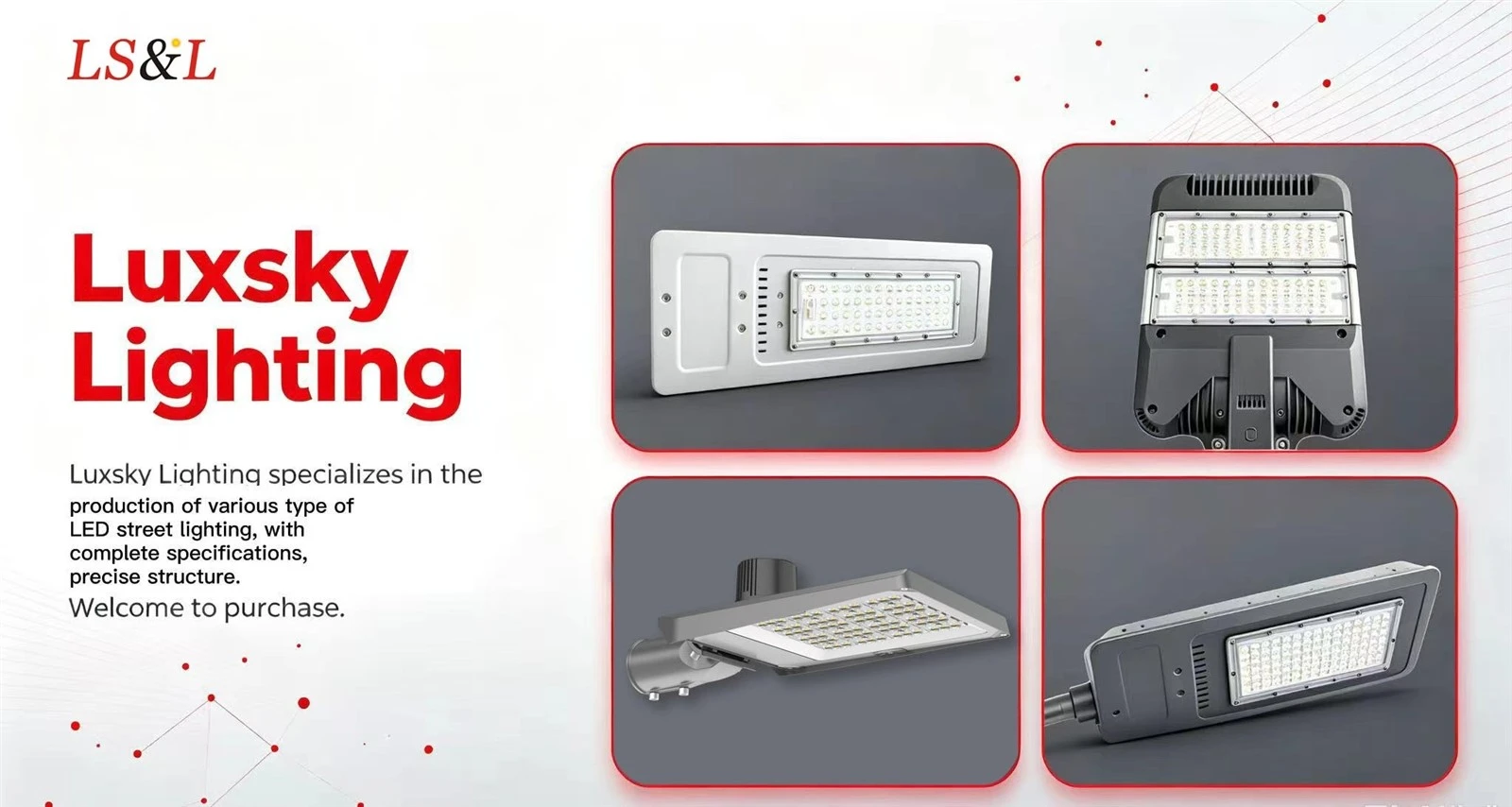
For coastal and high-salinity projects, all of Luxsky Lighting's roadway LED lighting products are designed from the start with die-cast aluminum alloy housings and anti-corrosion surface treatments, and are certified through Neutral Salt Spray testing by independent third-party labs, with test durations well beyond the industry baseline. Our Smart outdoor light series also features reinforced sealing to ensure stable operation even under prolonged exposure to high humidity and salinity.
If your project is located along a coastline, on an island, or in a high-humidity climate, I'd strongly recommend asking your supplier for an actual salt spray test report and lab credentials - don't settle for a verbal promise. Feel free to send us your project location and installation environment; we're happy to help you evaluate the best anti-corrosion solution at no cost.
Conclusion
Salt spray testing is a hard benchmark for whether a fixture can truly hold up in coastal climates, and it's an area where many suppliers cut corners. Luxsky Lighting stands behind Strict quality control and LED engineering lighting standards, with every product genuinely salt-spray tested to ensure long-term, corrosion-free performance on coastal projects. If you're sourcing a reliable LED street lighting supplier for a coastal-region project, reach out to us for test reports and a quote - let's give your project peace of mind.