When talking with clients who come from a grid design or municipal engineering background, I often get a very technical question: "Has your driver been through harmonic current testing? Does it meet IEC 61000-3-2?" Honestly, whenever this question comes up, I know right away - this is a client who genuinely understands electrical engineering, and exactly the kind of client worth taking seriously. Let me walk you through harmonic current from an old trade hand's perspective.
What Harmonic Current Is, and Why Street Lighting Projects Should Care
Simply put, harmonic current is distorted current at frequencies deviating from the fundamental frequency, generated by electronic devices due to their non-linear load characteristics. An LED driver is essentially a switch-mode power supply, and if poorly designed, it can easily generate significant harmonic current, which - once fed back into the grid - causes a range of problems:
1. Reduces grid power efficiency, increasing line losses;
2. Interferes with other sensitive equipment on the same grid, such as communication devices and precision instruments;
3. Long-term operation can cause transformer overheating, shortening the lifespan of grid equipment.
For a roadway LED lighting project - especially large-scale municipal road lighting powered from a centralized grid - if the driver in every single fixture has excessive harmonic current, the cumulative impact across hundreds or thousands of fixtures on the local grid becomes significant. This is exactly why many municipal tender documents in Europe, the US, and the Middle East now mandate IEC 61000-3-2 harmonic current testing as a required technical specification.
Harmonic Current Testing Reflects the Circuit Design Strength Behind Strict Quality Control
Many clients assume meeting harmonic current requirements is as simple as adding a filter capacitor. In reality, a truly compliant solution needs to be considered from the circuit topology design stage - for example, using an Active Power Factor Correction (APFC) circuit rather than a simple passive filtering approach. This places high demands on a driver manufacturer's R&D capability, and it's a key benchmark we use to judge whether an LED engineering lighting supplier has genuine engineering strength. Before finalizing any product design, we send it to an authoritative third-party lab for harmonic current testing, ensuring the product remains stable and compliant under full load, half load, and other operating conditions - one of the most technically demanding parts of our Strict quality control system.
Harmonic Compliance Working Alongside Smart Features
Many projects now deploy Smart outdoor light systems alongside street lighting, which involve dimming modules. It's worth noting that circuit load changes during dimming - if a driver's harmonic current control isn't stable across different dimming ratios, harmonics can exceed limits under low-load operation. When testing smart street light solutions, we specifically cover harmonic current data across the full 0-100% dimming range, ensuring the product remains stable and compliant in every usage scenario.
Recommendations for Buyers
Explicitly include IEC 61000-3-2 harmonic current testing requirements in tender or procurement documents;
Request harmonic current test reports issued by a third-party lab from your supplier;
For projects involving dimming features, confirm whether harmonic data remains compliant across different dimming ratios;
For large-scale, centrally powered projects, prioritize products with greater harmonic control margin to reduce the risk of grid impact.
Conclusion
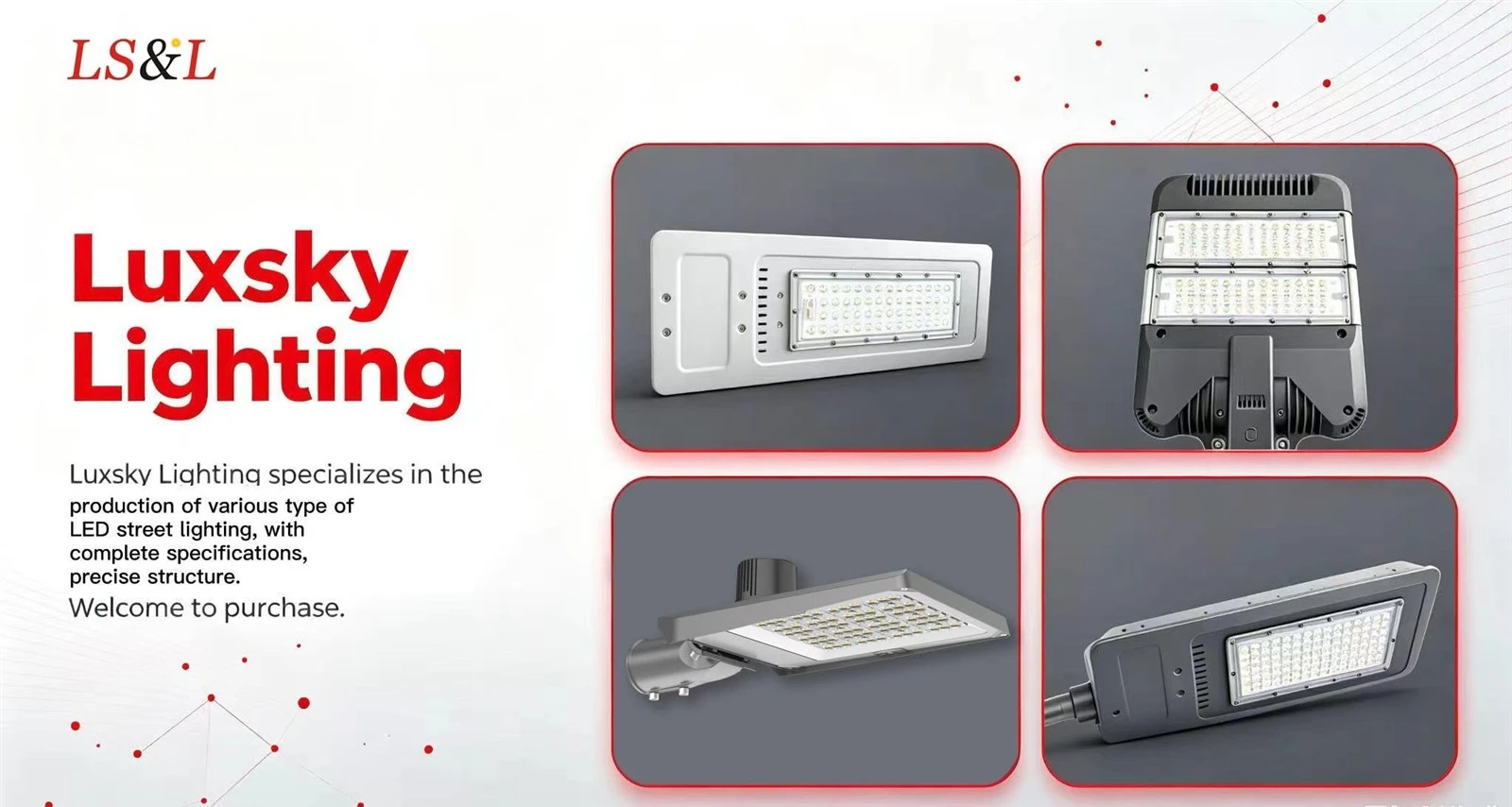
Harmonic current testing might seem like an obscure technical spec, but it directly affects a street lighting project's long-term impact on the grid and its overall operating stability. Every driver in our Luxsky Lighting LED street light product line passes IEC 61000-3-2 harmonic current testing, backed by third-party test reports, all under our rigorous quality control standard.
If your project has demanding electrical performance requirements, feel free to contact Luxsky Lighting - we can provide complete test data and a tailored product solution.