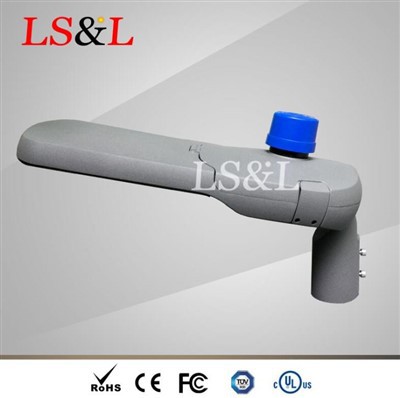
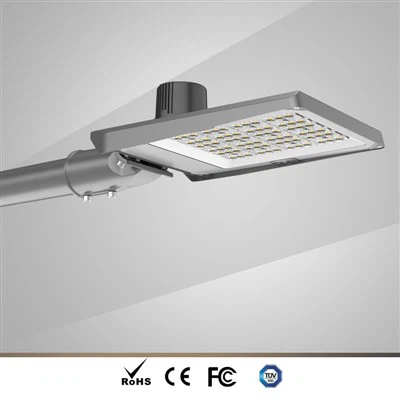
In municipal roads, industrial parks, and highway lighting projects, LED street light installation is not just a simple fixture mounting process. It is a system-level engineering task involving civil works, electrical wiring, structural safety, and lighting design. Installation quality directly affects lighting performance, service life, and long-term maintenance costs.
In real projects, many buyers focus on one key question: How are LED street lights installed?
Because installation quality largely determines the stability and long-term performance of the entire lighting system.
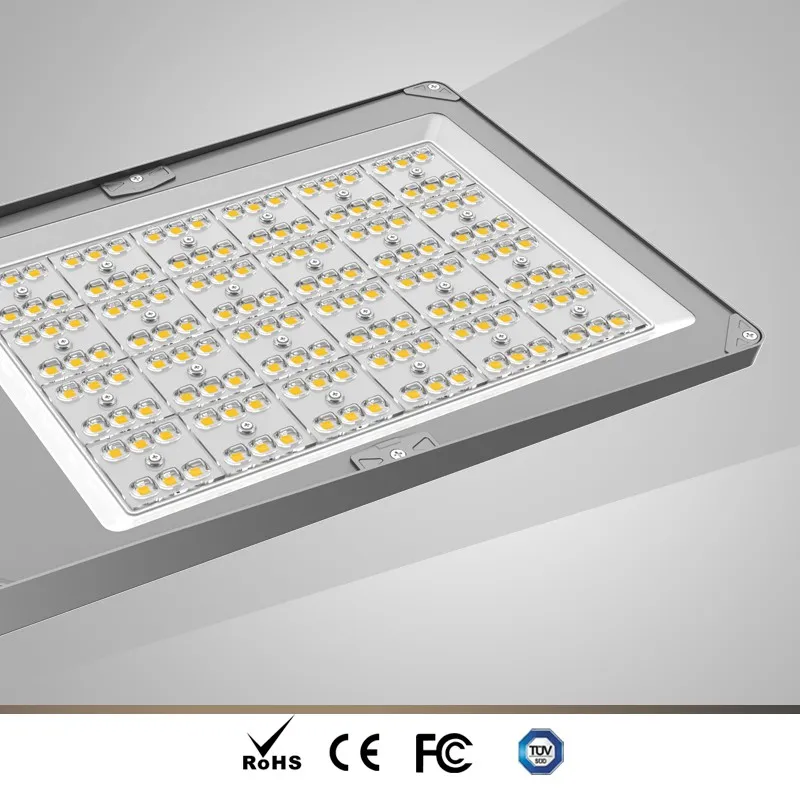
Pre-installation preparation
Before installing LED street lights, proper preparation is essential to ensure the system meets design requirements.
First, site assessment is required, including road width, pole spacing, and lighting requirements. Poor design can significantly affect uniformity, with industry experience showing illuminance variation may reach 30%–50% if spacing is incorrect.
Second, the power system must be checked, including voltage stability and distribution capacity. Unstable voltage may reduce LED driver lifespan by over 20%.
Finally, the pole foundation must meet engineering standards, especially wind resistance requirements. Outdoor projects typically require resistance to wind levels of 10–12 to ensure structural stability under extreme weather conditions.
How LED street lights are installed
LED street light installation follows a standardized engineering process with four main steps:
1. Foundation construction and pole installation
Concrete foundations are constructed and fully cured before pole installation. The pole is then aligned and fixed to meet structural requirements, ensuring stability under wind loads of 10–12 levels to prevent tilting or collapse in strong winds.
2. Cable laying and electrical connection
Power cables are routed from the distribution system into the pole, followed by wiring and insulation treatment. Waterproof and sealing measures are critical to prevent leakage, short circuits, or safety risks during long-term outdoor operation.
3. Fixture installation and angle adjustment
After electrical connection, LED street lights are mounted on the arm and adjusted according to road conditions. Main roads usually require wider beam angles, while industrial areas focus on more concentrated lighting to improve efficiency and uniformity.
4. Power-on testing and system commissioning
Final testing includes brightness checks, current stability evaluation, and fault inspection to ensure all fixtures operate correctly. System tuning further optimizes lighting performance to meet design and real-road requirements. Industry data shows that proper installation can improve overall lighting efficiency by 15%–25% while significantly reducing maintenance frequency.

Key factors affecting installation performance
Installation results depend not only on workmanship but also on product engineering design.
IP rating determines outdoor adaptability. IP65 is suitable for general roads, while IP66 or IP67 is recommended for heavy rain or coastal environments.
Driver quality directly affects stability under voltage fluctuations, significantly reducing failure rates when high-quality components are used.
Thermal management is also critical. Die-cast aluminum housings with fin-style heat sinks effectively reduce heat buildup and slow lumen depreciation in high-temperature conditions.
In long-term operation, high-quality LED street lights can last 50,000–100,000 hours, while low-quality products may experience more than 30% lifespan reduction in harsh environments.

FAQ
Q1:How are LED street lights installed?
They are installed through foundation construction, electrical wiring, fixture mounting, and final system testing.
Q2:How long does installation take?
Small roads may take a few hours, while large municipal projects can take days or weeks.
Q3:Do LED street lights require professionals for installation?
Yes. Due to high-voltage electricity and structural engineering requirements, professional teams are necessary.
Q4:What happens if installation is not done properly?
It may lead to uneven lighting, higher failure rates, and reduced product lifespan.
LED street light installation is a system engineering process involving foundation work, electrical wiring, fixture installation, and final testing. Each step plays a critical role in ensuring lighting performance and long-term system reliability.
For municipal and industrial lighting projects, proper installation not only affects illumination quality but also determines lifecycle cost and operational stability. Therefore, installation standards are just as important as product selection.
If you are looking for reliable LED street lighting solutions,welcome to comtact us for more details. Please click https://www.luxsky-light.com/led-street-lights/.