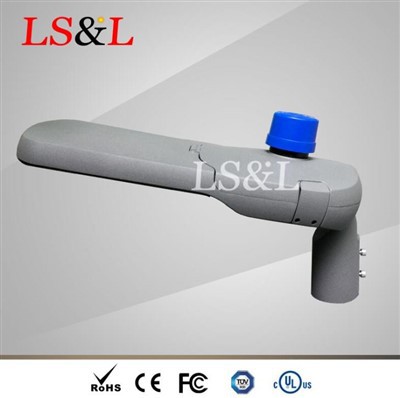
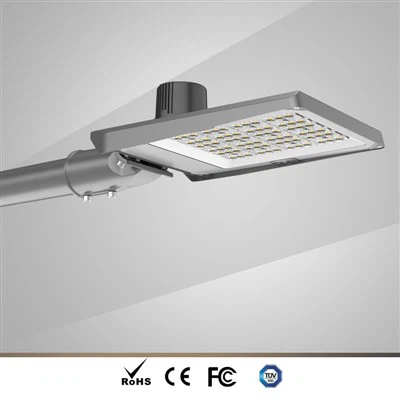
In municipal roads, industrial parks, and highway lighting projects, street light mounting height is a key factor that directly affects lighting uniformity, coverage, energy efficiency, and road safety.
In real engineering practice, many buyers ask:What is the standard mounting height for street lights?
However, there is no single fixed standard. The height must be determined based on road type, fixture power, and optical design.

Standard mounting height ranges
Different road types require different mounting heights:
- Residential areas / community roads
Typical height: 3–6 meters
Power range: 30W–80W
Used for basic safety lighting with limited coverage needs.
- Urban roads / municipal streets
Typical height: 6–12 meters
Power range: 80W–200W
Designed for balanced illumination and uniform light distribution.
Highways / industrial roads
Typical height: 10–15 meters
Power range: 150W–400W
Requires long-distance coverage and high-lumen output.
- Industry reference data:
For the same lighting conditions, every 1 meter increase in pole height can improve coverage by approximately 5%–8%, depending on optical design.
Key factors affecting mounting height
Street light height is not a fixed value but depends on multiple engineering factors.
Road width is the primary factor. Wider roads require higher poles to ensure proper coverage.
Illuminance requirements (lux levels) also influence height selection. Higher-standard roads typically require optimized height for uniform light distribution.
Luminaire power and luminous flux are also critical. Higher wattage allows effective illumination from greater heights.
Beam angle design and pole spacing further affect the final mounting height decision. Poor design may lead to uneven lighting or excessive brightness variations.
Improper design may cause lighting uniformity deviations of 30%–50%.
How to choose the correct mounting height for projects
For residential roads, 3–6 meter poles are usually sufficient, focusing on safety and comfort lighting.
For urban main roads, 6–12 meter poles are commonly used to ensure uniform illumination and efficient coverage.
For highways and industrial zones, 10–15 meter or higher installations are typically required for wide-area lighting.
Proper matching between pole height and fixture performance is essential. Incorrect pairing may lead to under-lighting or energy waste.
Proper design can reduce energy waste by 20%–35%, while poor design may increase maintenance costs by 25%+.
In procurement, working with an experienced LED street light supplier China or a reliable LED street light factory is important, as they can provide optical design support and project-based recommendations.

FAQ
Q1:What is the standard height of street lights?
Typically between 3–15 meters depending on road type and lighting requirements.
Q2:How tall are LED street lights on highways?
Usually 10–15 meters or higher.
Q3:Does street light height affect brightness?
Yes. Higher mounting increases coverage but requires stronger optical design.
Q4:What is the best height for LED street lights?
There is no fixed value; it depends on road width, power, and lighting design.
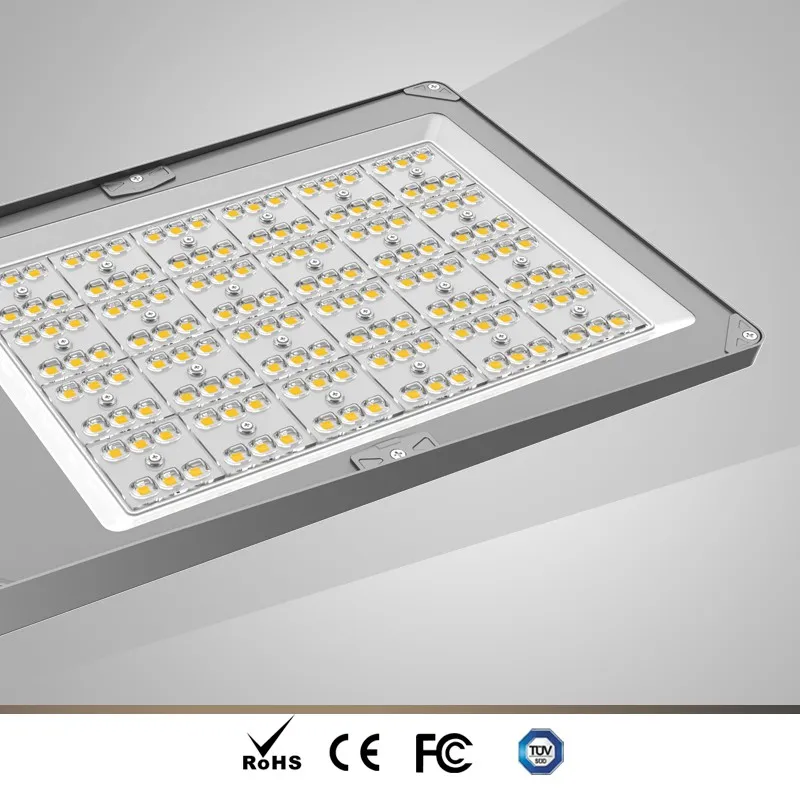
Street light mounting height is not a fixed standard but a result of road conditions, fixture performance, and lighting design.
For municipal and industrial projects, proper height selection improves lighting uniformity, reduces energy consumption, and lowers maintenance costs.
Choosing an experienced LED street light supplier China or a reliable LED street light factory ensures better engineering support and optimized project performance.
If you are looking for reliable street lighting solutions,welcome to contact us for more details. Please click https://www.luxsky-light.com/led-street-lights/.