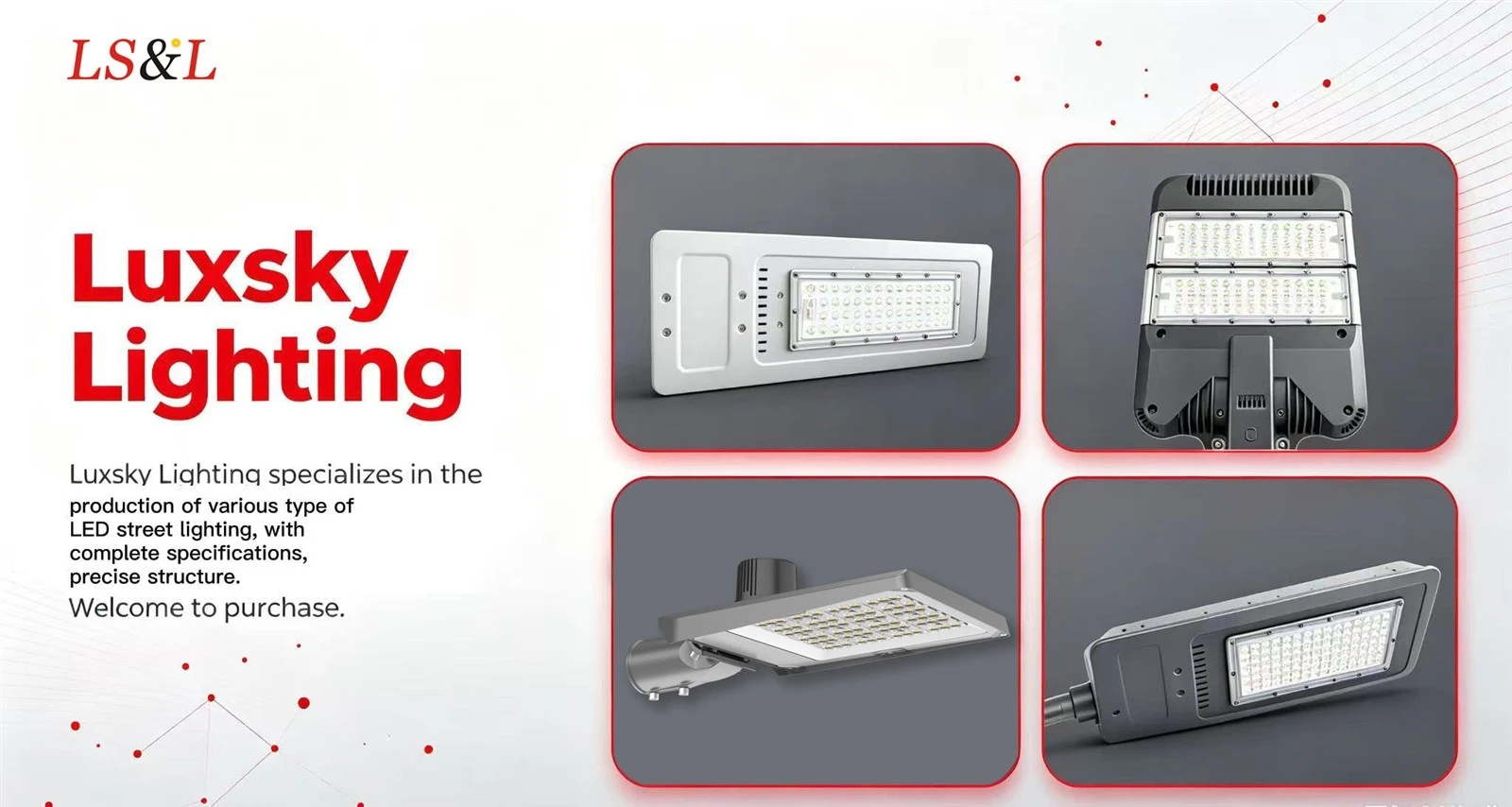
As an LED street light manufacturer with more than twelve years of export experience, I have supplied lighting to logistics parks, ports and industrial zones in the Middle East, Southeast Asia, Africa and South America. Many buyers ask me for a quote based only on the number of poles and the wattage. I always suggest one extra step first: a lighting simulation. It costs little, and it often saves a lot of money and trouble on site. Here is how I use it with my customers.
Why Simulation Matters Before You Order
A drawing can look perfect and still leave dark gaps, glare or wasted light once the poles are installed. Fixing this after installation means moving poles, changing fixtures and losing time. Simulation lets you see the problems on screen first. Software such as DIALux or Relux calculates lux levels, uniformity and glare for your exact site, so you can compare layouts before spending any money.
What You Need to Prepare
A good simulation starts with good data. Send your supplier the site plan in CAD or PDF, road widths, building positions, planned pole heights and the lighting target for each zone. For example, trunk roads may need 15 to 30 lux, docks 100 to 200 lux and parking areas 20 to 50 lux. The more accurate your input, the more reliable the result. Good LED street lights for logistics parks should come with real IES files, because the simulation is only as honest as the photometric data behind it.
What to Check in the Results
Look at four things: average illuminance, uniformity ratio, glare and shadow areas. Dark patches between poles, shadows behind parked trucks and bright spots near the gate are all easy to spot on the false-color map. A driver in a high truck cab can be dazzled, even for two seconds, so glare control should be checked just as carefully as brightness.
Optimize the Configuration, Not Just the Wattage
Simulation shows you what to change. You can test different pole heights, spacing, beam types and wattages in minutes. Often, a better beam pattern or a slightly higher pole lets you reduce the number of fixtures, or lower the wattage from 200W to 150W, while keeping the same uniformity. This saves on poles, cabling and electricity. Quality LEDs already use 50% to 70% less power than old metal halide lamps, and a well-optimized layout adds more savings, especially with dimming and motion sensors.
Choose a Supplier Whose Data and Products Match
A simulation result is only useful if the real fixture performs the same way. Beware of suppliers who give fake IES files or exaggerated lumen figures. Replacing one light on a 10-meter pole means hiring a lift, closing a lane and losing working hours, so I suggest an LED lighting supplier with 5 year warranty and a real factory behind it. As an LED lighting OEM manufacturer, we also customize wattage, beam angle, color temperature and branding for project buyers and distributors. Our quality standard includes:
- Branded LED chips and drivers, 100% aging test before packing
- Die-cast aluminum housing, IP66 / IK08, 6kV to 10kV surge protection, CE and RoHS certified, with real IES files and test reports for DIALux design
When a customer asks me for a 5-year warranty, I can say yes with confidence, because we test before shipment, not after complaints.
Conclusion
Lighting simulation helps you find dark spots, reduce glare, cut fixture numbers and avoid costly changes on site. Our LED street lights are built with strict quality control, so their real performance matches the simulation, year after year.
If you are planning a new logistics park or upgrading an old one, choose Luxsky Lighting. Contact us today for a free DIALux layout and a competitive quote.