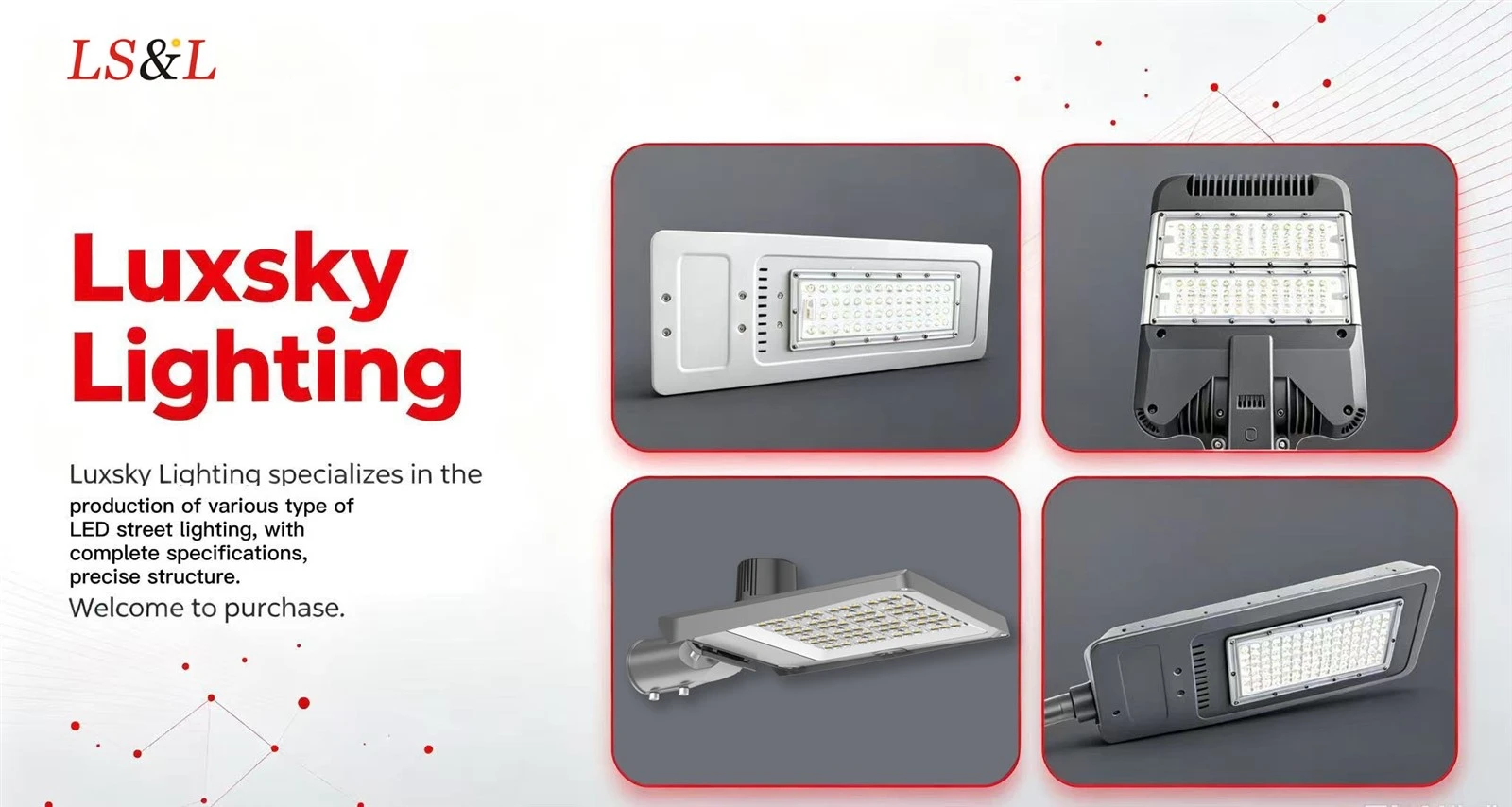
After more than twenty years in foreign trade, I have handled quite a few logistics-park lighting projects. Many clients ask: "What light distribution angle should we choose for the street lights?" If the optics are wrong, even adequate power and lumens can still result in a bright center with dark sides, or light wasted on ineffective areas. The light distribution angle directly affects road uniformity and actual lighting performance. Drawing from practical experience, here is how to choose properly for logistics parks.
First: Consider Road Width and Pole Placement
Logistics park roads commonly use single-side or double-side pole arrangements. For narrower roads (6–8 m), medium distribution (such as Type II or similar bat-wing optics) is usually more suitable and can effectively cover the opposite side. For wider roads or when one side needs priority illumination, asymmetric distribution can direct more light onto the pavement. Choosing an experienced LED street light manufacturer can provide more accurate recommendations based on actual road width and layout.
Common Distribution Types and Suitable Scenarios
Symmetric/wide distribution: Suitable for wider roads or areas needing larger coverage, but care must be taken to avoid an overly bright center.
Bat-wing distribution: Commonly used in roadway lighting; it improves pavement uniformity and reduces dark zones on both sides.
Asymmetric distribution: Ideal for single-side pole placement; it directs more light onto the road surface and reduces wasted spill light outside the roadway.
Quality products from a capable LED lighting OEM manufacturer usually offer multiple optical options, making it easier to match different road sections flexibly.
Uniformity Matters More Than Simply "Being Bright"
Logistics parks have large trucks and forklifts operating at night; large bright-dark contrasts on the road can affect judgment. Good optics maintain coverage while improving overall uniformity, giving drivers a more comfortable field of view. Pursuing high lumens while ignoring distribution often leads to disappointing results.
Consider Pole Height and Spacing Together
Once the distribution angle is selected, it must still match pole height and fixture spacing. Poles that are too high or spacing that is too wide can still create dark zones even with suitable optics. Experienced suppliers will calculate these factors together.
Stability and Long-Term Performance Must Not Be Overlooked
Logistics parks have high dust levels and strong vibration. Long-term light decay can degrade the actual optical performance. Selecting an LED lighting supplier with a 5-year warranty provides better assurance of optical stability, heat dissipation, and protection, helping the initially chosen distribution last longer.
Conclusion
Choosing the light distribution angle for LED Street Lights in logistics parks requires consideration of road width, pole layout, and uniformity needs-not a fixed standard. Selecting a reliable LED street light manufacturer and a capable LED lighting OEM manufacturer-especially an LED lighting supplier with 5 year warranty-makes the selection more dependable. Luxsky Lighting specializes in LED street lights with stable quality and solid after-sales support. If you are selecting optics for a logistics park, feel free to contact us directly for tailored recommendations and LED street light solutions-reliable products that help you get the road lighting right.