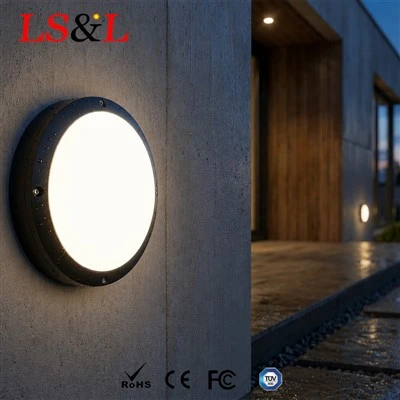
After more than a decade in lighting exports, factory clients often ask how industrial bulkheads behave where temperatures swing hard. Cold-store corridors, zones near ovens, and outdoor day–night cycles all stress the fitting. Here is what bulkheads face in variable-temperature areas-and how to specify them more stably-based on field experience.
Temperature Swing Drives "Breathing" and Condensation
When the day shift or nearby plant heats the housing, internal pressure rises; when night falls or cold air rushes in, pressure drops. Fine gaps can draw in moist air, which then mists on the cover.
If an LED bulkhead light in a swing zone has only average sealing, fogging can return again and again-and is often mistaken for a leak.
Seals and Housings Age with Expansion and Contraction
Gaskets harden and crack under repeated hot–cold cycles, so protection drifts downward. Outdoor or vestibule points add sun and rain on top of the swing, and ageing is usually faster.
Read the claimed ambient operating range and whether seal materials suit that band-not laboratory figures at comfortable room temperature alone.
Drivers and Cold Start Are More Sensitive
High temperature shortens driver life; low temperature can affect start-up and how quickly light output climbs. Points hard against a heat source or at a cold-store doorway should be selected on local ambient-not on the hall average.
When an LED bulkhead is the standard lamp for swing zones, favour comfortable thermal design and a stable driver, and build inspection into the maintenance cycle.
Installation and Ingress Protection Still Matter
Temperature change does not remove the need for the right IP rating and installation quality. Proper cable-entry sealing and avoiding water on the top of the fitting reduce how much moisture can be "breathed" into the cavity.
On routes that are both dusty and thermally variable, a well-sealed option such as an IP65 bulkhead light can lower the chance that dust and damp enter together.
Practical Points for Variable-Temperature Zones
- Select on the real high–low range, not a mild indoor average
- Give weight to seal materials and cover construction
- Separate condensation mist from true water ingress
- Avoid poor placement hard against extreme heat or a cold blast
- Add fogging and gasket condition to patrol checks
Industrial bulkheads can run stably in areas with temperature changes when operating range, sealing, and the driver match the site. The swing itself cannot be removed, but moisture intake from breathing and early ageing can be reduced.
From years of working with factory and export clients, I know swing-zone lighting should be thought through at the daily extremes-not at the comfortable average. When extremes are in the specification, complaints drop sharply.

If your workshop or storage area sees clear temperature swings, share the range and mounting positions. I can help identify which bulkhead light fits better and assess risk under thermal cycling.