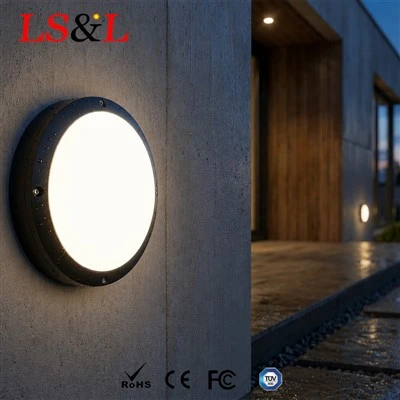
Many overseas engineering clients ask which housing materials offer the best durability for bulkhead lights in harsh industrial settings. With years of experience exporting lighting, I have seen many projects run into trouble because of poor material selection. Fixtures may meet stated specs on paper, yet corrode or crack after just a few months. Ingress protection ratings are only the baseline; the material of housings, diffusers and seals directly determines the fixture's long service life.
Comparison of common housing materials
Two mainstream housing options are powder-coated aluminium and modified PC. Aluminium offers high rigidity and strong impact resistance, ideal for workshops with frequent forklift traffic. However, standard coated versions will rust quickly once the coating is scratched in salt-laden or chemical vapour environments. Modified PC housings are lightweight and resistant to acid and alkali, working well in humid and chemical workshops. The downside is that low-grade PC turns yellow and brittle under prolonged sunlight. When sourcing an LED bulkhead light, match the housing material to on-site corrosion risks.
How to choose the right diffuser material
Diffusers are usually made of PC or acrylic. Acrylic boasts high light transmittance but poor impact and chemical resistance, so it is not recommended for industrial use. For industrial applications, UV-stabilised modified PC is the preferred choice. It features good toughness and scratch resistance and is less likely to shatter. For factory sites with long-term outdoor exposure, an outdoor bulkhead light must come with UV-resistant PC diffusers to slow yellowing and maintain consistent light output.
Sealing gaskets should not be overlooked
Most buyers focus only on housings and neglect gaskets, which are the core of waterproof and dustproof performance. Ordinary rubber hardens and cracks rapidly under high heat, oil contamination, or salt spray. For harsh environments, choose food-grade silicone or EPDM gaskets. These materials resist hydrolysis and ageing, and preserve the protective performance of an IP65 bulkhead light or IP66 bulkhead light to stop moisture and dust ingress.
Material combinations for different harsh conditions
Coastal salt-spray sites: modified PC housing + UV-stabilised PC diffuser + EPDM gasket for rust and corrosion resistance. Workshops with heavy forklift activity: thick powder-coated aluminium housing + high-impact PC diffuser for superior shock resistance. Food washdown and chemical steam workshops: silicone gaskets are essential, and corrosion-prone housing materials should be avoided.
Key tips to avoid mistakes
Do not judge quality by price alone. Not all PC material is equal; virgin material performs far better than recycled material, which becomes brittle within months. Ask for material certificates and salt spray test reports for samples to verify compliance with your project requirements.
Final thoughts
No single material works for all harsh industrial environments. The selection depends entirely on site conditions. Aluminium housings are preferred where impact risks are high, modified PC for corrosive and humid areas, and EPDM or silicone for reliable sealing.

Share your site environment details, and I can recommend fixtures with suitable material configurations, provide specifications and quotations, and help you reduce failures caused by premature ageing.