

Knowing the theory behind color temperature is helpful, but choosing the right product in real projects can be challenging. With so many options available, it is easy to select a light that does not fit the purpose of the space. The best way is to start with a clear, function-first approach that guides every decision.
The first step is to define the main function of the space. Ask yourself what the lighting is really for. Is it meant to help people work, to make them relax, or to improve safety and visibility? Once the purpose is clear, you can match it with the most suitable color temperature range. After that, consider the surroundings and the materials being illuminated to fine-tune your choice for the best overall effect.
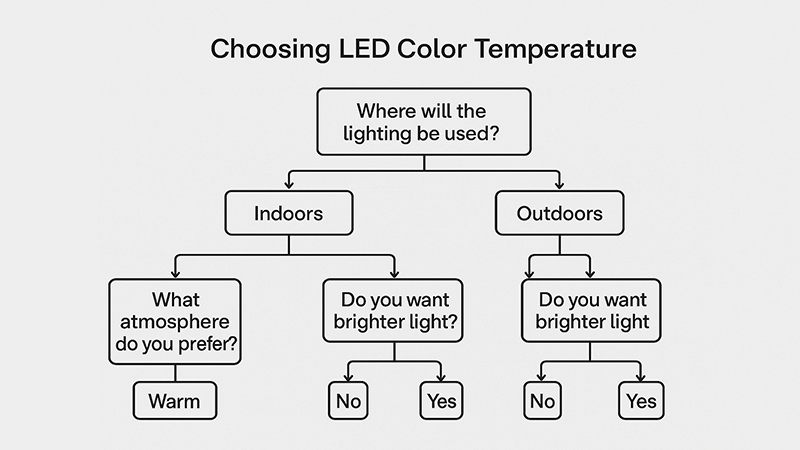
At Luxsky Lighting, we often begin every project with the same question: What is the main function of this space? Understanding that single point makes all the following choices much easier and more accurate. Below is the simple process we use when helping our clients select the right LED lighting solution.
Step 1: Define the Primary Function
Before looking at any specifications, think about what the lighting needs to achieve. Is it for safety in a parking lot or pathway? Is it to bring out architectural details on a building façade? Or is it to create a comfortable and relaxing mood on a restaurant patio? Being specific about the goal helps narrow down your options and ensures the final lighting design truly supports the space's purpose.
Step 2: Match the Function to the Color Temperature Range
Here is a general guide that connects lighting functions with their ideal color temperature ranges:
| Application | Recommended CCT (Kelvin) | Purpose |
|---|---|---|
| Security & Safety | 4000K – 5000K | Provides maximum visibility and clarity |
| Task & Work Areas | 4000K | Offers focused and clear light that reduces eye strain |
| General Ambiance & Welcome | 3000K | Creates a comfortable and inviting atmosphere |
| Accent & Architectural | 2700K – 3000K | Highlights textures and adds visual depth |
By matching the function with the right range, you ensure that the lighting supports both performance and mood.
Step 3: Consider the Materials and Colors
Once the color temperature range is chosen, think carefully about what the light will interact with. A 3000K warm white light brings out the natural tones in brick, wood, or warm paint colors, making them appear richer and more welcoming. A cooler 4000K light emphasizes the sleekness of materials like steel, glass, or concrete, giving a clean and modern look. This final step ensures that the lighting complements the environment rather than competes with it.
Choosing the right color temperature is not only about numbers on a specification sheet. It is about understanding the purpose of the space and how light shapes its character. When these elements are aligned, the result is a lighting design that looks beautiful, functions perfectly, and enhances every detail of the environment.
At Luxsky Lighting, we always guide our clients through this process to make selection simple and effective. Whether you are designing for a cozy restaurant, a modern office, or an outdoor security area, the right color temperature can completely transform how people experience the space.

Choosing Luxsky Lighting means choosing outdoor flood lights you can trust for both performance and durability. If you are interested, please click https://www.luxsky-light.com/led-flood-light/led-modular-flood-lights/3030-led-modular-flood-lights.html for more details.





