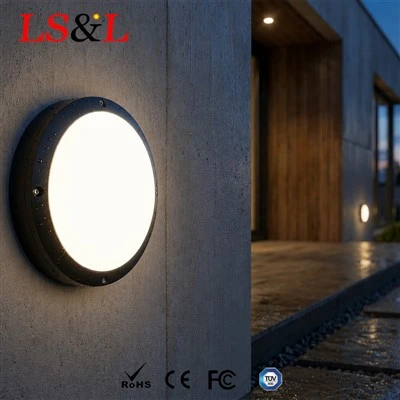
Glare is a common headache during the acceptance stage of workshop lighting projects. Harsh light causes eye strain for workers, cuts productivity and may even lead to safety risks. Many clients only notice excessive glare after installation, which brings costly rework. Drawing on years of industrial lighting project experience, we will share practical ways to reduce glare from led bulkhead light.
Pick Models with Anti-Glare Design First
The optical design of the fixture itself is the fundamental solution for glare control. Standard bare light sources emit light directly and tend to be dazzling. Versions fitted with diffusers, louvers or anti-glare lenses soften and redistribute light to avoid direct strong light hitting eyes. For machining and assembly zones, we often recommend oval bulkhead light. It features an optimized beam angle and even light distribution with fewer hotspots. Always ask for a UGR report before purchase. For industrial work areas, UGR below 22 is generally suggested.
Set Proper Mounting Height and Spacing
Even high-quality fixtures create glare if installed improperly. Glare becomes severe when lights are mounted too low and aligned at workers' eye level. For work zones, install fixtures higher to cast light downward instead of horizontally toward people. Keep reasonable spacing between lights to prevent over-bright spots from overlapping. Do not overcrowd lights in narrow spaces. Balance lux level and visual comfort. This rule also applies when you use outdoor bulkhead lights for exterior walkways to avoid blinding light at night.
Adjust Mounting Angle to Avoid Main Line of Sight
Many installers fix fixtures in place without fine-tuning angles, and this simple tweak delivers great results. Tilt the fixture slightly downward instead of letting it shine straight out, so the light source stays out of workers' regular sightlines. Mark operator viewing directions in advance for fixed workstations such as assembly lines. If the installation is already finished and fixture replacement is not feasible, adjusting angles is the fastest fix.
Other Often-Overlooked Points
Avoid overly high colour temperature. 5000K cool white is more likely to feel harsh; 4000K is preferred for detailed work areas.
Keep the cover clean. Dust and grease distort light output, create uneven illumination and worsen glare.
Check material durability. Workshops usually have dust and moisture. Yellowing or degraded covers will ruin the optical performance over time.
Wrap-up
Glare control relies on a combination of optical selection, layout planning and on-site adjustment. Many buyers only focus on lumens and IP rating while ignoring UGR, which causes trouble at final inspection.

If you are designing workshop lighting and are concerned about glare, or need optical specification sheets, send us your site drawings and working conditions. We can assess your layout and recommend suitable lighting solutions.