After more than a decade in lighting exports, factory clients often ask why industrial buildings put so much weight on uniform lighting. On many sites the average level is not low-the problem is bright patches next to dark ones. Here is why even light matters in industrial buildings, based on field experience.
Dark Zones Affect Movement and Task Safety Directly
Clear shadows on routes, stairs, and loading doors raise the risk of trips, collisions, and misjudged distance. Uniform lighting reduces the trap of "very bright under the lamp, very dark two steps away."
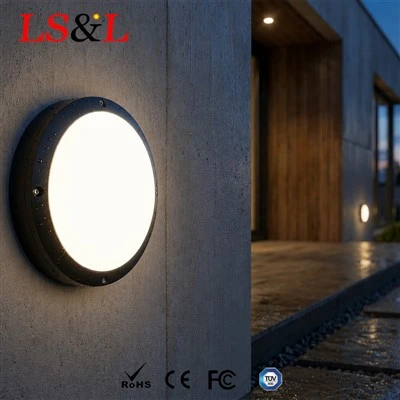
A round bulkhead light spaced sensibly along a path often removes mid-corridor dark bands more effectively than oversized power at single points.
Uniformity Supports Steady Work Performance
In strongly contrasting light, people adapt again and again, tire faster, and read signs, gauges, and floor obstacles less reliably. When distribution is even, vision stays continuous and inspection rounds run more smoothly.
That does not mean every surface must share one level-only that unnecessary harsh contrast should be avoided.
It Limits Glare and Wasted Fill Power
To lift the darkest spots, some sites keep raising local wattage. Bright areas then glare more, energy use climbs, and uniformity still does not improve. The better path is to adjust positions, distribution, and reflectance.
An led bulkhead is well suited to putting light on wall edges and turns, working with the main lighting-often more effective than adding more lamps in already bright zones.
Maintenance and Standards Also Rest on an Even Base
Uneven depreciation and delayed lamp replacement recreate dark zones. A uniform design needs patrols and consistent product standards if it is to hold over time.
Where outdoor door zones meet indoor routes, brightness and CCT should not jump sharply, or the space will still feel uneven.
Practical Directions for Industrial Uniformity
- Find dark zones first: mid-corridor stretches, column shadows, turns, vestibules
- Fix them with spacing and distribution, not watts alone
- Split roles between path bulkheads and high-level main lighting
- Unify CCT and maintenance standards so the scheme does not drift
Industrial buildings stress uniform lighting for safety, efficiency, and lasting visual comfort. Brightness can be measured; uniformity decides whether the space is comfortable and safe to move through.
From years of working with factory and export clients, I know industrial lighting can live with a slightly conservative average level-what hurts is on–off contrast. When uniformity is right, complaints and hazards both fall.

If you are improving the light environment in a plant, share where the main dark zones are. I can help identify which bulkhead light fits better and improve uniformity starting with path fill lighting.