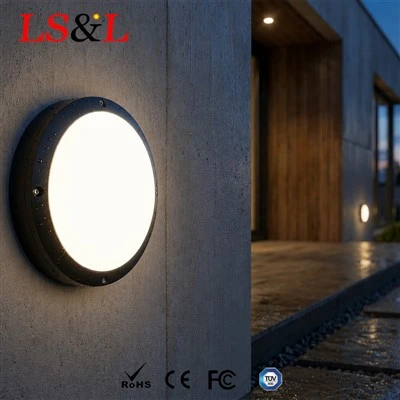
Many overseas buyers only check whether backup batteries are fitted when ordering emergency lights, without verifying runtime after a power failure. This often leads to failed fire inspections and costly rework. With years of export experience, I have handled many such cases. Today we discuss how long LED bulkhead lights should run in emergency mode once mains power cuts out.
Regional Baseline Runtime Standards
There is no single global standard; the required duration is governed by local fire codes. Most North American projects follow NFPA 101, with a minimum of 90 minutes for general factories. EU sites commonly require 60 minutes for standard workshops, while high-risk sites in the UK, such as chemical plants, call for 3 hours. Many regular aisle projects adopt round bulkhead light as integrated emergency units, with battery packs matched to the target market's runtime rules. Note that the requirement applies to sustained minimum illuminance for the whole period, not just bright output at the very start.
Selection Based on Site Risk Level
Low-risk warehouses and simple assembly zones allow fast evacuation, so a 90-minute unit meets most international requirements. High-risk facilities, including chemical plants, energy storage zones and heavy machinery workshops, need extra time to shut down equipment and handle hazards. These sites require 3-hour backup runtime. Extended underground escape routes also benefit from longer emergency duration. For damp and dusty industrial environments, many buyers choose emergency-rated IP66 bulkhead lights. Its sealed battery compartment delivers stable performance under harsh working conditions.
Common Specification Pitfalls
Some suppliers only list battery capacity without stating end-of-discharge illuminance, which creates hidden risks. Low-cost samples may shine brightly for the first half hour and dim sharply afterwards, falling below the minimum lighting threshold required for inspection. Always confirm the fixture maintains compliant floor-level brightness throughout the full emergency cycle. Also distinguish between maintained and non-maintained emergency modes. They affect battery drain and runtime calculation differently, and should be clearly defined in datasheets.
Battery Maintenance and Service Life
Emergency backup batteries have limited cycle life, whether lithium or NiCd types. Continuous float charging and high ambient temperatures accelerate degradation. After several years, actual runtime will drop below the rated value. Compliant sites require short monthly function tests and a full discharge test once a year, with records kept for fire inspectors. If units will be stored for a long time before installation, re-test battery performance before shipment.
Datasheet and Specification Tips
Do not simply mark fixtures as "emergency ready" in technical documents. Clearly state emergency runtime, switch-over delay, end-of-period illuminance, battery type, test standards and relevant certifications. Prepare separate quotations for different markets, instead of using one battery solution for all regions, to avoid compliance issues.
Wrap-up
The required runtime for emergency lights starts with local fire codes, then adjusts according to site risk. Ninety minutes is the widely accepted baseline for general factories, while high-risk facilities need a 3-hour upgrade. Consistent illuminance across the full emergency cycle and regular testing matter more than chasing longer battery life blindly.

If you are designing factory emergency lighting and are unsure of local runtime requirements, or need guidance on battery selection, send your project details to us. We can prepare compliant specifications for you.