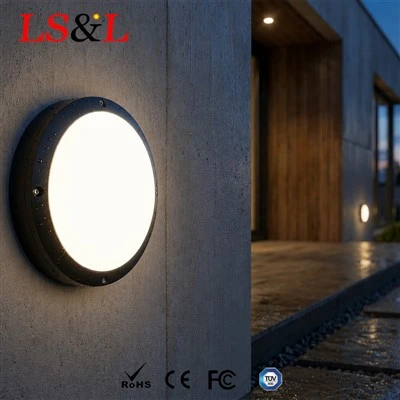
After more than a decade in lighting exports, factory and property clients often ask how maintained and non-maintained emergency bulkheads differ. The names are close; the wrong choice affects daily energy use and how the escape route feels in normal conditions. Here is the difference and how to choose, based on field experience.
Start with Whether the Lamp Is On in Normal Supply
Maintained emergency luminaires stay on under normal power and, on supply failure, continue from battery or an emergency supply for the required duration. Non-maintained luminaires can stay off in normal conditions and switch to emergency output only when mains power fails.
When an LED bulkhead light is used on an escape route, confirm which type the design drawings require-do not rely on a generic "with emergency" label.
Maintained: Daily Lighting and Emergency in One Fitting
On corridors and stairs where one lamp should provide both normal lighting and emergency cover, maintained types are common. Points stay consistent and the ceiling or wall line looks cleaner; the trade-off is that the emergency system is part of daily operation, energy is used in normal hours, and testing must follow code.
When a round bulkhead light is used as a maintained route lamp, check that normal brightness meets passage needs and that emergency mode still meets the minimum illuminance required by the rules.
Non-Maintained: Off or Indicator Only Until Failure
Non-maintained types suit positions that already have separate daily lighting and only need an emergency function added. They can stay off or act as indicators in normal use, which helps save energy, and then strike on supply failure to support evacuation.
If the site has only non-maintained emergency lamps and weak daily lighting, the space can feel too dark in normal hours-daily and emergency lighting need to be designed together.
Industrial and Damp Points Still Follow the Environment
Maintained or not, protection, installation, and testing requirements remain. Humid, dusty, or semi-outdoor points need matching IP and sealing; fully exposed areas should be treated as outdoor duty.
State emergency duration and test button or self-test functions clearly in the specification, and describe environmental needs-such as an outdoor bulkhead light duty-separately so requirements are not blurred in one line.
A Steady Way to Choose
- Follow the fire design and codes: maintained or non-maintained as specified
- Where daily lighting is already adequate: consider non-maintained emergency
- Where one lamp should do both jobs: maintained is common; include daily energy in the calculation
- At handover, test normal mode and emergency changeover separately
The core difference is whether the luminaire stays on under normal supply. Bulkheads can be built either way, but the type must match the escape design and the daily lighting scheme-not a single purchasing habit for the whole project.
From years of working with factory, property, and export clients, I know a wrong emergency type causes more trouble than a slightly wrong wattage. Align drawings and codes first, and later testing is far more likely to pass.

If you are choosing maintained or non-maintained emergency bulkheads, share mounting positions and design requirements. I can help identify which bulkhead light fits better and separate the two types clearly.