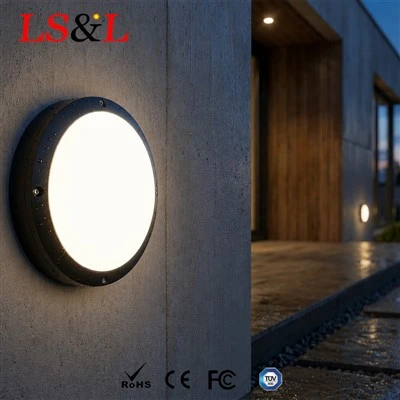
Many overseas engineering clients ask how many lumens they need for an industrial led bulkhead light. With years of export experience, I know higher lumens are not always better. Chasing excessive brightness causes glare, wastes power and blows the budget. The right lumen output depends on space function, mounting height and local lighting standards.
Lumens vs lux: know the difference
Many buyers confuse lumens with lux. Lumens measure the total light emitted by a fixture, while lux refers to the brightness hitting the surface. For the same fixture, lux drops as mounting height increases. Beam angle also matters. That explains why a bulkhead light of the same wattage delivers different results from site to site.
Lumen reference for different industrial zones
Factory corridors, stairwells and secondary walkways only need basic passage lighting. 800–1200 lumens is sufficient for safe movement, with low power draw for 24-hour operation. Warehouse aisles and equipment maintenance zones require clear visibility for labels and minor repairs, so 1200–2000 lumens is recommended. Fine workstations demand higher brightness with glare control. For perimeter paths and boundary points around the plant, typical spots for an outdoor bulkhead light, 1500–2500 lumens works well for security and navigation, while light pollution rules should also be checked.
Key factors affecting lumen selection
First, mounting height. The ranges above suit standard 2.5–3 metre wall mounting. If fixtures are installed above 4 metres, step up the lumen output or choose a narrow beam angle.
Second, surface colour. Dark walls absorb more light, so you need more lumens. Light, reflective surfaces let you save energy with lower brightness.
Third, many European and American projects specify lux targets. Always calculate lumens from the tender requirements instead of relying on guesswork.
Common pitfalls to avoid
Do not judge brightness purely by wattage. Luminous efficacy varies widely between manufacturers. Older, low-efficiency chips produce far fewer lumens at the same power rating.
Also check lumen depreciation. Light output fades over time, so build in a margin to avoid falling below lux requirements after years of service. Whether you pick an IP65 bulkhead light or IP66 bulkhead light, confirm luminous efficacy and consistent lumen output in your sample specification.
Final thoughts
There is no universal lumen figure for industrial settings. 800–1200 lumens for transit routes, 1200–2000 lumens for warehouse and maintenance areas, and 1500–2500 lumens for outdoor security points. Always match lumens to lux standards, mounting height and site conditions rather than simply choosing the brightest option.

Send over your factory drawings, mounting height and target lux values, and I can calculate and recommend properly sized fixtures to balance lighting performance and energy costs.