I've spent over a decade in the street lighting export trade, and before port clients decide to retrofit, they always ask me to "work out the numbers properly." We've already covered how to save on electricity and how to cut maintenance costs, so today I'll walk through the full calculation method - how energy savings are actually worked out, and where the data should come from.
Step 1: Understand the Current Situation and Build a Baseline
The starting point of the calculation is accurate "before retrofit" data: the number of existing fixtures, their models, actual power draw, and daily operating hours. A common mistake here is overlooking that high-pressure sodium and metal halide lamps need ballasts, so the actual system power is higher than the lamp's nominal wattage - a 400W lamp may draw close to 460W as a complete system. The more realistic the baseline data, the more credible the calculation that follows.
Step 2: Define the Retrofit Plan and LED Wattage
Based on illuminance requirements, use photometric simulation to determine the LED fixture model and wattage needed for replacement, on the premise that post-retrofit illuminance and uniformity are no lower - or even better - than before. That way the savings are "savings under equivalent lighting conditions." Choosing a high-efficacy roadway LED lighting product often lets you reach the same result at lower wattage.
Step 3: Calculate Annual Energy Consumption and Energy Savings
The core formula is simple: Annual energy consumption (kWh) = system power (kW) × number of fixtures × annual operating hours. Calculate annual consumption before and after retrofit, and the difference is the annual energy savings. If a Smart outdoor light dimming system is installed, also apply an average dimming factor - for example, if average power is reduced by 20%, multiply the post-retrofit consumption by 0.8.
Step 4: Convert to Electricity and Maintenance Savings
Annual electricity savings = annual energy savings × electricity tariff. Add maintenance savings - fewer fixture replacements and less aerial work - which can be estimated from historical maintenance records. The two combined give the total annual benefit.
An Illustrative Example
Suppose a port retrofits 100 fixtures: before retrofit, each draws 460W system power; after, the LED is 200W; they run 4,380 hours a year; smart dimming reduces power by an average of 20%; the electricity tariff is 0.12 USD per kWh; maintenance savings are 4,000 USD a year; and total investment is 55,000 USD (fixtures plus installation). Before retrofit, annual consumption is about 201,480 kWh; after, about 70,080 kWh - an annual saving of 131,400 kWh, worth about 15,768 USD in electricity, and with maintenance savings, an annual benefit of about 19,768 USD, for a payback period of about 2.8 years. Note that these are illustrative figures only - real projects need real data plugged in.
Step 5: Calculate Payback Period and Long-Term Return
Simple payback period = total investment ÷ annual benefit. For a more rigorous view, you can run a full lifecycle analysis, factoring in electricity price increases, cumulative benefits over the fixture's lifespan, and residual value, to calculate net present value or internal rate of return. LED's long lifespan means many years of net benefit after payback, and that's where its value lies.
Don't Forget the Carbon Reduction Benefit
Multiply the energy savings by the local grid's emission factor to get the reduction in CO2 emissions. For ports with carbon reduction targets, this is also a significant part of the retrofit's value.
Avoid a Few Common Pitfalls
First, using nominal power instead of actual system power underestimates existing consumption; second, ignoring lumen decay - choose products with stable lumen decay, since a strict quality control LED engineering lighting system is what ensures the benefit holds up over the full lifespan; third, counting only electricity and not maintenance; fourth, post-retrofit illuminance falling short, turning the savings into "saved power but lost brightness."
Verify Results With Measured Data
After the retrofit is complete, it's worth using zone-level electricity metering to compare actual consumption before and after, verifying the energy savings - what's commonly called measurement and verification. Measured data both confirms the benefit and builds a reference for future projects.
How We Help Clients Run the Numbers
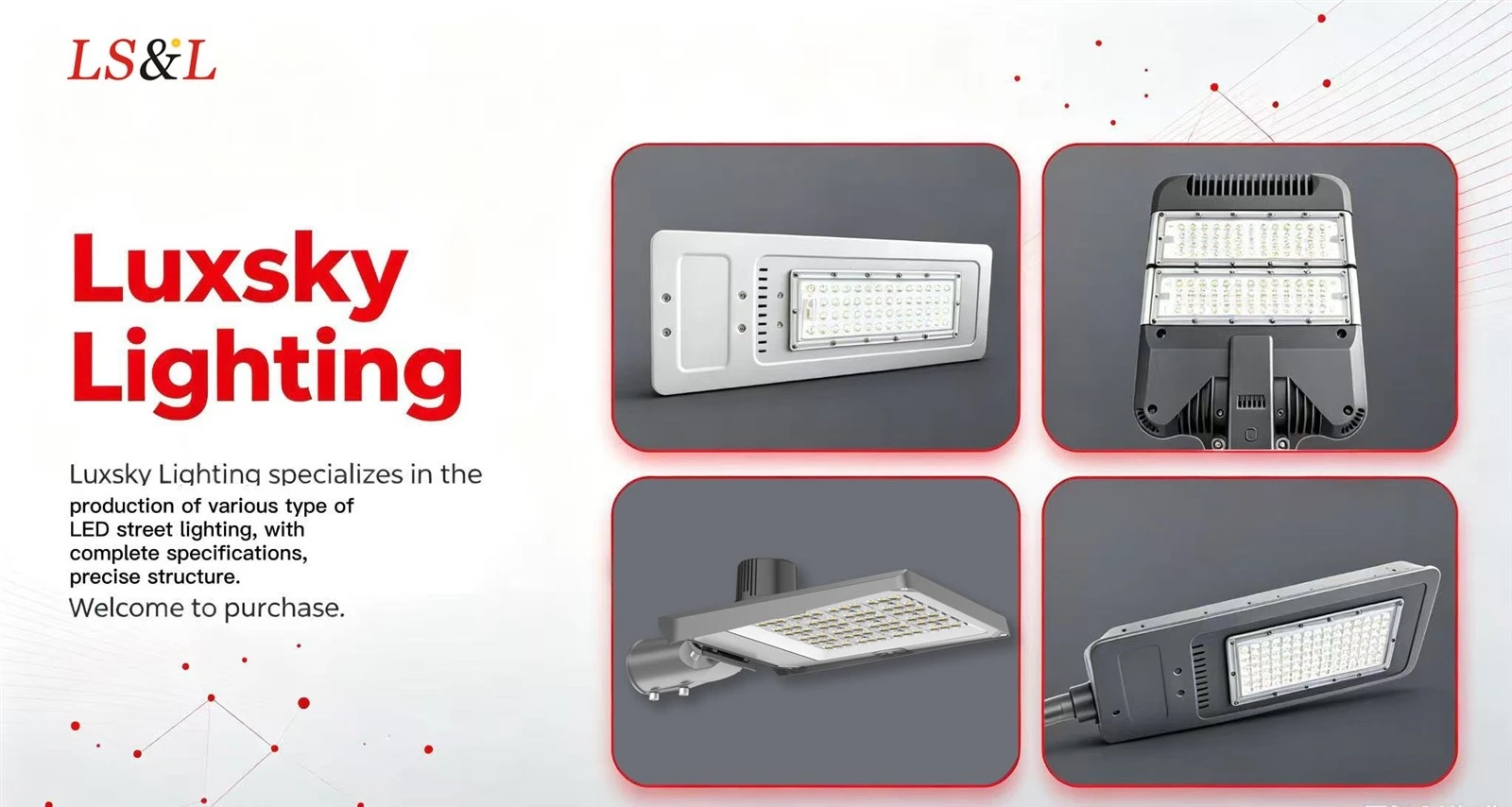
At Luxsky Lighting, we hold to strict quality control LED engineering lighting standards, and based on clients' existing fixtures and power consumption data, we can provide photometric simulation and energy savings estimate reports, laying out investment, benefit, and payback period clearly.
Conclusion
Calculating energy savings comes down to real baseline data, a like-for-like illuminance comparison, clear formulas, and measured verification - with fixture quality determining whether the benefit holds up over the long term. Luxsky Lighting has focused on LED street light engineering for years, holding to strict quality control to deliver dependable roadway LED lighting solutions to clients worldwide. If you're evaluating a port lighting retrofit, reach out to us for an energy savings estimate and a quote.