

With years of experience in industrial lighting foreign trade, I've noticed many overseas clients struggle with supplier selection during procurement. Judging suppliers by quotation alone often leads to pitfalls, such as falsely marked parameters, missing certifications and poor after-sales service. When comparing warehouse LED lighting suppliers, you need to evaluate qualifications, products, delivery and after-sales support comprehensively. Based on my long-term project experience, I will share core criteria for supplier comparison.
1. Verify product certifications and sample quality
Warehouse lighting has strict requirements for safety and protection. Reliable suppliers must provide complete and valid certification documents. Manufacturers without formal qualifications tend to exaggerate product specifications, which may create safety hazards once deployed in warehouses. It is recommended to test samples before purchase to check brightness, heat dissipation and protection performance.
For warehouse projects, the weatherproof LED light is a common basic lighting option. Products from reputable suppliers come with full optical and electrical test reports. They operate steadily in dusty and humid warehouses and reduce the risk of failed project acceptance from the start.
2. Evaluate product range and site adaptability
Different warehouse environments require different lighting fixtures. A qualified supplier should maintain a rich product portfolio and recommend solutions according to ceiling height, humidity and dust levels, instead of pushing only standard products. Some manufacturers can only supply basic models and cannot handle special storage areas such as cold rooms or washdown zones.
For warehouse projects demanding high protection, the IP65 LED tri proof light is the preferred choice. Professional suppliers are familiar with its application limits and can offer customization on structure, drivers and materials to match harsh site conditions and meet the requirements of overseas engineering projects.
3. Confirm delivery capacity and quality control system
On-time delivery is critical for overseas warehouse renovation projects. When comparing suppliers, check factory output, lead time and packaging plans to avoid order delays that hold up the whole project. Also ask about in-line quality control procedures and factory inspection items to lower defective rates upon arrival. Unreliable suppliers often deliver inconsistent color temperature and rapid lumen decay, disrupting on-site installation.
For old warehouse retrofits with large order volumes, the weatherproof LED batten light is widely used. Mature suppliers can guarantee stable mass supply and full pre-shipment inspection. Its dimensions and mounting interfaces fit original lamp positions, greatly simplifying field installation and ensuring smooth project delivery.
4. Check technical support and after-sales response
Engineering orders require more than just good products. Trustworthy suppliers provide technical drawings, illuminance simulation and on-site consultation, and respond quickly when quality issues occur. Many low-cost suppliers only ship goods and offer little support for fixture failures or parameter questions afterwards, leading to long replacement cycles and extra losses.
Never select warehouse LED lighting suppliers based on price alone. Four key evaluation factors are certifications, product adaptability, delivery & QC, and technical after-sales service. Comprehensive assessment helps you find stable and reliable partners to maintain long-term reliable performance of warehouse lighting systems.
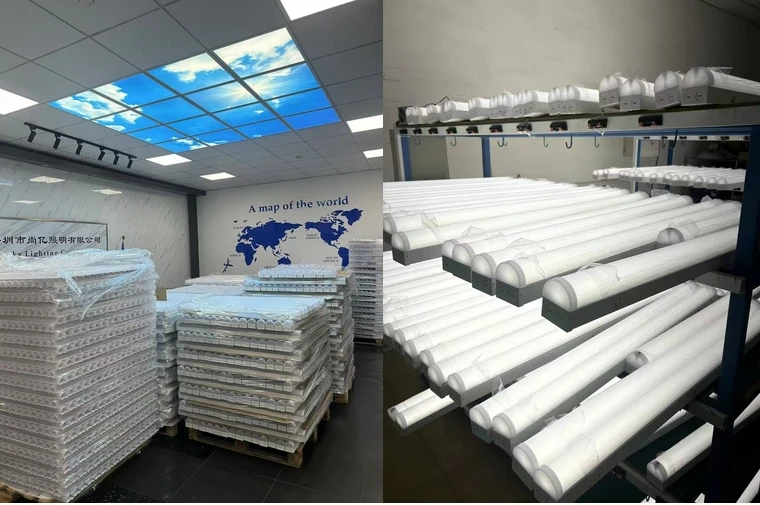
If you are screening warehouse lighting suppliers, need an evaluation checklist or tailored lamp solutions for your project conditions, feel free to contact me. With rich experience in overseas lighting engineering projects, I can help you select suitable manufacturers and avoid procurement risks.





