

Tri-proof lights used in warehouses face dust, humidity, vibration and long operating hours. If quality is inadequate, problems appear quickly. Looking only at brochure claims makes it hard to judge real reliability. Knowing the key tests a fixture should pass helps in selecting more dependable products. Here are the most important ones based on practical experience.
1. Ingress protection (IP) testing
Dust and water resistance form the core of tri-proof performance. IP65 is the most common requirement in warehouses and involves dust and water-jet tests. The evaluation checks not only the surface but also whether the sealing remains effective under pressure. When tri proof lights claim a given rating, complete test reports should be available.
2. Impact resistance (IK) testing
Forklifts and moving loads are frequent in warehouses, so the housing needs adequate mechanical strength. IK08 or IK10 are common benchmarks. The test applies a defined impact energy to verify that the housing does not crack or deform, which would otherwise compromise protection.
3. Electrical safety and insulation tests
These include high-voltage withstand, insulation resistance and earth continuity. They confirm that the fixture presents no electric-shock risk under normal or fault conditions and are basic requirements for export and project acceptance.
4. Lumen maintenance and ageing tests
LED lifetime depends largely on the rate of light depreciation. High-temperature or extended burn-in tests reveal how quickly output declines and indicate the quality of the driver–LED match. A well-made LED tri proof light shows more stable results in ageing tests.
5. Temperature and humidity-cycle tests
Temperature swings or high humidity put stress on seals and electronic components. Damp-heat cycling and high-temperature operating tests expose material ageing and condensation risks, helping determine suitability for real warehouse conditions.
6. Vibration and transport tests
Fixtures experience vibration and handling from factory to site. Vibration testing simulates these conditions and checks whether internal connections and structure remain secure. Linear products such as an LED tri proof lamp must still perform reliably after long-distance transport.
These tests do not cover every possibility, yet they address the main risks in warehouse environments. Products backed by full test reports and third-party certification are generally more trustworthy than those supported only by marketing literature.
It is not necessary to demand the highest rating in every category. Core protection, safety and ageing-related tests should, however, be verifiable. Matching the test level to the actual project environment is more practical than chasing perfect scores across the board.
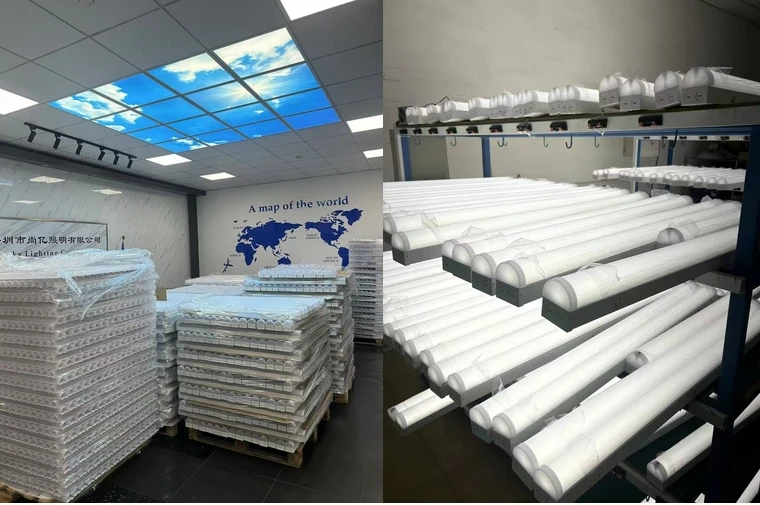
If you are evaluating the quality of tri-proof lights or comparing test data from different suppliers, share the main operating conditions and your priorities. I can help identify which test results deserve the most attention. Transparent test information makes product selection far more confident.





