With years of experience in overseas food factory lighting foreign trade and engineering implementation, I've noticed most factories struggle with high lighting power consumption and frequent fixture failures. Old traditional lights consume massive power and have short lifespans, leading to soaring electricity bills over time. Based on numerous overseas retrofitting cases, I will share how to cut power costs efficiently for food factories with suitable industrial LED lighting.
1. Replace power-hungry traditional fixtures to cut base energy consumption
Many older food processing plants still use fluorescent or metal halide lamps. These lights feature high power draw and low luminous efficiency. Running round the clock, they become the main source of high power usage. Besides, they generate substantial heat, further raising the cooling load of workshop air conditioners.
High-efficiency weatherproof lights consume only one-third of the power of traditional alternatives while delivering better luminous output. Built to withstand high humidity, dust and washdown conditions in food workshops, they can replace old units without major wiring changes to lower baseline energy use and deliver long-term power savings.
2. Low lumen depreciation cuts replacement and maintenance overheads
Traditional industrial lights suffer fast lumen decay and high failure rates. Frequent purchases and manual inspections every year drive up material costs. Worse still, downtime for maintenance disrupts production and brings hidden economic losses.
Premium LED tri proof light adopts high-grade LED chips and constant-current drivers with minimal light decay and an ultra-long service life. It stands up to harsh food plant conditions including washdown, oil contamination and corrosion. Stable long-term operation reduces frequent replacements and maintenance labor costs to achieve cost savings.
3. Zoned lighting design eliminates unnecessary power waste
Different work zones in food factories have distinct lighting requirements. Many plants install high-wattage fixtures across the whole site, causing over-illumination in warehouses, walkways and idle areas. This idle lighting wastes a large amount of electricity month after month.
The dust and water resistant IP65 LED tri proof light comes in multiple power options to support customized zoned lighting design. Pick high-brightness versions for fine inspection zones and low-power energy-saving models for warehouses and aisles. Match brightness to actual needs and eliminate power waste caused by one-size-fits-all lighting layouts.
4. Integrate smart controls to unlock extra energy-saving potential
Traditional lights cannot be dimmed or controlled intelligently. They stay on day and night whether the workshop is busy or idle, wasting power during off-hours. LED tri-proof lights compatible with smart control systems help avoid such unnecessary consumption.
Motion sensors and timers can automatically dim or turn off lights in unmanned areas to minimize idle power draw. Their low heat output also reduces heat buildup indoors and eases the thermal load of temperature control systems, cutting overall factory electricity expenses.
To lower electricity bills for food factories via LED lighting, focus on replacing high-power legacy fixtures, adopting zoned lighting selection, cutting maintenance costs with long-lasting products and adding smart controls. Compared with conventional lighting, compliant industrial LED lights balance energy efficiency and durability. A retrofit delivers lasting savings on power and maintenance, making it an ideal solution for overseas food manufacturers.
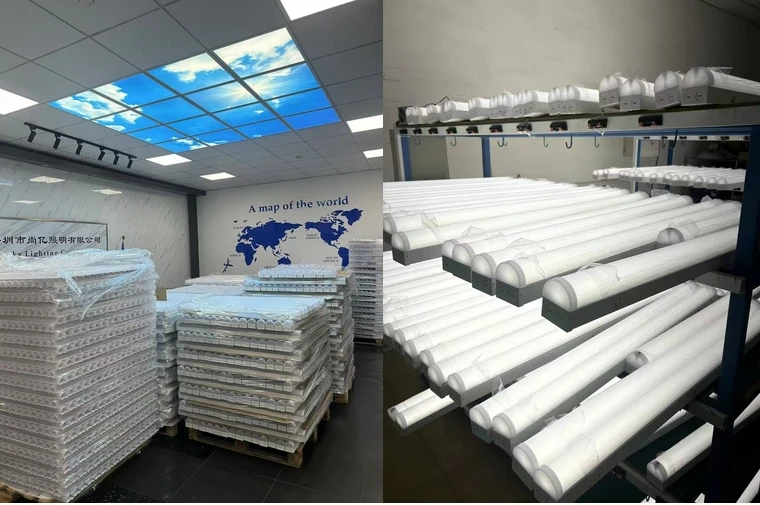
If you plan a lighting retrofit to cut factory electricity costs but feel confused about power selection and zone layout, or worry about unsatisfactory energy-saving results, feel free to reach out. With rich experience in overseas food lighting projects, I can customize energy-efficient lighting solutions tailored to your site conditions.