I've spent over a decade in the street lighting export trade, and what port clients care about most is never "does the light turn on" - it's "how many lights are still working three or five years from now?" We've covered protection against all kinds of harsh weather, so today let me take a different angle, using a failure-rate mindset, to talk about how to genuinely bring down the long-term failure rate of port street lights.
First, Understand the Three Stages of Failure
Product failure follows a classic pattern called the bathtub curve, with three stages: the early failure period, mostly caused by manufacturing defects and early component failures; the random failure period, where failures occur sporadically, mostly tied to environmental shocks and usage conditions; and the wear-out period, where components reach the end of their lifespan and fail in clusters. Reducing long-term failure rate means tackling each of these three stages separately.
Stage 1: Use Burn-In Testing to Suppress Early Failures
A high early failure rate often comes from insufficient screening before shipment. The reliable approach is to put every batch through full-load burn-in testing, generally no less than 72 hours, weeding out units with latent defects ahead of time, combined with photoelectric performance testing and waterproof testing. This is exactly the core value of a strict quality control LED engineering lighting system: stopping problems before they leave the factory, rather than leaving them for the client's job site.
Stage 2: Use Protective Design to Suppress Random Failures
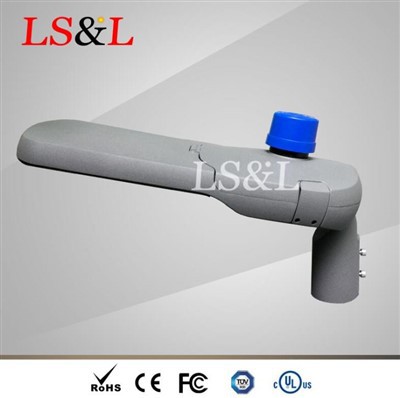
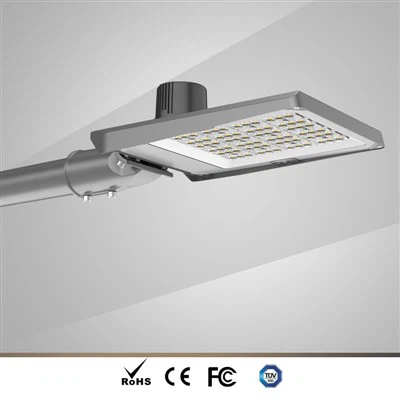
Random failures are mostly caused by external shocks like lightning surges, voltage fluctuation, overheating, and water ingress. The targeted approach is: equip the driver with comprehensive over-voltage, over-current, over-temperature, and surge protection; seal and anti-corrode the fixture properly; and derate sensibly to leave margin for components. These measures give a roadway LED lighting product enough "cushion" to survive unexpected shocks rather than failing at the first hit.
Stage 3: Use Long-Life Components to Delay the Wear-Out Period
When the wear-out period arrives depends on the lifespan of key components. Electrolytic capacitors inside the driver are usually the lifespan bottleneck - choosing 105°C long-life grades and controlling operating temperature significantly delays wear-out; LED chips should come from top-tier brands with stable lumen decay; seals should use aging-resistant silicone. Extend the life of the weakest components, and the whole fixture's wear-out period naturally shifts later.
Use Data to Find the Real Cause of Failures
On many projects, when a failure happens, the fixture is simply swapped out without any root cause analysis, so the same problem keeps recurring. It's worth keeping failure records: which fixtures failed, in which area, when, and with what symptoms, then sending them back for failure analysis to find out whether it was the driver, chip, seal, or installation. Paired with batch traceability, if a particular batch starts showing clustered problems, it can be located and addressed quickly, before things escalate.
Use Smart Systems to Catch Problems Early
With a Smart outdoor light control system, continuously monitoring each fixture's temperature, current, and power data lets you flag abnormal parameter drift ahead of time and schedule repairs before a full failure occurs. This kind of "predictive maintenance" turns sudden failures into planned replacements, which is especially valuable in places like ports where shutdowns are hard to arrange.
Do Preventive Maintenance and Spare Parts Management Well
Set up an inspection schedule to periodically check fasteners, seals, surge protectors, and grounding status; keep a sensible stock of wear items (drivers, surge protectors, gaskets) so failures can be replaced quickly, cutting down the time a light stays dark.
Supplier Warranty and Responsiveness Matter Too
Choosing a supplier that offers clear warranty terms, responds promptly, performs failure analysis, and keeps improving its products is an important safeguard for reducing long-term failure rate.
What We Do
At Luxsky Lighting, we hold to strict quality control LED engineering lighting standards. Every batch goes through 72-hour burn-in testing, drivers are equipped with comprehensive protection and long-life components, we support batch traceability and failure analysis, and we offer smart monitoring solutions and spare parts support.
Conclusion
Reducing long-term failure rate means working on the early, random, and wear-out stages separately, backed by data analysis and preventive maintenance. Luxsky Lighting has focused on LED street light engineering for years, holding to strict quality control to deliver dependable roadway LED lighting solutions to clients worldwide. If you're selecting products for a port project, reach out to us for a detailed reliability plan and a quote.