Many port clients ask me the same question when we talk: If we replace the old high-pressure sodium or metal halide lamps with LED street lights, how much electricity can we actually save? And can the savings pay back the investment? As someone who has worked in foreign trade for more than a decade, I have handled quite a few lighting retrofit projects for ports, terminals, and logistics parks. Today I want to share the real numbers and practical experience with you in the most straightforward way.
Let me start with the conclusion: In most port projects, switching to high-quality roadway LED lighting reduces overall energy consumption by 50%–70%, and in some cases it can approach 75%. These figures are not casual estimates - they come from actual project data and industry averages.
Why Do Port Street Lights Consume So Much Power?
Port working areas, container yards, quay fronts, internal roads, and parking lots usually need lights on all night. Traditional high-pressure sodium lamps often run at 250W, 400W or even higher, plus ballast losses. They have low luminous efficacy, short lifespan, yellowish color temperature, and high maintenance costs. In typhoon seasons or humid, salt-spray environments, the fixtures fail even faster. The labor cost of replacing lamps and the downtime losses quickly become painful.
After switching to modern Smart outdoor lighting systems and professional LED engineering lighting, the situation changes completely. Today's mainstream port LED street lights deliver the same (or better) illuminance at only one-third to half the power of the old lamps. For example, a position that previously used a 400W high-pressure sodium lamp can be replaced with a high-efficacy 150W LED street light and still achieve equal or superior brightness, with more uniform light distribution and better color rendering - which is also helpful for cargo identification and security monitoring.
How Much Can You Really Save? Let's Look at the Numbers
Assume a medium-sized port has 500 street lights. If the average old fixture is calculated at 350W (including losses) and operates 12 hours a day, the annual electricity bill is already substantial. After upgrading to efficient roadway LED lighting, the average power drops to 120–150W, cutting electricity use by more than 50% right away. When paired with intelligent control systems (Smart outdoor light functions) that automatically dim according to tide schedules, working hours, and weather conditions, an additional 10%–20% can often be saved.
I have seen several real cases:
- A Southeast Asian port reduced annual electricity consumption by about 62% after the retrofit, with a payback period of roughly 2.5–3 years.
- Several coastal terminal projects in China that adopted Strict quality control LED engineering lighting not only saw a clear drop in power bills but also experienced a sharp decline in failure rates - almost zero replacements within three years.
One point I must emphasize: Strict quality control LED engineering lighting is critical. Ports face heavy salt spray, high humidity, and constant vibration. Ordinary commercial LED products simply cannot survive. Fixtures must pass IP65/IP66 protection, salt-spray testing, thermal shock, and vibration resistance. The drivers need to be industrial-grade, long-life, and wide-voltage. Otherwise the electricity savings can easily be eaten up by frequent maintenance.
Beyond Energy Savings - Other Practical Benefits
Long lifespan: Quality LED street lights typically last 50,000–80,000 hours - several times longer than traditional lamps - greatly reducing replacement frequency.
Intelligent control: Smart outdoor light systems can connect to IoT platforms for remote monitoring, fault alarms, and on-demand dimming, making operations much easier.
High efficacy and uniform illumination: Less glare and fewer dark spots improve night-time working safety and cargo recognition efficiency.
Environmental compliance: Many international ports are under pressure to lower their carbon footprint; switching to LED is one of the most direct and measurable ways to cut emissions.
How to Choose Reliable Products
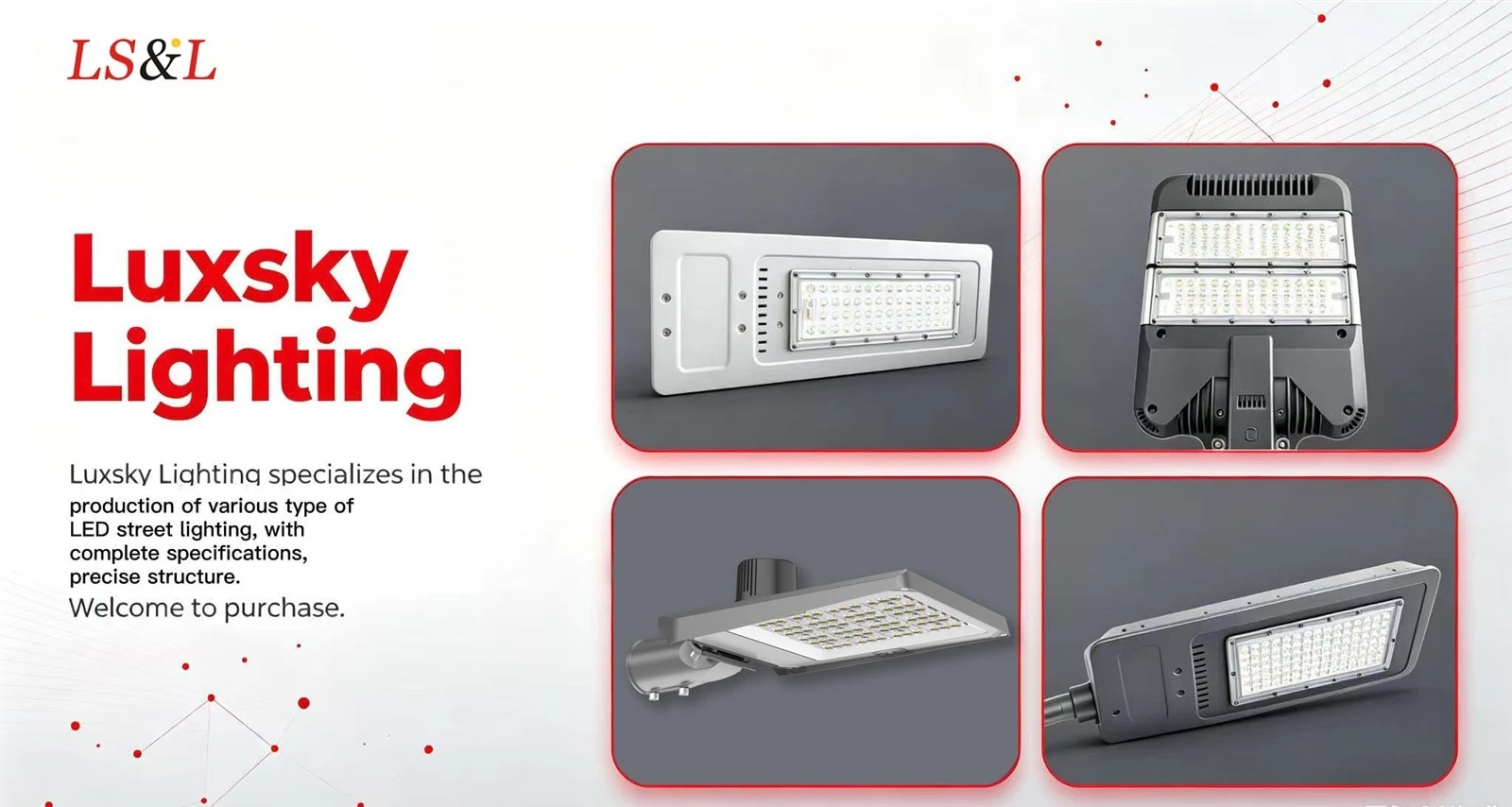
After so many years in foreign trade, what I fear most is clients buying "cheap-looking but expensive-to-use" lights. True port-grade roadway LED lighting must have strict quality control from the chips and drivers all the way to the heat-dissipation structure and protection rating. At Luxsky Lighting we insist on Strict quality control LED engineering lighting standards. Our products carry multiple international certifications and are specifically engineered for high-corrosion, high-load outdoor environments. The Smart outdoor light functions also support various intelligent control solutions.
Many long-term clients have told us after installation: the electricity bill went down, maintenance work orders decreased, and the night-time working light became clearer. That is real long-term cost saving.
Conclusion
Upgrading port lighting to high-quality LED street lights typically delivers 50%–70% energy savings with a clear return on investment. The key is choosing products that truly undergo strict quality control and are designed for the harsh port environment, rather than simply chasing the lowest price. Luxsky Lighting specializes in Strict quality control LED engineering lighting, Smart outdoor light, and roadway LED lighting. Our fixtures are stable and reliable and have already served multiple port and outdoor engineering projects. If you are considering a port lighting retrofit, feel free to contact us directly for a detailed proposal and quotation. Let's lower energy consumption together and truly reduce your operating costs.