I've spent over a decade in the street lighting export trade, and port clients love asking this one too: "IP65 or IP66 - which should we choose for our port?" We recently covered the airport scenario, but ports are a very different environment - beyond wind and rain, you're dealing with seawater, salt spray, and high-pressure washdowns, so the selection logic has to be recalculated from scratch. Let me break it down specifically for port applications.
A Quick Recap: What Separates IP65 From IP66
Both have a dust protection rating of 6 - fully dust-tight. The difference lies in water protection: IP65 withstands low-pressure water jets, while IP66 withstands powerful water jets. On paper it's just one level apart, but in a port environment, that one-level gap gets noticeably amplified.
Ports Are Far "Wetter" Than Ordinary Roads
Ports sit on the coast, with sea wind carrying moisture and spray, so fixtures spend their lives in high-humidity, high-salt air. Fixtures along the quay front may even get hit directly by waves and splash, and during typhoons, the impact of wind and rain far exceeds what ordinary municipal roads see. On top of that, port work areas routinely use high-pressure water guns to wash down ground surfaces and equipment, so fixtures mounted lower on poles inevitably get caught in the spray. In these scenarios, IP65's protection margin starts to look thin, and IP66 becomes the sensible baseline - which is why IP66 has become the mainstream configuration for port roadway LED lighting projects.
But Here's a Warning: IP Rating Doesn't Mean Salt Spray Protection
This is the most common trap in port projects: an IP rating only measures dust and water protection, and says nothing at all about salt spray corrosion. Plenty of clients assume that choosing IP66 settles the matter, only to find that after a year or two, the housing is rusting, screws are seizing, and gaskets are aging and cracking - letting water in regardless. For ports, beyond IP66, you also need to look at the salt spray test rating (for example, passing 500 or even 1,000 hours of neutral salt spray testing), whether the housing has anti-corrosion coating or anodizing, and whether hardware is stainless steel. These are exactly the details where a manufacturer's real capability shows under a strict quality control LED engineering lighting program.
When a Higher Rating Might Be Worth Considering
If certain port areas carry a short-term submersion risk - low-lying areas, or spots prone to water pooling in heavy rain - IP67 or even higher might be worth considering. That said, most port street lights are mounted on poles where submersion risk is low, and IP66 combined with solid anti-corrosion design usually meets the need, with no reason to add unnecessary cost chasing a higher rating.
Nominal Ratings Need Test Reports to Back Them Up
Plenty of products on the market claim IP66, but actual compliance varies widely - gasket material, assembly precision, and breather valve design all affect real-world waterproofing. When purchasing, it's worth requesting IP rating and salt spray test reports issued by a third-party lab, and verifying the reports are genuine, rather than just trusting the numbers on a brochure.
Don't Let Smart Modules Become the Weak Link
If a project includes a Smart outdoor light control system, the sensors and communication modules should also meet IP66 or higher with proper anti-corrosion treatment, so an add-on module doesn't fail before the fixture itself and drag down the reliability of the whole system.
Our Recommendation
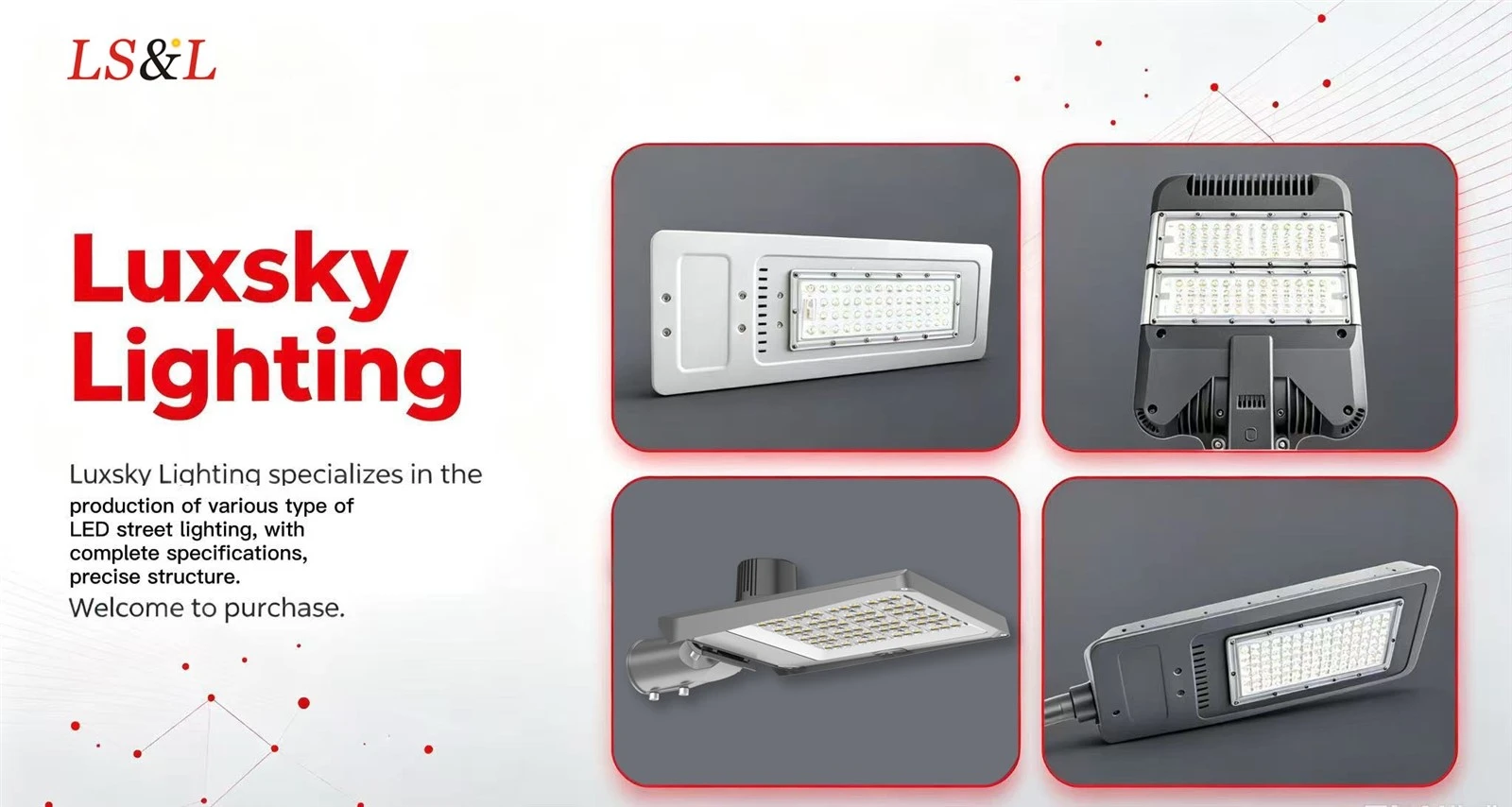
At Luxsky Lighting, we recommend IP66 as the baseline configuration for port projects, paired with anti-salt-spray and anti-corrosion design. We hold to strict quality control LED engineering lighting standards, with all protection ratings and salt spray tests verified by third-party labs, and original reports available for verification.
Conclusion
For ports, IP66 is the starting point - anti-salt-spray and anti-corrosion design is what really determines lifespan. Luxsky Lighting has focused on LED street light engineering for years, holding to strict quality control to deliver dependable roadway LED lighting solutions to clients worldwide. If you're selecting products for a port project, reach out to us for detailed test reports and a quote.