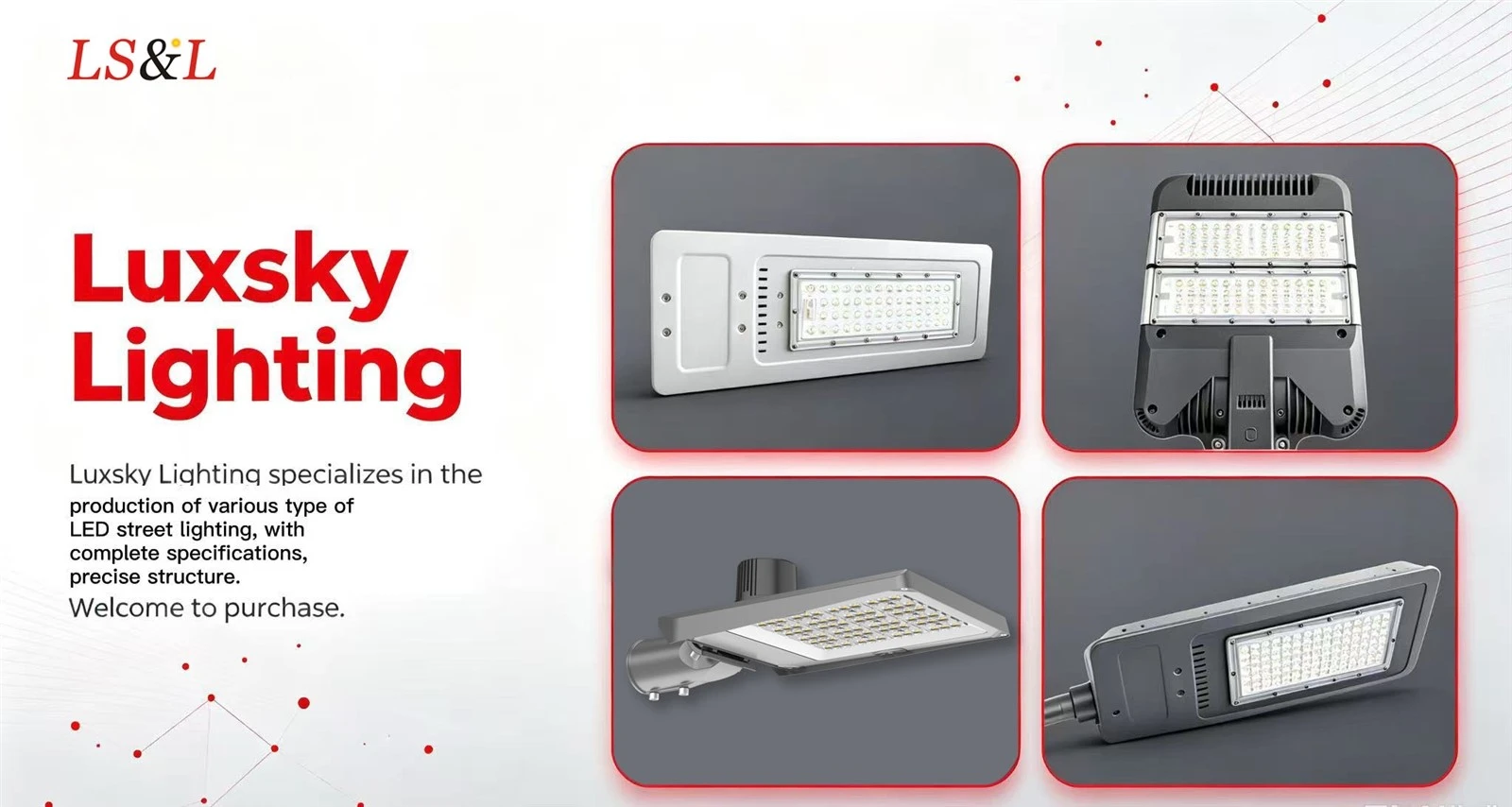
Port environments are far harsher than ordinary roads, with high humidity, salt-spray corrosion, strong storms, and occasional flooding all placing higher demands on luminaires. As a foreign trade professional with over a decade of experience in the lighting industry, I have seen many port projects suffer from inadequate IP ratings-fixtures quickly experiencing water ingress, corrosion, and failure-seriously compromising the lighting safety of dock roads and storage yards. Today, drawing on practical experience, I will discuss what IP protection rating port LED Street Lights actually require.
Special Challenges Port Environments Pose to Roadway LED Lighting
Ports are typical high-corrosion, high-humidity outdoor settings. Salt spray accelerates the aging of metals and seals, while heavy rainfall and sea winds increase the risk of water ingress. Ordinary IP65 fixtures may cope in the short term, but long-term use often leads to seal failure, internal condensation, or even short circuits. Truly suitable roadway LED lighting for ports is generally recommended at IP66 protection rating. IP66 provides complete dust-tightness and resistance to powerful water jets, making it better suited than IP65 to the open, humid, and salt-laden conditions of a port.
In some areas close to the water or in low-lying zones, even higher protection may be considered, but IP66 remains the reliable baseline for mainstream port road and yard lighting.
Strict Quality Control LED Engineering Lighting Is the Long-Term Guarantee
Simply claiming IP66 is not enough-the key lies in actual craftsmanship and materials. Strict quality control LED engineering lighting requires rigorous verification of housing die-casting, sealing gaskets, surface anti-corrosion treatment, and driver waterproof compartments. High-quality products undergo salt-spray testing, thermal cycling, and long-term waterproof validation to ensure stable operation in the corrosive port environment.
At the same time, modern ports are increasingly adopting Smart outdoor light solutions. Intelligent dimming and remote monitoring can improve operational efficiency, but electronic components are more sensitive to humidity and salt spray. If basic protection is inadequate, smart functions become a weakness instead. Therefore, Smart outdoor lights must be built on reliable, high-protection engineering design.
Practical Selection Advice
Prioritize IP66 or higher, especially for fully exposed dock roads and storage yard areas.
Focus on anti-corrosion and sealing details: Salt-spray-resistant coatings, high-quality silicone seals, and independent driver compartments are more important than numbers alone.
Synchronize intelligence with protection: When selecting Smart outdoor lights, always confirm overall protection and long-term reliability.
Review actual tests and cases: Confirm that the supplier truly implements Strict quality control in LED lighting engineering.
As an experienced foreign trade professional, I often remind clients: a port is not an ordinary outdoor space-luminaires must actively adapt to salt spray and humidity rather than passively endure them. Selecting products with proper protection design and controllable quality is the only way to truly reduce later maintenance costs.
Conclusion
We have always adhered to the standards of Strict quality control in LED engineering lighting. Our products have accumulated extensive experience in roadway LED lighting and Smart outdoor light applications for ports and outdoor projects, delivering solid protection ratings and stable, reliable quality. If you are looking for high-quality LED street lights for a port project, please contact us directly to learn more about Luxsky Lighting's LED street light solutions and let professional products safeguard your project.