With years of industrial lighting export experience, we frequently receive inquiries about protection ratings from overseas engineering buyers. Many clients wonder whether LED triproof lamp with IP65 rating can cope with real‑site workshop conditions, or if upgrading to IP67 and higher is necessary. Higher IP ratings do not always equal better suitability; selection should depend on actual site environments. Based on numerous completed projects, we analyze the real‑world performance of IP65 in industrial workshops below.
1. Practical capabilities of IP65 rating
IP65 means full dust‑proof performance and resistance against high‑pressure water jets. Fixtures complying with IP65 waterproof light standard block dust build‑up and withstand floor washing, mist and condensation in workshops. It is important to note that IP65 is not designed for permanent water submersion. This rating will fail under continuous immersion, a condition rarely seen in ordinary processing workshops.
2. Workshop scenarios where IP65 is fully sufficient
For most assembly workshops, mechanical processing plants and standard production lines exposed to dust, moisture and occasional water washing, IP65 delivers reliable long‑term performance with great cost‑effectiveness. In on‑site storage areas prone to dust accumulation, led warehouse light with IP65 rating effectively prevents dust intrusion and supports round‑the‑clock warehouse lighting, making higher‑grade protection unnecessary.
3. Special working conditions where IP65 falls short
IP65 has limitations under certain extreme environments. First, sites with frequent continuous high‑pressure water spraying or permanent fixture submersion. Second, chemical workshops with strongly corrosive chemical vapors. For such cases, upgrade to IP66 or IP67 together with corrosion‑resistant housing materials. Besides, standard tri‑proof lights, regardless of IP grade, cannot be used in zones with flammable or explosive gas and dust. Certified explosion‑proof lighting is mandatory.
4. Common purchasing pitfalls
Some buyers blindly pursue higher IP ratings under the assumption that higher numbers mean better products. For regular industrial workshops, IP66 or IP67 brings extra unnecessary costs and wastes project budgets. Beware of falsely marked specifications on the market. Some items are labelled IP65 yet have poor sealing workmanship. Always verify that suppliers implement complete quality inspection procedures instead of trusting label data only.
IP65 provides adequate protection for the vast majority of conventional industrial workshops, balancing protective performance and project expenditure. Upgrade to higher IP specifications only for submersion‑prone or heavily corrosive environments. Chasing excessive IP ratings without considering actual conditions will only raise procurement costs unnecessarily.
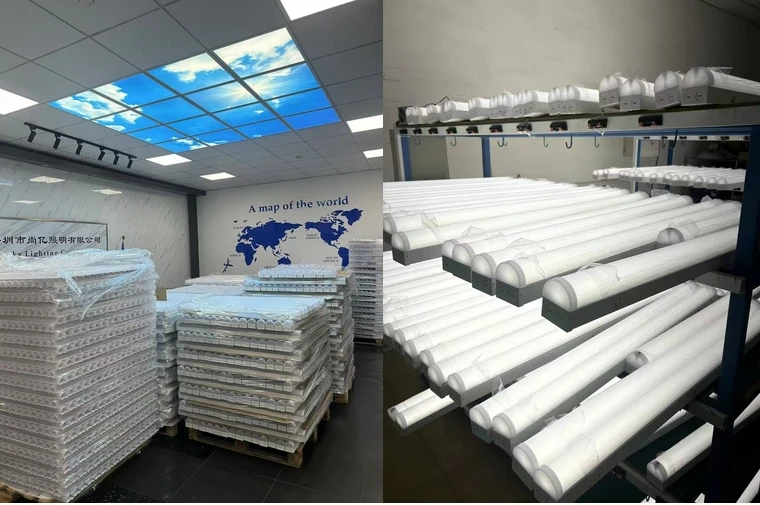
We are familiar with diverse overseas factory operating conditions and can offer rational protection‑grade and fixture selection advice based on your workshop environment. Feel free to contact us for parameter evaluation, project configuration and bulk quotations for your customized lighting solution.