After more than a decade in foreign trade, clients often ask me: "What is the real difference between IP65 and IP66 tri-proof lights, and which should a factory choose?" This is a practical question-choosing too high raises cost, while choosing too low may not be enough. Here is a clear explanation based on our daily shipments and client feedback.
The IP rating has two parts: the first digit for dust protection and the second for water protection. IP65 and IP66 share the same dust rating of 6 (dust-tight). The difference lies in water resistance. A proper LED triproof lamp clearly states the rating it actually meets rather than using vague claims.
The concrete difference in water protection
- IP65: resists low-pressure water jets from any direction. It is normally sufficient for everyday washing, rain or high-humidity conditions.
- IP66: resists more powerful water jets and is better suited to frequent high-pressure cleaning or harsher outdoor exposure.
In short, IP66 offers a higher level of water protection, but not every factory needs it.
How to choose for factory use
For most manufacturing workshops, ordinary warehouses and underground parking, an IP65 waterproof light is already enough. Dust is fully blocked and low-pressure water jets cause no harmful effects. Many logistics and storage clients choose a led warehouse light solution with IP65 for better cost-performance.
Food-processing plants or slaughterhouses that use high-pressure wash-downs regularly, and coastal or dock areas with strong wind, rain or salt spray, are better served by IP66. Sites with explosion risks must confirm the IP rating on top of the required explosion-protection level and may need an Explosion-proof linear light.
Other points to watch
The rating is only the baseline. Seal material, housing structure and long-term ageing performance matter just as much. A high claimed rating means little if workmanship and materials are poor. Market quality varies; always review the test reports rather than the marketing numbers alone.
From our actual shipments, food processing, machinery and ordinary warehouse factories use IP65 most often. Projects with strict cleaning requirements or outdoor exposure are the ones that move up to IP66. When enquiring, share the exact environment, whether high-pressure washing is used and the mounting location-this helps us recommend more accurately.
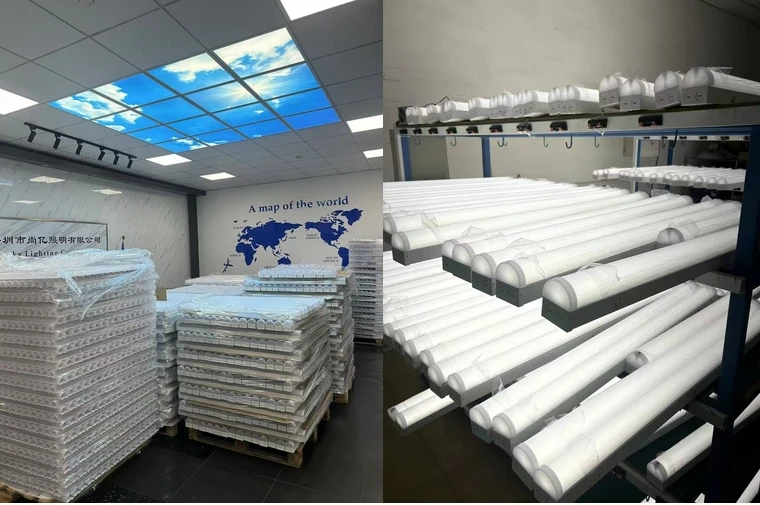
If you are comparing IP65 and IP66 tri-proof lights or are unsure which rating your factory needs, leave a message or send an inquiry. We will match the right LED tri-proof lights based on real shipment experience and help you avoid both over-specification and insufficient protection.