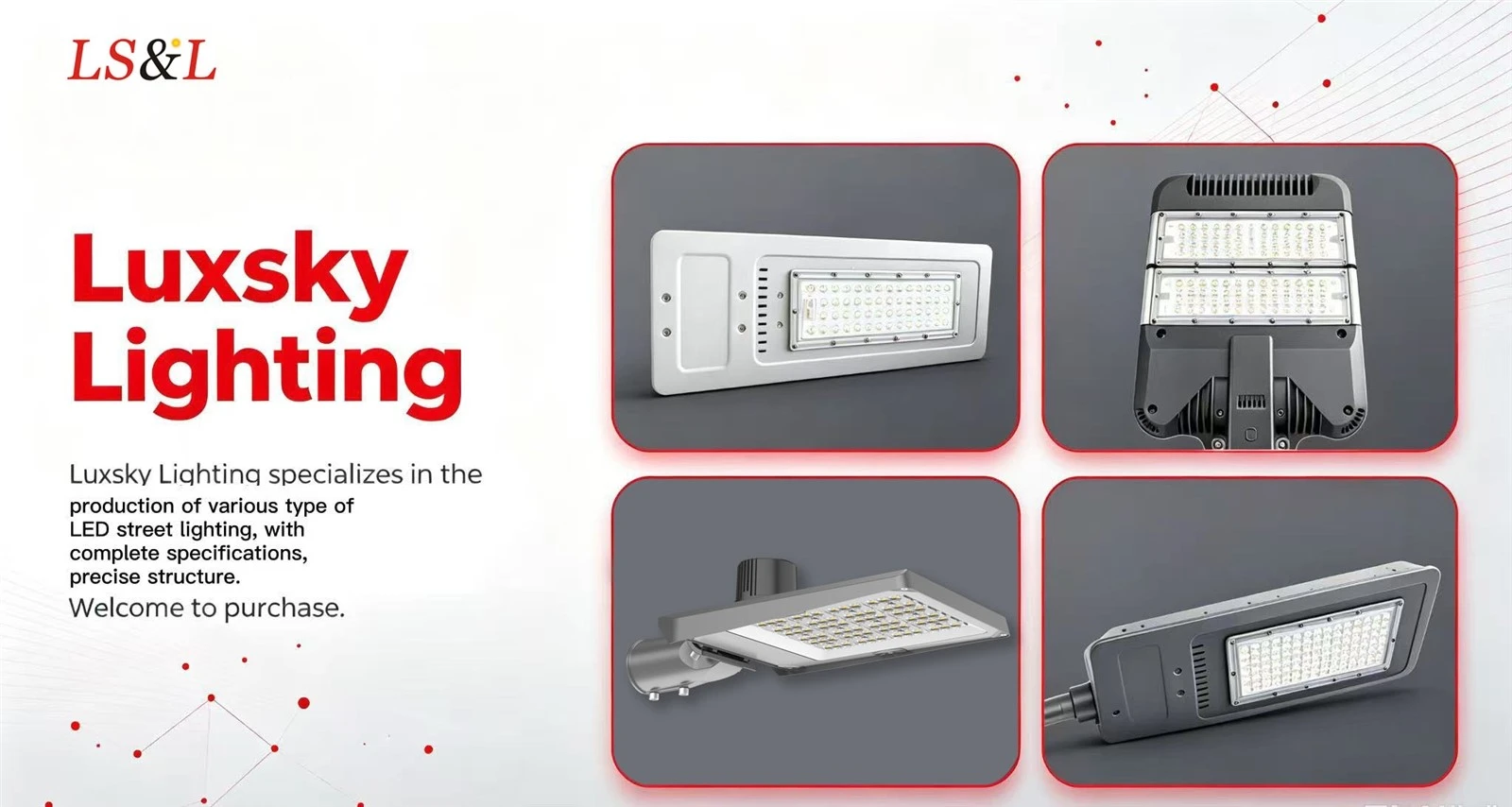
After more than ten years in foreign trade and handling numerous industrial park LED street light and facility lighting projects, I've seen both successes and failures. When clients later review what went wrong, the reasons are often highly concentrated-rarely a single issue, but several problems stacking up. Here's a practical breakdown of the most common failure points so you can avoid them.
The most frequent problem starts at the design stage. Many projects simply follow the "higher wattage is better" approach or copy municipal standards without proper illuminance calculations based on road width, vehicle types, and operating hours. The result is dark zones on main roads and over-lighting on secondary roads. Workers complain about poor visibility while electricity bills stay high. Once uniformity fails to meet requirements, adding extra poles later doubles the cost.
Second is selecting fixtures purely on price. To win the bid, some suppliers use low-end chips, poor-quality drivers, and thin aluminum housings. Industrial parks have heavy dust, voltage fluctuations, and sometimes corrosive gases-IP65 is barely enough, let alone heat dissipation and surge protection. Within six to twelve months, significant lumen depreciation and frequent driver failures appear. I've seen projects where nearly one-third of the fixtures had to be replaced within three years, and the supplier was blacklisted.
Third is neglecting smart control and maintenance planning. Some projects install only basic photocells or timers to save money, leaving no data for energy management or fault detection. When large numbers of lights fail, the only option is manual inspection-slow and inefficient. Worse, without spare parts inventory or a responsive after-sales system, a failed driver can take two months to replace, affecting night-shift safety.
Fourth is poor installation quality. Shortcuts in foundation work, inadequate waterproofing of connections, and poles that are not properly vertical often pass initial acceptance but surface after one or two rainy seasons. Water ingress, tilted poles, and poor grounding lead to shortened lifespan and safety risks.
Fifth involves logistics and customs issues. Inadequate packaging of sectional poles causes deformation on arrival; incomplete clearance documents delay the project by months and miss the best installation window. Overall delays quickly erode the client's trust.
Finally, there is a lack of total cost of ownership awareness. Focusing only on the initial purchase price ignores long-term electricity, repair, and replacement costs. In reality, the low-price option often ends up 20 % or more expensive over the full life cycle.
In short, industrial park LED lighting projects rarely fail because of the technology itself. They fail due to insufficient upfront research, price-only selection, and disconnection between installation and after-sales support. To avoid these pitfalls, involve a supplier with real project experience from the design stage, run full illuminance simulations and life-cycle cost calculations, confirm samples with on-site testing before bulk production, and supervise installation closely.
If you are preparing an industrial park LED lighting project or already facing similar issues and want to review them, send me the road drawings, current fault details, and budget range. Based on past project experience, I can help identify the key risks and improvement directions. Need detailed parameter comparisons or successful case studies? Just get in touch-we can discuss your specific project directly.