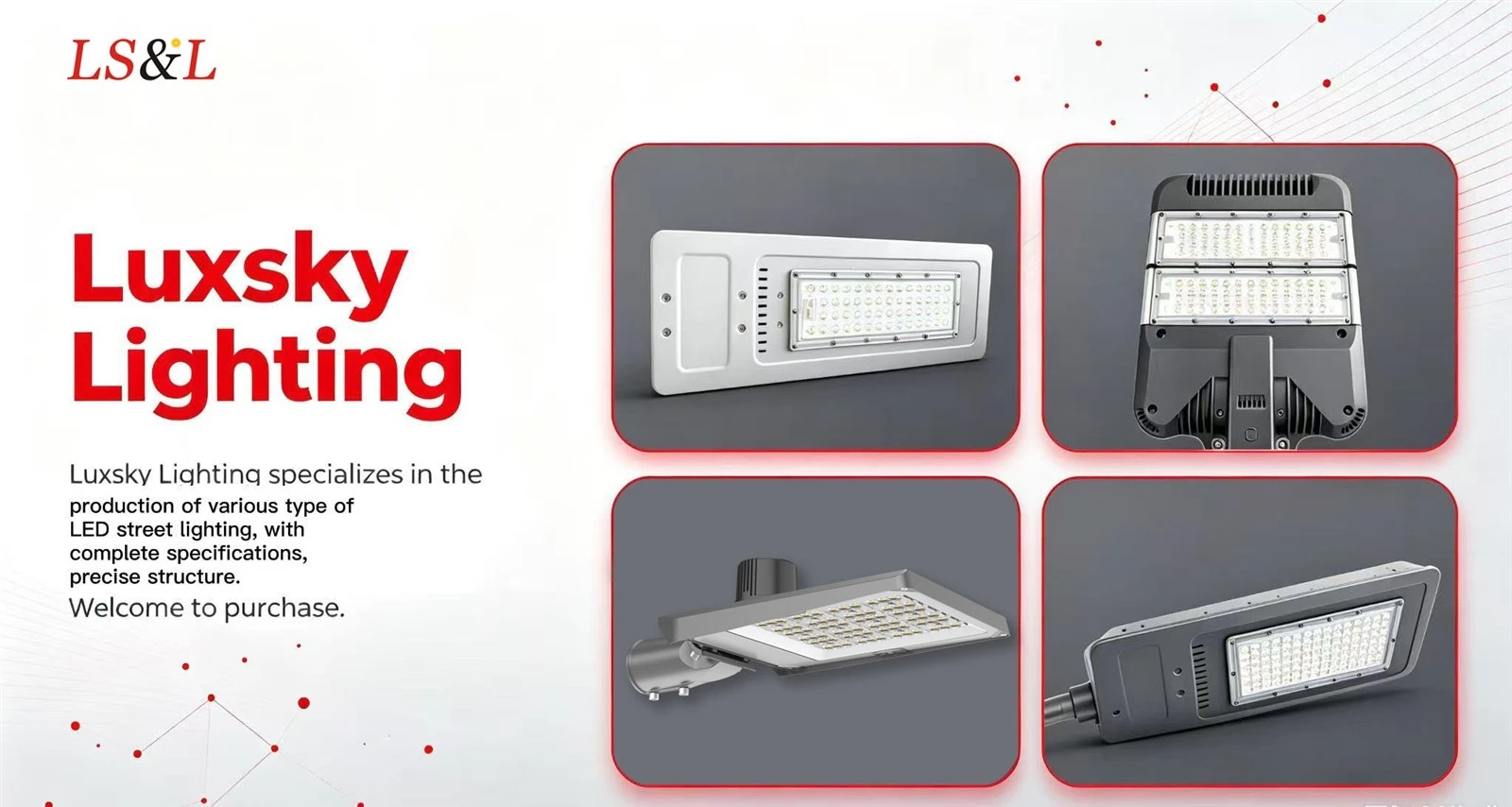
Having worked in the lighting export business for years, I often come across customers who want to keep things simple by ordering the same wattage for every road in the port-main roads and secondary roads alike. Honestly, whenever I encounter this, I always ask one more question: "Are you sure you want the same wattage for all roads?" Because there's real nuance here that a one-size-fits-all approach just can't handle. Let's talk about this today.
A Uniform Configuration May Seem Convenient But Actually Wastes Resources
Many customers think that purchasing the same fixture model across the board makes price negotiation easier and future maintenance simpler. That logic isn't wrong in itself, but applying it to wattage configuration creates problems. Port internal roads vary significantly in classification, function, and traffic intensity. If main roads and secondary roads use the same wattage:
- Main roads may be underpowered, failing to meet illuminance standards and creating safety hazards;
- Secondary roads may be overpowered, causing unnecessary energy waste and driving up long-term electricity costs.
When we develop strict quality-controlled LED engineering lighting solutions, the very first step is always helping customers clearly sort out road classifications, then providing targeted wattage recommendations-never a crude "one fixture fits everything" approach.
Core Differences Between Main Roads and Secondary Roads
Different Traffic Volume and Speed: Main roads typically serve as the primary route for trucks entering and exiting the port, with heavy traffic and relatively higher speeds, demanding better illuminance uniformity and brightness. We generally recommend 150-200W roadway LED lighting products here. Secondary roads have lighter traffic and lower speeds, where 100-150W is usually sufficient.
Different Road Width and Pole Spacing: Main roads are generally wider, often requiring double-side pole layouts or increased pole height, which calls for higher wattage accordingly. Secondary roads are narrower, where single-side layouts with lower wattage can still meet illuminance standards.
Different Safety Requirements: As traffic hubs within the port, main roads carry a higher risk of accidents if lighting is inadequate, so design margins are typically built in with more buffer. Secondary roads, on the other hand, can be designed more economically with tighter margins.
If these differences aren't sorted out in advance, you easily end up with the awkward situation of "main roads not bright enough, secondary roads wastefully over-lit"-a pitfall many customers have fallen into before.
Tiered Configuration Is the Professional Approach
Based on years of project experience, we typically recommend customers adopt a tiered configuration by road classification:
Main Roads: 150-200W, paired with high color rendering index and anti-glare design to ensure nighttime driving safety;
Secondary Arterial Roads: 100-150W, balancing illuminance and cost-effectiveness;
Branch Roads/Access Roads: 60-100W, sufficient for basic passage lighting needs.
Of course, the exact figures still need to be calculated based on actual parameters such as local illuminance standards, pole height, and road width-simply copying another project's plan won't work.
Smart Management Makes Tiered Configuration Even More Effortless
Working with port customers in recent years, I've noticed more and more projects layering intelligent management on top of tiered configuration, especially with Smart outdoor light systems. Tiered configuration solves the question of "how much wattage should be used," while smart systems further address "when should that brightness level actually be applied." Combining the two enables:
Grouped dimming control by road classification, with overall power reduction during late-night hours;
Priority illuminance assurance for high-traffic main roads, with flexible adjustment for secondary roads;
Remote monitoring of fixture status across zones, with prompt fault alerts.
This combination of tiered design plus smart control is often more energy-efficient than simply stacking high-power fixtures everywhere, and it better aligns with port customers' focus on long-term operational costs.
Recommendations for Customers
If your port is planning or upgrading its road lighting system, we recommend avoiding the shortcut of uniform wattage across the board. Instead:
- Sort out road classifications and functional divisions in advance;
- Provide separate road condition parameters for main roads and secondary roads;
- Prioritize suppliers with proven experience in tiered lighting design, rather than simply applying generic product catalogs.
Conclusion
Port main roads and secondary roads differ significantly in traffic volume, road width, and safety requirements, and should therefore use LED street lights with different wattages tailored to each-not a one-size-fits-all approach. Precisely because we understand this, we've always upheld Strict quality control standards, providing customers with tiered lighting design solutions to ensure every stretch of road is lit exactly right.
If you're planning a tiered road lighting solution for your port, feel free to reach out to the Luxsky Lighting team. We're happy to provide free professional selection advice based on your road classifications and site data.