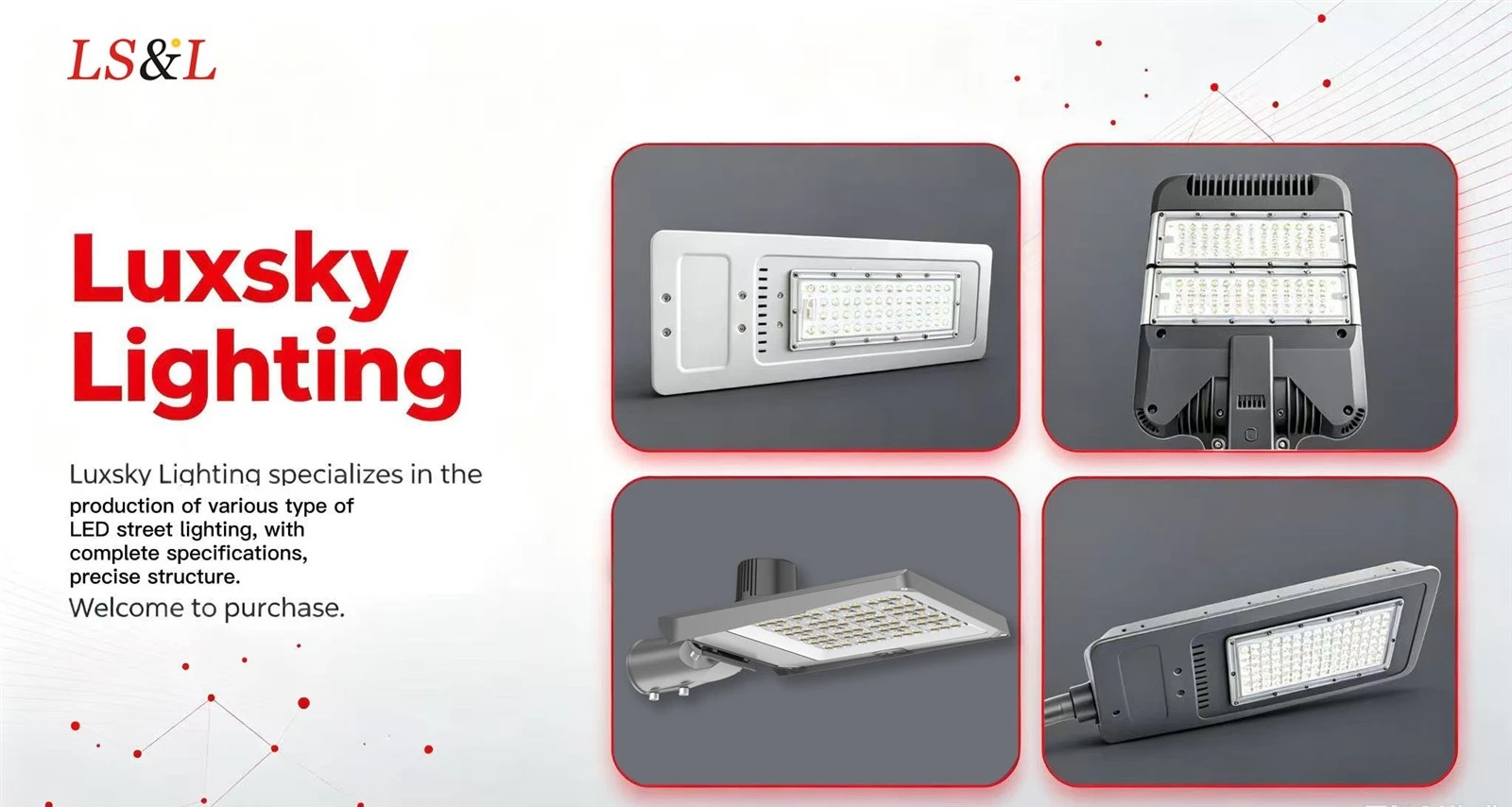
After more than a decade in the lighting export business, I get some version of this question almost every week: "What's the adjustable power range on this fixture? Can it be tuned to match our local lighting code?" So let's break this down properly today, and I'll also walk you through some of the behind-the-scenes engineering work that makes reliable power adjustment possible in the first place.
What Does "Adjustable Power Range" Actually Mean
Put simply, the adjustable power range refers to the span between a fixture's minimum and maximum output power that can be achieved through the driver, without swapping any hardware or re-opening a mold. For example, a street light rated at 150W with an adjustable range of 60W-150W means the customer can set the actual output anywhere within that window based on road class, illuminance requirements, or energy-saving targets - no need to change the fixture itself.
Most mainstream LED fixtures on the market today fall into three general categories. Narrow-band dimming, roughly ±20%, suits applications requiring very stable light output. Mid-range dimming, spanning 40%-100%, is the most common requirement for road lighting and industrial lighting projects. Wide-range dimming, from 30% up to 150% or even higher, is typically used in smart lighting systems that adjust dynamically based on traffic flow or time of day.
Why the Adjustable Power Range Matters So Much
Based on our experience across hundreds of overseas projects, the adjustable power range directly determines a fixture's adaptability and service life. Many buyers focus purely on unit price upfront, only to discover later that the fixed power output can't be fine-tuned to actual road class requirements - leading to either non-compliant illuminance or wasted energy from over-powering. This is exactly why more and more clients now proactively request a dimmable Smart outdoor light solution when requesting quotes.
A wide dimming range is fundamentally a test of how well the driver and light source are engineered together. It's not as simple as tweaking a potentiometer - it involves constant-current precision, thermal design, and circuit protection working in concert.
How We Ensure Stable Power Adjustment - Strict Quality Control LED Engineering Lighting
Many manufacturers can produce drivers with a wide dimming range - the real question is whether they hold up reliably over years of operation. From day one, we've built our production around a Strict quality control LED engineering lighting framework, which shows up in a few concrete places:
- Raw material screening: drivers, LED chips, and heat-sink aluminum are all sourced from certified suppliers, with batch sampling on every shipment
- Burn-in testing: every batch undergoes 48+ hours of continuous aging tests simulating operation across different power levels
- Dimming precision calibration: light output degradation across the full adjustable range is kept within reasonable industry thresholds
- Third-party test reports: CE, RoHS, and ENEC certifications are all available, and reports can be provided for verification anytime
This process sounds straightforward on paper, but actually executing it requires every worker and engineer on the line to hold the line on quality. We've made our share of mistakes over the years - and it's precisely this rigorous quality control system that has kept our return rate well below the industry average.
Common Applications for Adjustable Power Fixtures
Drawing on feedback from clients across Southeast Asia, the Middle East, Africa, and South America, adjustable power demand tends to cluster around a handful of project types: municipal road lighting retrofits, where replacing old fixtures requires flexible power matching; industrial parks and port lighting, where time-based dimming drives energy savings; smart streetlight networks integrated with IoT systems for remote control; and solar street light projects, where output is automatically adjusted based on battery charge level.
That last category especially often calls for a wide Smart outdoor light dimming capability, so the system can automatically lower power output during consecutive cloudy days to extend battery life and avoid nighttime blackouts.
A Few Tips for Buyers
If you're currently sourcing LED street lights or industrial fixtures, it helps to clarify a few things upfront so your supplier can provide an accurate quote and technical proposal: the illuminance standard required for your project location, whether smart dimming or time-based dimming is needed, your budget range and energy-efficiency targets, and whether third-party test reports are required for documentation.
Providing this information early on significantly reduces back-and-forth and rework down the line - it's one of the most practical lessons we've learned over the years.
Conclusion
The adjustable power range may look like just another spec on paper, but it actually reflects a manufacturer's overall capability in driver matching, thermal design, and quality control. At Luxsky Lighting, we hold firm to our Strict quality control LED engineering lighting standard - every fixture is checked at every stage, from raw materials to final testing, so customers can count on stable, long-lasting performance across the entire adjustable power range.
If you're looking for an LED street light or Smart outdoor light solution with a wide dimming range and dependable quality, feel free to reach out to the Luxsky Lighting team anytime. Our engineers will recommend the right power configuration and provide a detailed quote based on your project needs. We look forward to working with you!