In factory lighting projects, one of the most common technical questions from clients is: "How can the average illuminance (lx) truly meet the standards for factory main roads?" As a seasoned foreign trade professional with years of experience exporting LED engineering lighting, I must make it clear: meeting the standard is not simply a matter of increasing lamp power. It requires comprehensive control over luminous efficacy, optical design, installation parameters, and overall system stability. Only suppliers with genuine, strict quality-control LED engineering lighting capabilities can consistently deliver Roadway LED lighting solutions that meet the requirements.
Core Illuminance Requirements for Factory Main Roads
Factory main roads typically serve multiple functions, including logistics vehicles, forklifts, and pedestrian traffic, placing high demands on lighting safety and efficiency. According to common engineering practices and relevant roadway lighting standards, the average illuminance on factory main roads generally needs to fall within a reasonable range, while also ensuring illuminance uniformity, glare control, and appropriate color temperature. Simply pursuing "brightness" without considering uniformity and glare can lead to visual fatigue or even safety hazards.
A truly professional Smart outdoor light solution uses precise secondary optics to distribute light evenly across the road surface, avoiding alternating bright and dark patches as well as wasted spill light. High-efficacy LED sources combined with well-designed photometric curves can achieve the target average illuminance (lx) at lower power levels, while reducing energy consumption and long-term maintenance costs. This is the key difference between Strict quality control LED engineering lighting and ordinary products.
Key Factors Affecting Compliance with Average Illuminance Standards
To consistently meet the average illuminance requirements for factory main roads, the following points must be addressed simultaneously:
- Luminous efficacy and actual lumen output of the luminaire: Laboratory data may look impressive, but what matters is stable output under real operating conditions. High-quality chips and efficient drivers form the foundation.
- Optical design and beam angle selection: Matching the appropriate light distribution to road width and mounting height ensures both average illuminance and uniformity are achieved.
- Mounting height, spacing, and layout: Pole height, luminaire spacing, and single-side or double-side arrangements all directly affect the final illuminance values. Experienced suppliers provide professional illuminance simulation reports.
- Long-term lumen maintenance control: Street lights are not just about "meeting the standard at installation." They must maintain basic illuminance after 5 or 10 years. Strict quality control and reliable thermal design are critical to long-term performance.
- Intelligent dimming capability: Smart outdoor light systems with intelligent control can automatically adjust brightness according to traffic flow and time periods, meeting standards while further saving energy.
None of these details can be overlooked. Many projects later experience "illuminance non-compliance" or "noticeable dimming after a few years," often because Strict quality control was neglected during the initial product selection stage.
The Practical Value of High-Quality Roadway LED Lighting
In actual export projects, we have seen too many cases of rework, complaints, and even contract disputes caused by failure to meet illuminance standards. Truly reliable Roadway LED lighting must withstand on-site measurements and long-term operation. We insist on strict control across the entire chain-from chip selection and driver power to thermal structure and optical lenses-ensuring every batch undergoes aging and photometric verification before shipment. Only in this way can clients obtain stable average illuminance data during project acceptance and avoid frequent concerns about lumen depreciation during later use.
For factories with smart requirements, Smart outdoor light systems that support single-lamp dimming and remote monitoring can further optimize energy consumption while meeting illuminance standards and enabling refined management.
Why Choose Luxsky Lighting?
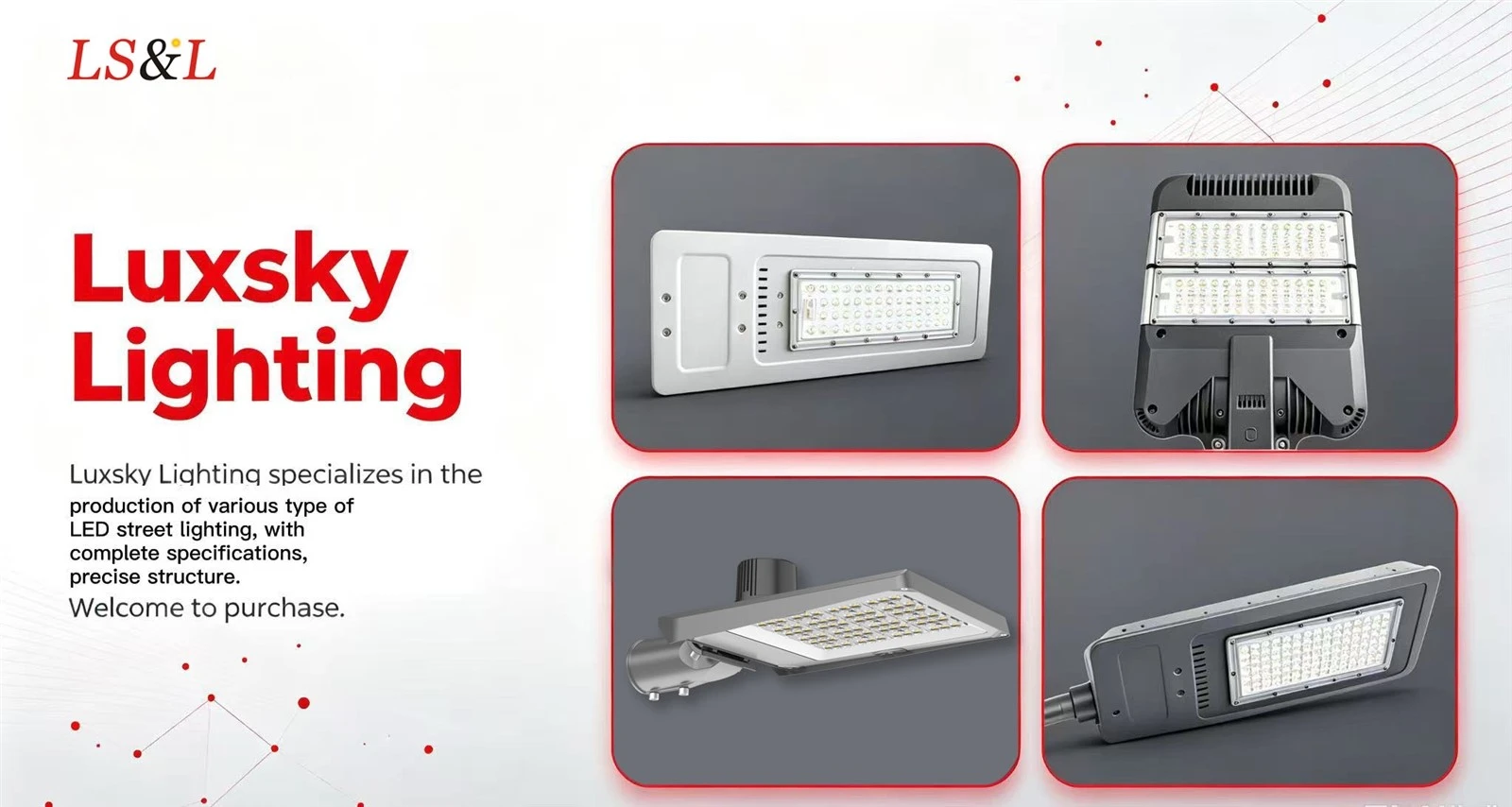
We fully understand that foreign trade clients fear most the situations of "samples meet the illuminance, but bulk delivery falls short" or "it looks bright at first, but becomes noticeably dim after two years." Therefore, Luxsky Lighting consistently integrates Strict quality control throughout R&D, production, and shipment. Our LED street light series is designed for applications such as factory main roads, offering high luminous efficacy, precise optics, and optional intelligent control solutions that effectively help clients achieve and maintain the required average illuminance (lx) standards over the long term. Whether for new factory construction or retrofitting existing lights, we provide professional technical support and reliable product assurance.
If you are selecting lighting for a factory main road project, feel free to contact us directly for detailed photometric data, illuminance simulation references, and project cases. Only with reliable quality as the foundation can the average illuminance standards be truly implemented.
Conclusion
Meeting the average illuminance (lx) standards for factory main roads depends on high-quality products and professional system design. Only LED engineering lighting that has undergone rigorous quality control can consistently meet standards in real projects and maintain performance over time. If you are looking for reliable Roadway LED lighting and Smart outdoor light solutions, we recommend Luxsky Lighting-delivering solid quality and professional service to help your factory lighting project achieve compliance and operate efficiently.