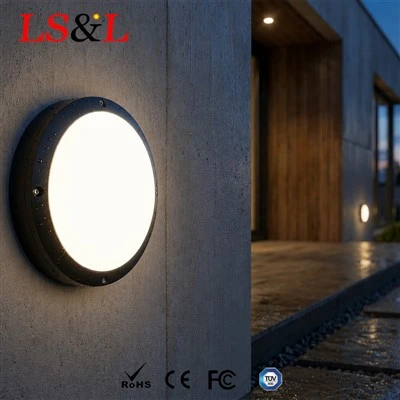
Overseas engineering clients often ask me how to choose between self-test and manual-test emergency lights. Years in lighting foreign trade have taught me many buyers mix these two types up, only to find they fail local fire inspections on site. Based on real project experience, I will walk you through their differences, suitable applications and key selection tips.
1. How manual-test emergency lights work
A manual-test led bulkhead light requires on-site staff to press the test button to simulate power failure and check emergency performance. The operation is straightforward, but dedicated workers must carry out checks on a regular schedule. It comes with a budget-friendly price and simple structure, delivering a lower failure rate, ideal for small factories with in-house electricians for routine inspections. The downside is clear: battery degradation or wiring faults can easily go unnoticed if inspections are missed.
2. How self-test emergency lights work
Self-test fixtures have built-in circuits that run automatic discharge and recharge cycles at preset intervals, with status indicators showing faults. Many versions of this IP66 bulkhead light are available with remote monitoring for large factory sites. The fixture logs test results by itself and triggers warning lights when batteries weaken or switching circuits malfunction. Frequent manual power-cut tests are no longer required, cutting inspection workload greatly for sites with scattered light points or limited on-site staff.
3. Core comparison
The fundamental difference lies in how testing is activated. Manual models rely on human operation and manual record keeping, while self-test units run checks independently with built-in fault alerts. For compliance, fire codes in many European and American regions favour self-test variants for escape routes in large facilities. Manual models are usually acceptable for secondary access ways. When you select a bulkhead light, always start by checking local regulations for your project.
4. Common pitfalls to avoid
Do not opt for self-test versions across the board just for convenience. They contain more electronic components, so long-term reliability needs careful evaluation in high-humidity and corrosive environments. Manual units cost less, yet they demand a solid inspection routine. Missing regular tests will lead to non-compliance during fire audits. Also confirm the backup battery runtime of both types meets local standards.
5. Practical deployment advice
Many projects use a mixed layout: self-test lights along main escape routes and manual-test units for secondary corridors and storage rooms to balance cost and compliance. Verify test functions and fault indication logic during incoming inspection.

If you are planning factory emergency lighting and unsure which type to specify, share your project location and site layout. I can design a compliant solution that fits your budget and fire code requirements.