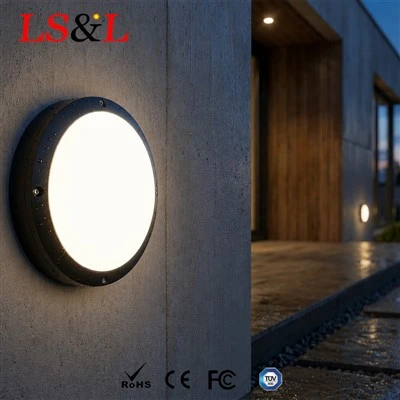
After more than a decade in lighting exports, factory and property clients often ask what emergency bulkheads actually do for safe evacuation. Many think they only "still light when power fails"; their real value is continuous path visibility. Here is how emergency bulkheads support orderly exit, based on field experience.
Keep Routes and Obstacles Readable After Power Loss
In a fire or supply failure, normal lighting goes out and people must judge direction and floor level at once. Emergency bulkheads provide basic brightness on critical routes so fewer trips, shoves, and wrong turns occur.
When an led bulkhead light is placed along escape-corridor side walls, it forms a continuous reference and helps people move along the path instead of stopping to adapt to darkness.
Stairs and Turns Are Evacuation Bottlenecks
In vertical escape, treads, landings, and turns are where missteps happen most. Emergency bulkheads light these changes of level and reduce falls when the stair is crowded.
A round bulkhead light spaced evenly on the stair side wall helps keep tread edges readable even when emergency illuminance is lower than normal.
Work with Escape Signs-Do Not Replace Them
Emergency bulkheads make the floor and volume visible; escape signs show where to go. The roles are separate: luminaires support safe movement, signs provide direction.
Bulkheads near exits also reduce dark patches at the door so the final stretch of the path stays clear.
In Industrial Settings, Survive the Real Environment
Plant escape routes often see dust, humidity, or a link to exterior doors. Emergency points need matching protection and sealing so they are not already damp when they are finally needed-and then fail to strike or look too dim.
On damp or semi-outdoor sections, choose a site-matched option such as an IP65 bulkhead light, and keep scheduled tests so changeover and duration remain available.
How Emergency Bulkheads Support Evacuation
- Provide path visibility after mains failure
- Cover stairs, turns, and approaches to exits
- Complement escape signage rather than replace it
- Rely on protection and testing so they work at the critical moment
Emergency bulkheads support safe evacuation by maintaining basic visibility on corridors, stairs, and exit approaches when normal power is gone. They are not decorative lamps; they are the lighting layer inside the escape system.
From years of working with factory, property, and export clients, I know evacuation depends on design and testing in normal time-not on luck when an incident starts. When bulkhead positions and functions are right, the critical moment is calmer.

If you are improving escape lighting in a plant or building, share the stair and corridor layout. I can help identify which bulkhead light fits better and place emergency bulkheads where they support evacuation in practice.